
Sponsored
ColoradoMike
Well-Known Member
It is because of the altitude. And I live in Colorado, and I use 87. I don't know if it's necessary. But I'm a slave to the owner's manual.
jhackathorne
Well-Known Member
Yes, 85 is due to elevation change. I've always run 85 and had no issues.
From a dealer site....
2. Octane Ratings At Altitude
They say the air is rare here in the Rocky Mountains, and that actually has an effect on how your engine performs. Because the air is less dense, less air flows to your car's engine. This translates to a slightly richer air-fuel ratio, and deters engine knock. For that reason, you'll find that regular gas carries an 85 octane rating here in Denver and throughout Colorado, Wyoming, Utah and Montana. In most states, regular unleaded is rated slightly higher at 87.
In most cases, you won't experience any problems running 85 octane in an ordinary car when a few thousand feet above sea level. However, if you do detect that tell-tale pinging noise, it may be wise to try filling your car with mid-grade gasoline which is rated at 87 octane here in Denver.
From a dealer site....
2. Octane Ratings At Altitude
They say the air is rare here in the Rocky Mountains, and that actually has an effect on how your engine performs. Because the air is less dense, less air flows to your car's engine. This translates to a slightly richer air-fuel ratio, and deters engine knock. For that reason, you'll find that regular gas carries an 85 octane rating here in Denver and throughout Colorado, Wyoming, Utah and Montana. In most states, regular unleaded is rated slightly higher at 87.
In most cases, you won't experience any problems running 85 octane in an ordinary car when a few thousand feet above sea level. However, if you do detect that tell-tale pinging noise, it may be wise to try filling your car with mid-grade gasoline which is rated at 87 octane here in Denver.
DonH63
Well-Known Member
- First Name
- Don
- Joined
- Jun 22, 2023
- Threads
- 2
- Messages
- 10,768
- Reaction score
- 61,257
- Location
- Monument, CO
- Vehicle(s)
- 21 GC Trailhawk, 23 JLU 392 XR
- Occupation
- Retired EE; musician (trumpet)
I try to use the min octane it's rated for. Altitude, yes, that is the rational, but that made more sense decades ago before EFI, turbo/superchargers, and knock sensors were in so many vehicles. They also claim it lowers emissions though that does not jive with the chemistry and thermodynamics I've read... I use mid grade here and regular on our trips elsewhere. Except my 392 needs premium, and even it is minimum octane per the manual. 
You also generate less power at altitude, though again modern engines mitigate that somewhat.
You also generate less power at altitude, though again modern engines mitigate that somewhat.
grimmjeeper
Well-Known Member
- First Name
- Roy
- Joined
- May 6, 2021
- Threads
- 13
- Messages
- 8,282
- Reaction score
- 41,354
- Location
- Castle Rock, CO
- Website
- www.grimmjeeper.com
- Vehicle(s)
- 2021 Wrangler, 1987 Comanche, 1997 F250
- Build Thread
- Link
- Occupation
- enginerd
Altitude does lower the required octane needed to prevent detonation. At least in naturally aspirated engines.
If your engines starts pinging, fill up with higher octane next time.
If your engines starts pinging, fill up with higher octane next time.
Sponsored
Reinen
Well-Known Member
The 85 octane in the mountain west makes no sense anymore.
You can get away with 85 octane in high altitudes IF you have a carbureted engine, which nobody has anymore. It's not good if you have a naturally aspirated fuel injected engine, but not necessarily terrible. It's downright bad if you have a turbo fuel injected engine, which partially negates the thin high altitude air.
I have the 2.0l Turbo and always use 87 octane, getting screwed because I'm paying mid-tier prices for everyone else's regular fuel.
You can get away with 85 octane in high altitudes IF you have a carbureted engine, which nobody has anymore. It's not good if you have a naturally aspirated fuel injected engine, but not necessarily terrible. It's downright bad if you have a turbo fuel injected engine, which partially negates the thin high altitude air.
I have the 2.0l Turbo and always use 87 octane, getting screwed because I'm paying mid-tier prices for everyone else's regular fuel.
grimmjeeper
Well-Known Member
- First Name
- Roy
- Joined
- May 6, 2021
- Threads
- 13
- Messages
- 8,282
- Reaction score
- 41,354
- Location
- Castle Rock, CO
- Website
- www.grimmjeeper.com
- Vehicle(s)
- 2021 Wrangler, 1987 Comanche, 1997 F250
- Build Thread
- Link
- Occupation
- enginerd
I ran 85 octane here in Denver in my old JK with the 3.6 all the time with no ill effects. The lower density of the air reduces the need for octane in any naturally aspirated engine whether its carbureted or injected.The 85 octane in the mountain west makes no sense anymore.
You can get away with 85 octane in high altitudes IF you have a carbureted engine, which nobody has anymore. It's not good if you have a naturally aspirated fuel injected engine, but not necessarily terrible. It's downright bad if you have a turbo fuel injected engine, which partially negates the thin high altitude air.
I have the 2.0l Turbo and always use 87 octane, getting screwed because I'm paying mid-tier prices for everyone else's regular fuel.
Forced injection is different however. Turbos run at absolute pressure which doesn't change based on altitude. It needs more octane because of the boost. The benefit is that you lose less power at altitude.
J.Ferreira
Well-Known Member
- First Name
- John
- Joined
- Aug 4, 2022
- Threads
- 7
- Messages
- 8,287
- Reaction score
- 42,928
- Location
- Castle Rock, Colorado
- Website
- www.tmgps.org
- Vehicle(s)
- 1999 Jeep XJ
These threads are always so entertaining to me.
Robblerobblerobble I use 87 because the manual says to use 87. I'll always use 87 robblerobblerobble.
I mean, sure. You do you. No harm, no foul.
But to that I ask, what about the folks whose vehicles require 93?
They throw in 91 and carry on with their day. Just my two pennies.
Robblerobblerobble I use 87 because the manual says to use 87. I'll always use 87 robblerobblerobble.
I mean, sure. You do you. No harm, no foul.
But to that I ask, what about the folks whose vehicles require 93?
They throw in 91 and carry on with their day. Just my two pennies.
Ratbert
Well-Known Member
Modern engines mitigate that?You also generate less power at altitude, though again modern engines mitigate that somewhat.
Sponsored
DonH63
Well-Known Member
- First Name
- Don
- Joined
- Jun 22, 2023
- Threads
- 2
- Messages
- 10,768
- Reaction score
- 61,257
- Location
- Monument, CO
- Vehicle(s)
- 21 GC Trailhawk, 23 JLU 392 XR
- Occupation
- Retired EE; musician (trumpet)
EFI, knock sensors reduce pinging and turbos or superchargers drive more air into the engine. Altitude will still cut power (about 23% at my house) for naturally-aspirated engines. Not completely mitigated, however; I've read you still lose 10~15% at 5000' (my house is at 7500', still lower than many other CO folk).Modern engines mitigate that?
Edit: I am NOT an engine expert; the 23% I got from tables, and a fellow forum member corrected that for forced-induction engines so I did a little research.
Gregj
Well-Known Member
- First Name
- Greg
- Joined
- Dec 15, 2018
- Threads
- 20
- Messages
- 2,761
- Reaction score
- 5,667
- Location
- West Texas
- Vehicle(s)
- 2018 JLU Rubicon, 2018 JLU Sport, 2023 JTRD, 2017 JKRR
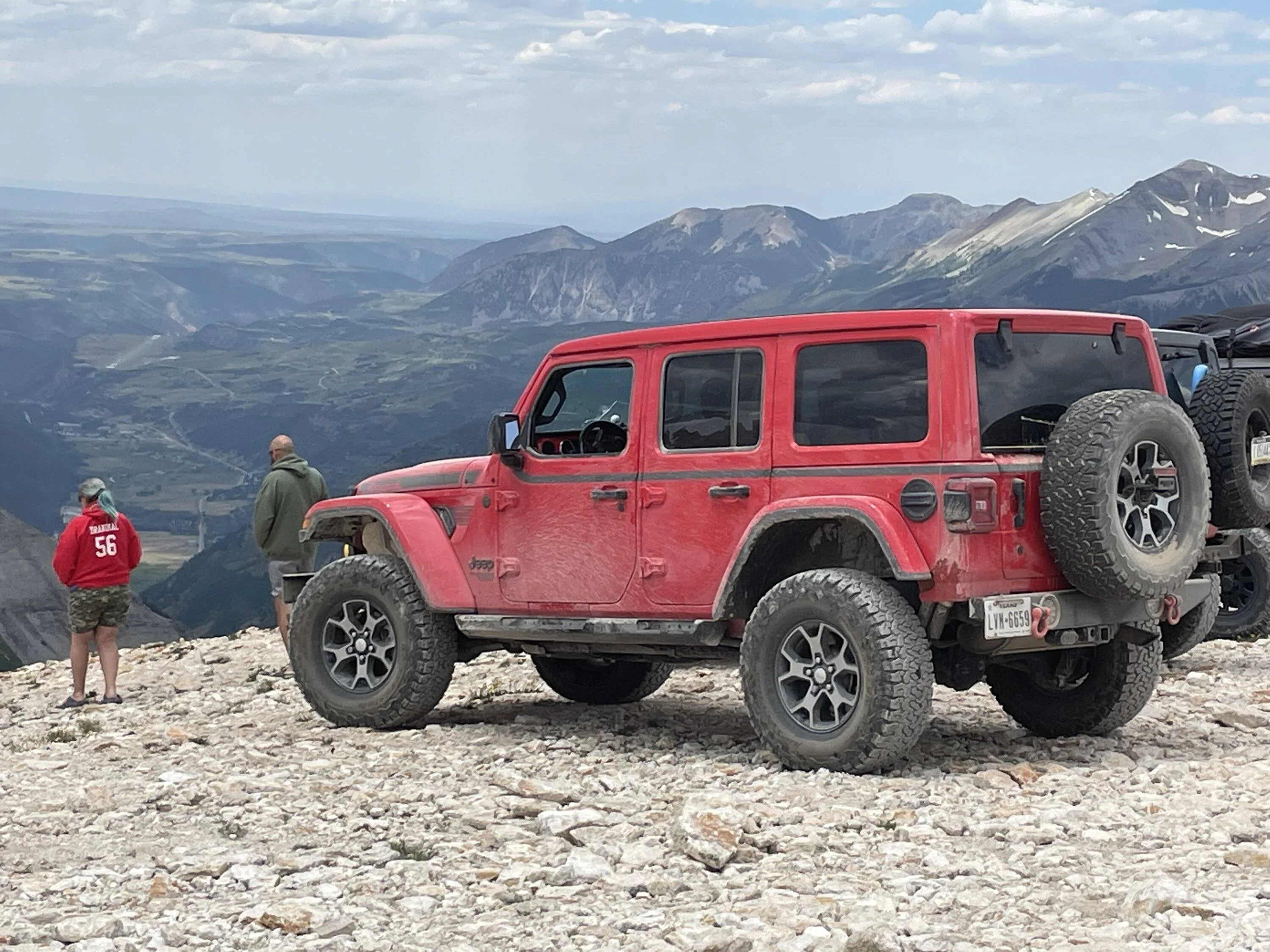
? My son and I both had our 3.6’s with manual transmissions over 13000 feet this weekend with no problems on what ever regular ran out of the hose.

Gregj
Ps. Even my other sons XJ ran fine too.
My son and I both had our 3.6’s with manual transmissions over 13000 feet this weekend with no problems on what ever regular ran out of the hose. 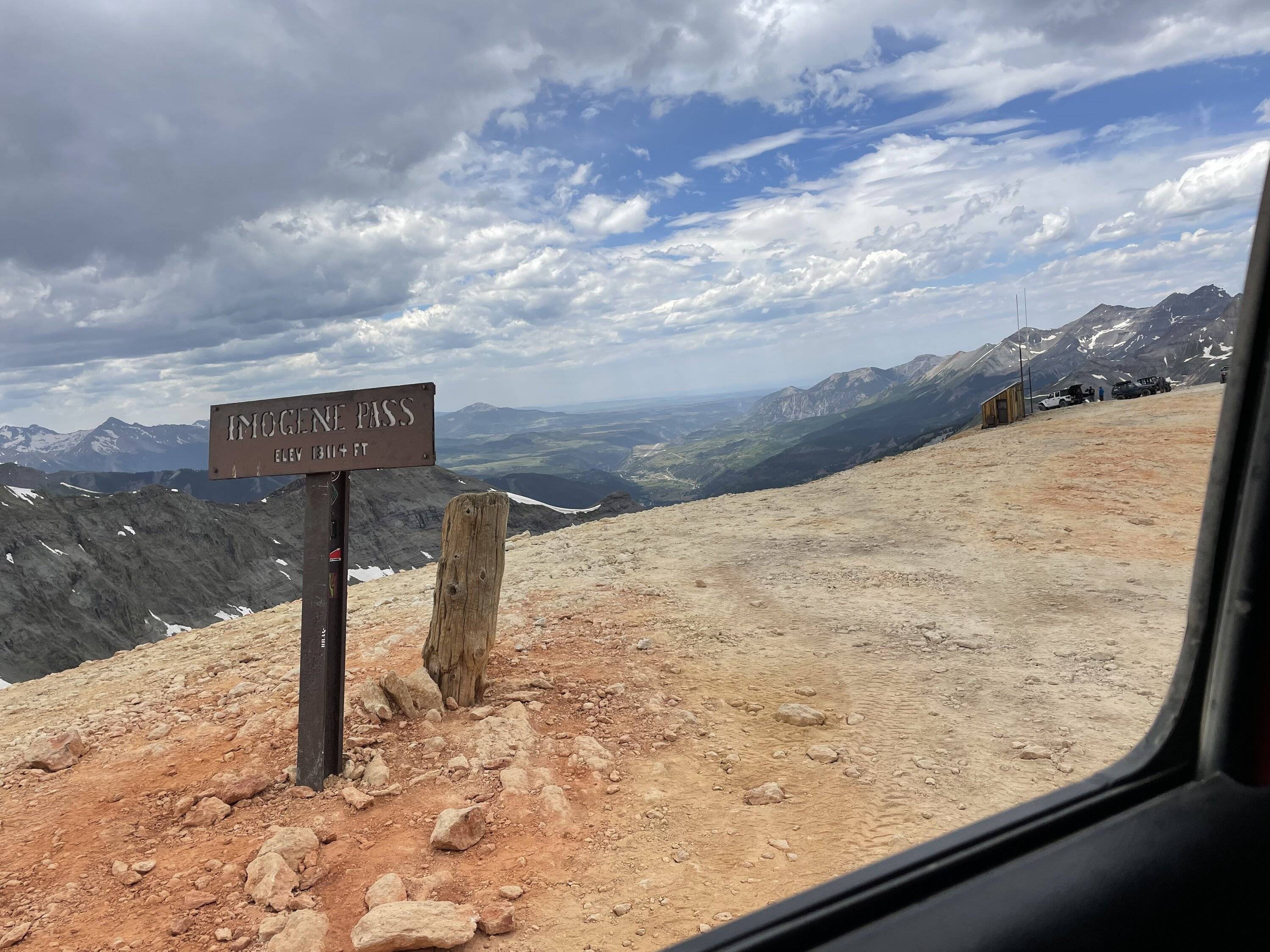

Gregj
Ps. Even my other sons XJ ran fine too.
grimmjeeper
Well-Known Member
- First Name
- Roy
- Joined
- May 6, 2021
- Threads
- 13
- Messages
- 8,282
- Reaction score
- 41,354
- Location
- Castle Rock, CO
- Website
- www.grimmjeeper.com
- Vehicle(s)
- 2021 Wrangler, 1987 Comanche, 1997 F250
- Build Thread
- Link
- Occupation
- enginerd
EFI on a naturally aspirated engine will lean out the mixture at altitude based on how much air is being pulled in. It uses either a Mass Air Flow (MAF) sensor or Manifold Absolute Pressure (MAP) sensor. Sometimes both.EFI, knock sensors reduce pinging and turbos or superchargers drive more air into the engine. Altitude will still cut power (about 23% at my house) for naturally-aspirated engines. Not completely mitigated, however; I've read you still lose 10~15% at 5000' (my house is at 7500', still lower than many other CO folk).
Edit: I am NOT an engine expert; the 23% I got from tables, and a fellow forum member corrected that for forced-induction engines so I did a little research.
Based on those sensors the computer knows how much air is in the engine and it adjusts how much fuel to squirt in. That compensates better than any carburetor. Back in the day we brought a kit and swapped out the jets in the carburetor every couple of thousand feet in elevation change because the engine would choke itself with too much fuel. Now the computer does it for us automagically.
With a turbo (or supercharger), boost at sea level measures the same as on the top of a mountain pass. 20PSI is 20PSI no matter where you are. And that means you don't lose anywhere near as much power as you do without one.
Circling back to the OP's question, the lower density air in a NA engine means lower cylinder pressure during compression. And that means the fuel is less likely to detonate early. Since octane is resistance to detonation, you don't need as much octane with lower density air.
thecritter
Well-Known Member
- First Name
- Rusty
- Joined
- May 31, 2018
- Threads
- 48
- Messages
- 863
- Reaction score
- 1,158
- Location
- East Texas
- Vehicle(s)
- 2018 Crystal Granite JlU Rubicon
- Vehicle Showcase
- 1
Same experience last week but it's an auto..?
Gregj
Ps. Even my other sons XJ ran fine too.


jeepoch
Well-Known Member
- First Name
- Jay
- Joined
- Nov 13, 2019
- Threads
- 1
- Messages
- 1,052
- Reaction score
- 2,941
- Location
- Longmont, CO
- Vehicle(s)
- 2019 JL Wrangler Sport S 3.6L Auto 2 door, 2.5" lift, 35s
This debate never ends. It really doesn't. Use grape juice at the pump if it puts a smile on your face.
Octane is a measure of a fuel's flashpoint not it's energy content. Higher compared to lower octane has exactly the same amount of chemical energy. However it's generally more expensive because it's processed further to ensure it ignites at a more consistent, much more narrower range, of temperature and pressure. The more consistent this threshold the less chance there is for any pre-detonation.
The lower the octane the higher the probability that the fuel may ignite before it's supposed to. If the cylinder temperature is high enough, or the internal piston pressure rises significantly, when coupled with an inconsistent flashpoint, then combustion may occur even without a spark event at all. This is known as 'pre-detonation'. Worse, if this happens on the piston's upstroke, before top dead center (TDC) really (really) bad things happen. When this pre-detonation occurs, then all the explosive energy works against positive crankshaft rotation. This event can be very violent and causes mechanical vibration known as knock.
Any knock (whatsoever) is detrimental to your engine. The piston rings and cylinder walls will be damaged to some degree upon each and every knock event. Each and every one! Since everything is sealed shut before the exhaust valves open, this explosive blowback energy has to go somewhere. The only place it can go is past the piston ring's seal causing distortion and scraping of the rings on the cylinder walls. With enough marking, permanent surface damage to the cylinder walls occurs, compression will lower eventually to the point of power loss. With enough 'knock' damage over time, total piston failure will eventually occur. In summary, any knock whatsoever, is detrimental to some degree. Unfortunately with today's modern Engine Controllers, most knock is imperceptible to the driver. Nonetheless, it's still there.
Thankfully the Engine Control Computer can detect knock and do various things to lower it's generation. It does this primarily by lowering internal piston temperature. It either retards spark, so the spark plugs fire further past the piston's downward stroke (well after top dead center), lowers the amount of fuel injected, introduces more inert gas via the EGR valve, reduces input airflow at the throttle body or some amount of all the above. Regardless, all of these solutions reduce overall performance by reducing output torque.
BUT, even worse the Engine Controller can only take these actions AFTER knock has already been detected. In other words, only after some cylinder damage has unfortunately just occurred.
So the moral of the story is to try and prevent any pre-detonation related knock event from happening in the first place (period)!
By using lower octane you are only promoting the possibility of producing pre-detonation and resultant knock damage. In contrast, the use of higher octane vastly reduces the probability of knock from happening at all. Maybe not completely to zero but dramatically less so.
Furthermore, with a more consistent ignition flashpoint within the piston's stroke location (just after TDC but never before) the better the Engine Controller can manage optimal combustion ensuring maximum power, lowest emissions and best possible engine longevity. The better the predicted spark delivery, the more efficient the engine performs. This also results in optimal gas mileage.
So go ahead and put the cheapest crap you can find in your tank. Rest assured you're likely saving money. Right up until the point of lost performance (needing even more fuel) or even catastrophic engine failure altogether. "Pay now or pay later."
I for one ALWAYS put premium in the tank regardless of altitude or any other factors. A few more dollars per fill-up is a small price to pay to ensure best possible performance, lowest emissions and highest mileage and longest range. Plus the premium offerings are the products with the best additives blended in, such as detergents, for cleaner injector performance.
Just like you, your engine is what it eats.
Grape juice indeed seems to be the diet that some just have to find any possible excuse under the sun to use. Ignorant of the fact that the Owner's Manual is total propaganda, biased simply towards a lower cost of ownership.
At least now you know why technically you shouldn't use the cheapest petrol. Still for most, the physics means very little.
Happy motoring... No knock, knock joke.
Jay
Octane is a measure of a fuel's flashpoint not it's energy content. Higher compared to lower octane has exactly the same amount of chemical energy. However it's generally more expensive because it's processed further to ensure it ignites at a more consistent, much more narrower range, of temperature and pressure. The more consistent this threshold the less chance there is for any pre-detonation.
The lower the octane the higher the probability that the fuel may ignite before it's supposed to. If the cylinder temperature is high enough, or the internal piston pressure rises significantly, when coupled with an inconsistent flashpoint, then combustion may occur even without a spark event at all. This is known as 'pre-detonation'. Worse, if this happens on the piston's upstroke, before top dead center (TDC) really (really) bad things happen. When this pre-detonation occurs, then all the explosive energy works against positive crankshaft rotation. This event can be very violent and causes mechanical vibration known as knock.
Any knock (whatsoever) is detrimental to your engine. The piston rings and cylinder walls will be damaged to some degree upon each and every knock event. Each and every one! Since everything is sealed shut before the exhaust valves open, this explosive blowback energy has to go somewhere. The only place it can go is past the piston ring's seal causing distortion and scraping of the rings on the cylinder walls. With enough marking, permanent surface damage to the cylinder walls occurs, compression will lower eventually to the point of power loss. With enough 'knock' damage over time, total piston failure will eventually occur. In summary, any knock whatsoever, is detrimental to some degree. Unfortunately with today's modern Engine Controllers, most knock is imperceptible to the driver. Nonetheless, it's still there.
Thankfully the Engine Control Computer can detect knock and do various things to lower it's generation. It does this primarily by lowering internal piston temperature. It either retards spark, so the spark plugs fire further past the piston's downward stroke (well after top dead center), lowers the amount of fuel injected, introduces more inert gas via the EGR valve, reduces input airflow at the throttle body or some amount of all the above. Regardless, all of these solutions reduce overall performance by reducing output torque.
BUT, even worse the Engine Controller can only take these actions AFTER knock has already been detected. In other words, only after some cylinder damage has unfortunately just occurred.
So the moral of the story is to try and prevent any pre-detonation related knock event from happening in the first place (period)!
By using lower octane you are only promoting the possibility of producing pre-detonation and resultant knock damage. In contrast, the use of higher octane vastly reduces the probability of knock from happening at all. Maybe not completely to zero but dramatically less so.
Furthermore, with a more consistent ignition flashpoint within the piston's stroke location (just after TDC but never before) the better the Engine Controller can manage optimal combustion ensuring maximum power, lowest emissions and best possible engine longevity. The better the predicted spark delivery, the more efficient the engine performs. This also results in optimal gas mileage.
So go ahead and put the cheapest crap you can find in your tank. Rest assured you're likely saving money. Right up until the point of lost performance (needing even more fuel) or even catastrophic engine failure altogether. "Pay now or pay later."
I for one ALWAYS put premium in the tank regardless of altitude or any other factors. A few more dollars per fill-up is a small price to pay to ensure best possible performance, lowest emissions and highest mileage and longest range. Plus the premium offerings are the products with the best additives blended in, such as detergents, for cleaner injector performance.
Just like you, your engine is what it eats.
Grape juice indeed seems to be the diet that some just have to find any possible excuse under the sun to use. Ignorant of the fact that the Owner's Manual is total propaganda, biased simply towards a lower cost of ownership.
At least now you know why technically you shouldn't use the cheapest petrol. Still for most, the physics means very little.
Happy motoring... No knock, knock joke.
Jay
Sponsored
Last edited:


