Sponsored

Drained Battery, Any jumpstart tips??

Jebiruph

Well-Known Member
First Name
Jerry
Joined
Feb 18, 2018
Threads
57
Messages
2,402
Reaction score
2,997
Location
Iowa
Vehicle(s)
2018 JLU, 2020 JT, 2024 WL
My theory deduced from observing various Jeep Informant's posts, information from misc. posts and personal observations;
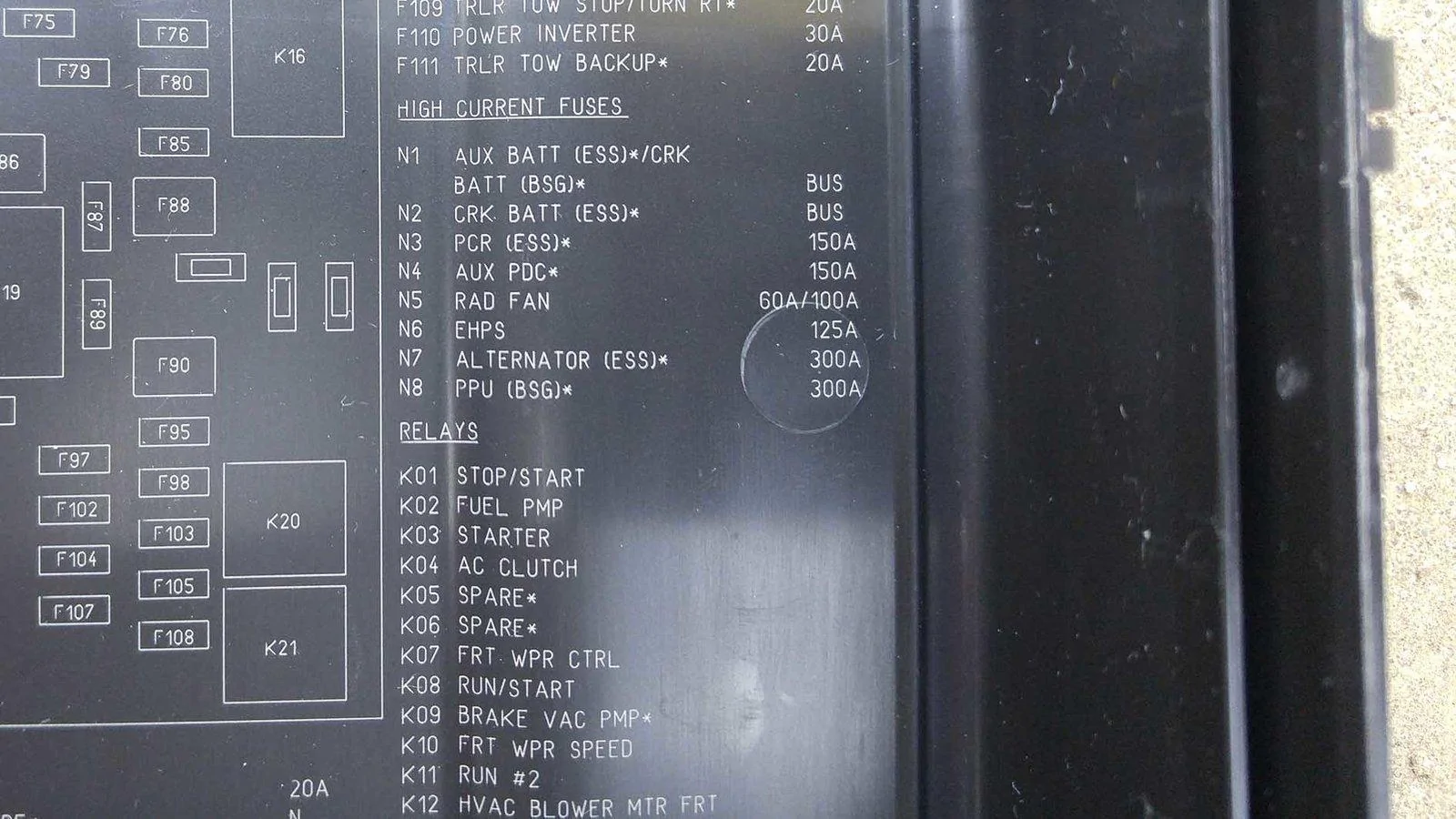
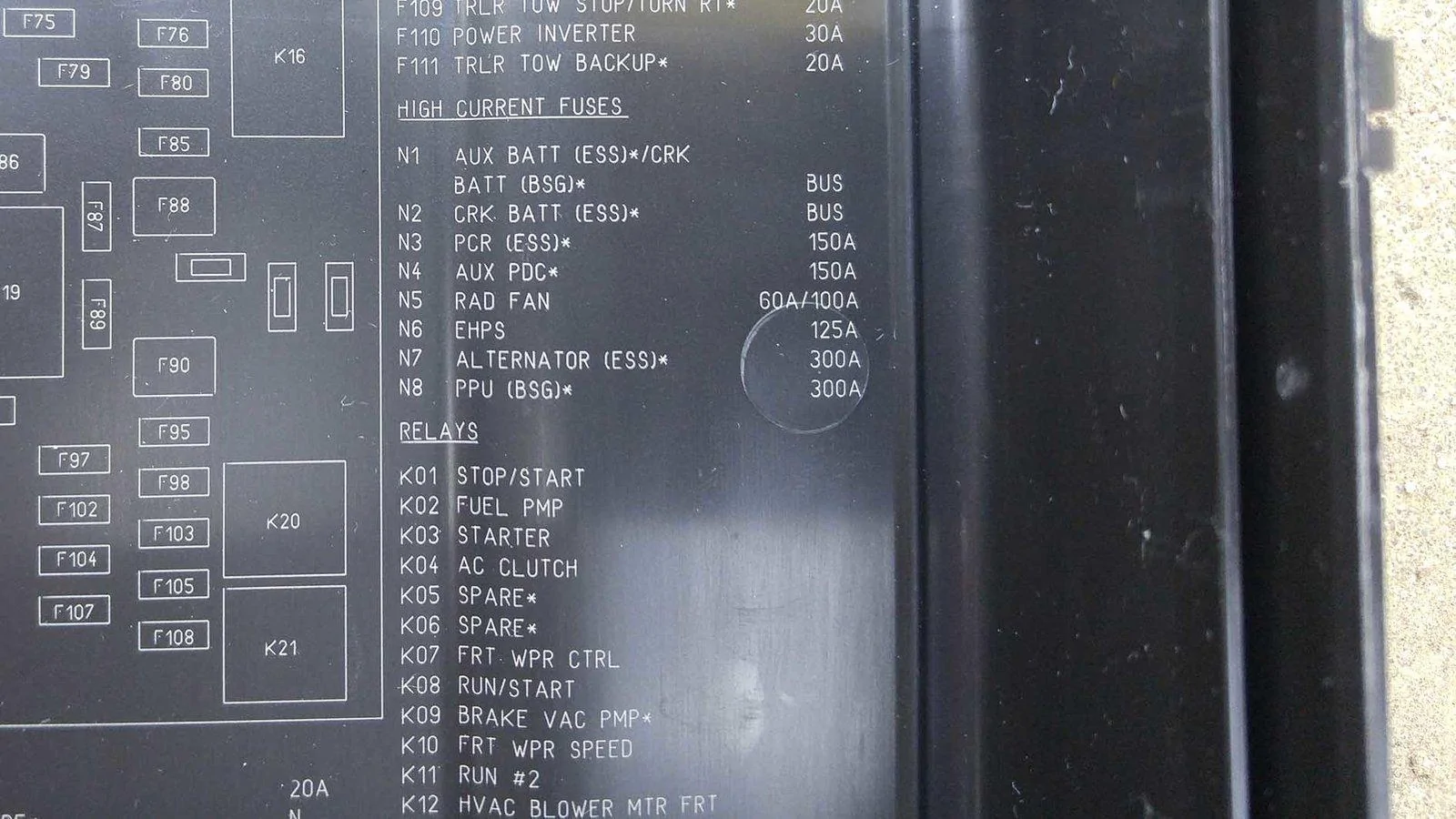
pdc label 2.webp

The Power Control (ESS) relay is what connects the two batteries in parallel. I suspect it is more like a dual battery controller as opposed to a simple relay. The batteries are in parallel when cranking, but since the large battery is connected directly to the starter, it is called the cranking battery (see PDC label above). If the aux battery is dead, the electronics that work the starter relay won't function and it won't start. If you disconnect the positive battery terminal from the large battery, the aux battery can start the engine through the cables still attached to that disconnected terminal.

If you are jump starting the aux battery by connecting to the large battery, the charge gets to the aux battery through the Power Control relay, which may account for the slow charge. If you jump the aux battery through N1, you bypass the Power Control relay and connect directly to the aux battery, but this won't charge the large battery if the Power Control relay is not connecting the batteries.

In theory, if the aux battery is dead, but the large battery is good, connecting N1 to N2 should get it started, but try that at your own risk.

Charging current from the alternator to the aux battery goes through the Power Control relay, so if the relay fails, the aux battery will not charge.

If anybody has a better theory, I'm all ears.
Posted this on another thread, apllies here too.
Sponsored


twisty

Well-Known Member
First Name
bob
Joined
Jul 22, 2018
Threads
9
Messages
1,083
Reaction score
815
Location
Fountain Hills, Arizona
Vehicle(s)
2018 JL Rubicon White
NOPE, popping the clutch/w the IGN in "RUN" works, at least mine has worked twice--

Now those two times were because of ENGINE STALLING--I just left the IGN sw in "RUN"--and while still rolling slow, put her in 2nd gear, popped the clutch and--BINGO-away I went-

That was one of the reasons i got the manual this time, just for the "POP THE CLUTCH" trick with a dead battery and I thought I was going to have to wire in a clutch/IGN switch, but-no need, once you arm the IGN system the engine can be started in gear/w the clutch-

Now ain't that just "SUPER"-

W.E.

JIMBO
yeah that is whats great about a manual for sure. Wonder if an auto set in the manual position can be jumped. Thinking you would need to go a lot faster then with a manual if it can be done at all. Been a manual guy forever so ignorant on auto's
 

twisty

Well-Known Member
First Name
bob
Joined
Jul 22, 2018
Threads
9
Messages
1,083
Reaction score
815
Location
Fountain Hills, Arizona
Vehicle(s)
2018 JL Rubicon White
Posted this on another thread, apllies here too.
So you think the batteries are connected when cranking? You might be right but I thought they were connected up until the point you started the motor. That's where the relay kicked in and isolated the smaller battery. That would explain (at least to me) why you could pull off the big battery jumpers and it would still start.

Sooner or later we will have a for sure answer on this. The suspense is killing me. lol
 

Jebiruph

Well-Known Member
First Name
Jerry
Joined
Feb 18, 2018
Threads
57
Messages
2,402
Reaction score
2,997
Location
Iowa
Vehicle(s)
2018 JLU, 2020 JT, 2024 WL
So you think the batteries are connected when cranking? You might be right but I thought they were connected up until the point you started the motor. That's where the relay kicked in and isolated the smaller battery. That would explain (at least to me) why you could pull off the big battery jumpers and it would still start.

Sooner or later we will have a for sure answer on this. The suspense is killing me. lol
They have to be connected when the engine is running for the smaller battery to charge. When you pull the positive terminal off of the main battery, the smaller battery connects to the starter through the cables that remain attached to the main battery positive terminal. The only reason I know of to isolate the batteries is during an auto stop to preserve power for the restart, so what I posted is based on that assumption.
 

RussJeep1

Banned
Banned
Banned
Joined
Oct 12, 2016
Threads
139
Messages
2,542
Reaction score
2,075
Location
Westchester, NY
Vehicle(s)
JLU Sahara
On the fuse cover it lists N1 and N2 as the main and aux batteries.
When i had a no start condition had 11.3 on N1 and 4.2 volts on N2 only after slow charging both was i able to get it to start.
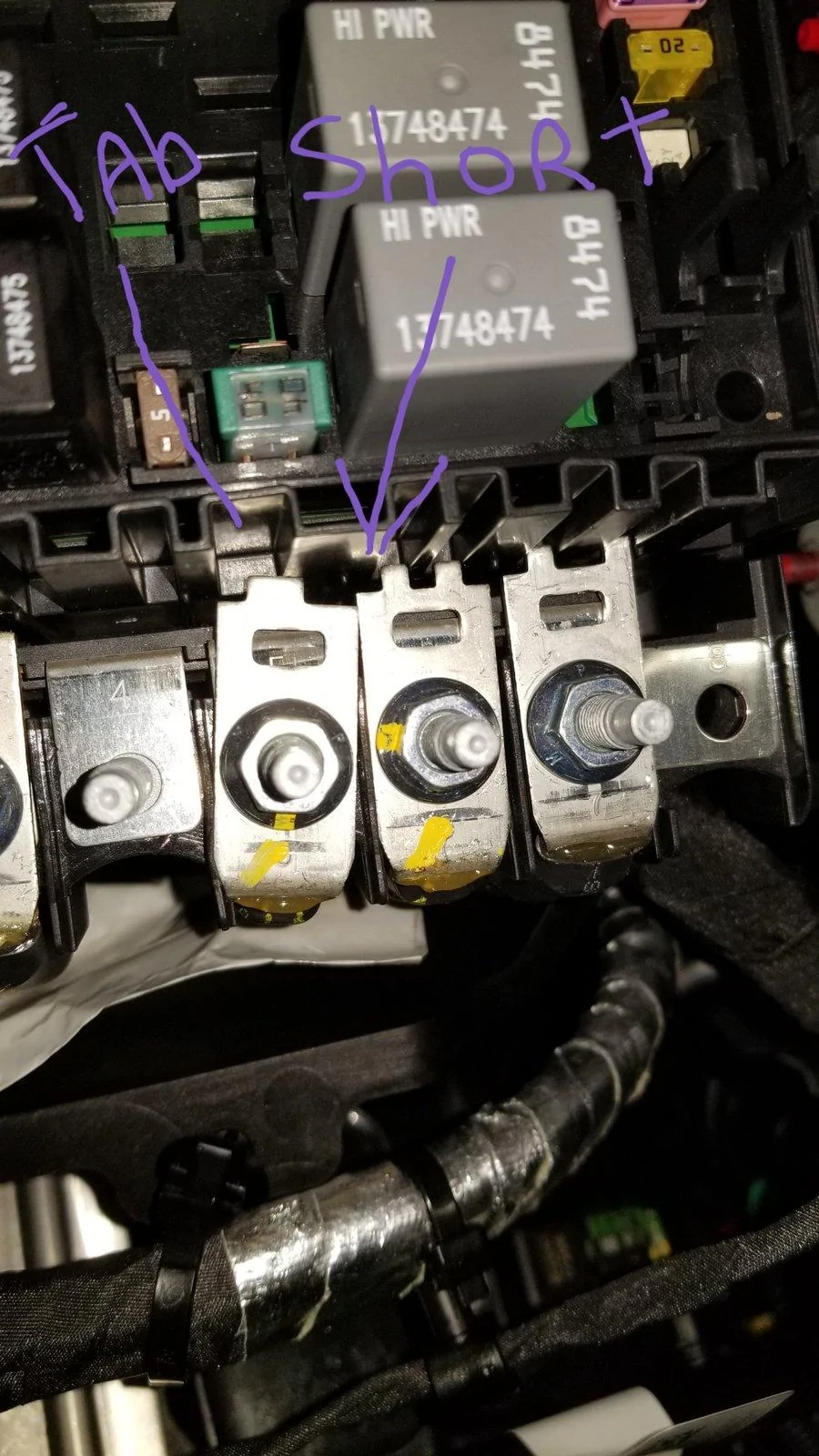
If you look closely at the pix posted, i has N5 and N6 terminals touching and tab on terminal not seated in groove.
After ess relay was replaced. Had 13.2 and 13.8 on main and aux battery after good trickle charge.
I did reseat the touching terminal properly.

20180803_075351.webp
I hear you sir. FWIW Brandon Halon's Youtube videos, where this is actually tested, as opposed to what the PDS has written on it (or the schematic for that matter) seem to suggest terminal 1 in PDS goes to the main battery, and terminal 5 to the aux battery, isolated by the PDS at startup.

Could this be wrong: sure. If it helps I could find the places in two of his videos where this is shown.

Rusty Teeth: please understand that just like you and the rest of us, I'm just trying to understand what's going on here. Not say "X is right, Y is wrong.":)
 

Sponsored

RussJeep1

Banned
Banned
Banned
Joined
Oct 12, 2016
Threads
139
Messages
2,542
Reaction score
2,075
Location
Westchester, NY
Vehicle(s)
JLU Sahara
They have to be connected when the engine is running for the smaller battery to charge. When you pull the positive terminal off of the main battery, the smaller battery connects to the starter through the cables that remain attached to the main battery positive terminal. The only reason I know of to isolate the batteries is during an auto stop to preserve power for the restart, so what I posted is based on that assumption.
This is insightful Jebiruph. The batteries are isolated on ALL cranks to preserve aux battery power for ESS crank. It puts things in a whole different context for me.

But as I think about it, the thing of it is, for me at least, that on cold start, I'm not sure the batteries should have been isolated.

I'm going to define cold start here not as a function so much of engine temperature, but whether the crank is operator initiated through button press (i.e. cold start) , or an ESS auto crank.

It seems to me that a crank is a pretty quick and heavy draw of power better suited (or supplemented) by the large battery. And that maybe the smaller battery should have been used to supplement power when stopped at a light, rather than risk voltage dropping to a level that the ESS feels it necessary to crank and charge the batteries with the engine , while it sill has enough power to crank. Maybe the ESS battery should have been used in the same way that some JK owners did dual battery kit mods.

I truly wonder, with the passage of time and cold seasons that degrade vehicle batteries, if this cold crank design was best, particularly on a physically smaller battery. Supposedly FCA hacked away at this design over time and weather.

I do not claim to know how this smaller battery might be designed differently for, say, fast deep draw electric needs associated with a deep cycle battery than the rig's conventional battery, and perhaps better immune to cold or frequency of replacement.

Still more, I posed the question of hard connecting the two batteries together, which it sounds like is exactly the case at all times except crank.
 
Last edited:

RussJeep1

Banned
Banned
Banned
Joined
Oct 12, 2016
Threads
139
Messages
2,542
Reaction score
2,075
Location
Westchester, NY
Vehicle(s)
JLU Sahara
Waiting for someone to come up with a delete plan.
Bob: you are owed first dibs at submitting "Chump Start" to the urban dictionary as FCA;s way of "jump" starting a JL.

It can go right beside:

chjeeped:

The situation where an accessory other vehicle manufacturers would put on their vehicles standard, just to get you to look at them over the competition, Fiat/Chrysler considers an accessory because it CAN, selling Wranglers faster than it can build them.

E.g. "I feel so Chjeeped that our lower riding SUV has grab handles standard, but with Wranglers you have to buy them.";)
 

DanW

Well-Known Member
First Name
Dan
Joined
Mar 2, 2017
Threads
179
Messages
8,864
Reaction score
11,734
Location
Indiana
Vehicle(s)
21 JLUR, 18JLUR, 08JKUR, 15 Renegade, 04 WJ
Vehicle Showcase
2
Bob: you are owed first dibs at submitting "Chump Start" to the urban dictionary as FCA;s way of "jump" starting a JL.

It can go right beside:

chjeeped:

The situation where an accessory other vehicle manufacturers would put on their vehicles standard, just to get you to look at them over the competition, Fiat/Chrysler considers an accessory because it CAN, selling Wranglers faster than it can build them.

E.g. "I feel so Chjeeped that our lower riding SUV has grab handles standard, but with Wranglers you have to buy them.";)
Lol, funny! Except that the JL has grab handles, front and rear. Not in the best spot, though.
 

RussJeep1

Banned
Banned
Banned
Joined
Oct 12, 2016
Threads
139
Messages
2,542
Reaction score
2,075
Location
Westchester, NY
Vehicle(s)
JLU Sahara
Lol, funny! Except that the JL has grab handles, front and rear. Not in the best spot, though.
Very fair point Dan. Automatic up and down front windows might have been a better example!

(or water sensitive wipers (I understand why version 1.0 of the JL, and a windshield that lowers made that hard)…

or a noise abated hard top, etc.);)

FWIW, sometimes I use the FCA grab handle you refer to in the left hand, and the MOPAR aftermarket one in the right hand to get in.
 

Jebiruph

Well-Known Member
First Name
Jerry
Joined
Feb 18, 2018
Threads
57
Messages
2,402
Reaction score
2,997
Location
Iowa
Vehicle(s)
2018 JLU, 2020 JT, 2024 WL
This is insightful Jebiruph. The batteries are isolated on ALL cranks to preserve aux battery power for ESS crank. It puts things in a whole different context for me.
My theory is that the batteries are connected for an operator initiated start and isolated for an ESS start. Did you misunderstand me or do you know something different?
 

Sponsored

RussJeep1

Banned
Banned
Banned
Joined
Oct 12, 2016
Threads
139
Messages
2,542
Reaction score
2,075
Location
Westchester, NY
Vehicle(s)
JLU Sahara
My theory is that the batteries are connected for an operator initiated start and isolated for an ESS start. Did you misunderstand me or do you know something different?
Hey Jebiruph: Brandon Halon (The Jeep Informant) on YouTube was unsuccessful at-as you probably know--user starting with a push button the rig without the Aux battery. This doesn't of course mean or assure that the two batteries are isolated at user initiated crank--I mean they could be but you could be right. All I could glean from this is if the rig's computer doesn't first detect, in isolation, sufficient juice on the Aux/ESS battery, no crank is attempted, whether both batteries are parallel at the point of crank or not.

Truth be told, even though I suggested otherwise above, as I think about it, I have no evidence to claim that once juice in the ESS battery is detected, that both batteries aren't first linked in parallel by the PDS before the crank is attempted (or not).

I'd kind of hope this to be the case, and that you're on the right track so that even if the ESS battery has little to offer, it's enough for the computer to attempt a bi-battery based crank.

In fact I hope a similar algorithm is followed for ESS crank, which I suspect wouldn't even be attempted, or the ESS might even go into fault if both or either, or certainly the ESS battery wasn't providing sufficient power.

As far as both batteries being connected in parallel post a successful crank of any kind (ESS or manual), I'm certainly not disputing that, or that both batteries need charging from the alternator.

I simply don't know if the batteries are connected in parallel post successful crank. I think you do know and I respect that.

Do you have confirmation I missed that they are connected in parallel post successful crank or is it possible the PDS feeds each one alternator current independently?
 

RussJeep1

Banned
Banned
Banned
Joined
Oct 12, 2016
Threads
139
Messages
2,542
Reaction score
2,075
Location
Westchester, NY
Vehicle(s)
JLU Sahara
Dear Wiley Publishing, the makers of the Dummies Guide to Books, would you please pay an expert at FCA to write "The Dummies Guide to the ESS System on the all new 2018 JL Wrangler?"

Thanks.
 

Jebiruph

Well-Known Member
First Name
Jerry
Joined
Feb 18, 2018
Threads
57
Messages
2,402
Reaction score
2,997
Location
Iowa
Vehicle(s)
2018 JLU, 2020 JT, 2024 WL
Hey Jebiruph: Brandon Halon (The Jeep Informant) on YouTube was unsuccessful at-as you probably know--user starting with a push button the rig without the Aux battery. This doesn't of course mean or assure that the two batteries are isolated at user initiated crank--I mean they could be but you could be right. All I could glean from this is if the rig's computer doesn't first detect, in isolation, sufficient juice on the Aux/ESS battery, no crank is attempted, whether both batteries are parallel at the point of crank or not.

Truth be told, even though I suggested otherwise above, as I think about it, I have no evidence to claim that once juice in the ESS battery is detected, that both batteries aren't first linked in parallel by the PDS before the crank is attempted (or not).

I'd kind of hope this to be the case, and that you're on the right track so that even if the ESS battery has little to offer, it's enough for the computer to attempt a bi-battery based crank.

In fact I hope a similar algorithm is followed for ESS crank, which I suspect wouldn't even be attempted, or the ESS might even go into fault if both or either, or certainly the ESS battery wasn't providing sufficient power.

As far as both batteries being connected in parallel post a successful crank of any kind (ESS or manual), I'm certainly not disputing that, or that both batteries need charging from the alternator.

I simply don't know if the batteries are connected in parallel post successful crank. I think you do know and I respect that.

Do you have confirmation I missed that they are connected in parallel post successful crank or is it possible the PDS feeds each one alternator current independently?
The aux battery supplies the power to activate the Power Control relay, it the powers the Keyless Ignition modue and other start related electronics. So if it doesn't have sufficient power, you can't start.

The output of the alternator is connected to N7, which connects directly to the main battery through a 300 amp fuse on the High Current fuse bus. The path from the alternator to the aux battery is from N7 through N3 to the Power Control relay to the aux battery.

Here's the related Jeep Informant videos in case you haven't seen them all. For some reason, he indicates that the aux battery is connected to N5, I'm going by the label on the PDC cover.

View attachment 76914
Jeep Wrangler JL Drained Battery, Any jumpstart tips?? pdc label 2


Attachments

  • 0 bytes Views: 0

Jebiruph

Well-Known Member
First Name
Jerry
Joined
Feb 18, 2018
Threads
57
Messages
2,402
Reaction score
2,997
Location
Iowa
Vehicle(s)
2018 JLU, 2020 JT, 2024 WL
I simply don't know if the batteries are connected in parallel post successful crank. I think you do know and I respect that.
As far as what I know, I'm trying to figure it out like everyone else, but I do have an electronics background. Several decades ago I was a field engineer for Sperry (Univac). Bet the kids don't know what that was.
Sponsored


Top