
Sponsored

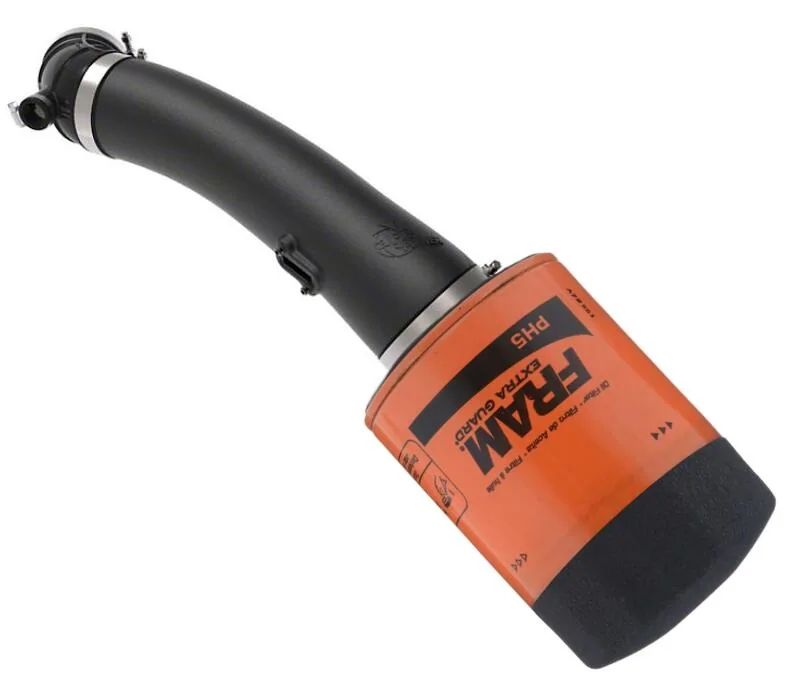
I did it. Tar and feather me lol. I got an oil filter intake

JINO

Well-Known Member
First Name
Jino
Joined
Jan 18, 2023
Threads
69
Messages
1,423
Reaction score
1,918
Location
Socal
Vehicle(s)
2021 jlurd
I got an oiled filter air intake.
Watched a bunch of videos a while ago, and considered a snorkel, but they charge double for the diesel engines.
But I got to hear another ecodiesel with an aftermarket intake, man it sounded good. Had to do it.
Already ordered a prefilter, as I read that oil has better flow but allows more dust in.

I know it's not going to add any power, the diesel has plenty, I like the sound it made. Whoosh and whistle.
Sponsored

 
Last edited:
Sponsored

Whaler27

Well-Known Member
First Name
Alex
Joined
Jul 1, 2020
Threads
60
Messages
2,697
Reaction score
5,374
Location
Oregon
Vehicle(s)
2019 JL, 2016 Jeep Grand Cherokee Altitude Ecodiesel, 2005 Mustang GT, 2018 Ford Raptor, 2018 BMW R1200GSA, 2020 Honda Monkeybikes (2), 1972 Honda CT-70, 1980 Honda CT-70,
Occupation
Saving the world :-)
OP
OP
JINO

JINO

Well-Known Member
First Name
Jino
Joined
Jan 18, 2023
Threads
69
Messages
1,423
Reaction score
1,918
Location
Socal
Vehicle(s)
2021 jlurd

Obi Wan

Well-Known Member
First Name
Obi
Joined
May 14, 2022
Threads
17
Messages
385
Reaction score
1,690
Location
Tatooine, Outer Rim
Website
starwars.fandom.com
Vehicle(s)
2023 JLU SPORT S 2.0, 2004 TJ SPORT 5.3LS
Occupation
Jedi Knight
A waste of money IMO. A good paper filter is the best thing you can have for your intake air.

The listing claims " This air intake has been tested to outflow the stock intake by a staggering 23%" What they don't tell you is that more airflow does not equal more power. If you meter the same amount of fuel for a larger amount of air, you now have a AFR (Air Fuel Ratio) that may not be optimal for the given load at RPM.

Another important aspect isn't just airflow, but air velocity. Your MAF (Mass Air Flow) meter has been tuned to look for a specific range of airflow at a given load. By changing the airflow on stock tune, you're gaining squat.

They also market this thig as a CAI, but from what I can tell, it pulls air from the exact same location as the stock filter :facepalm:

Oiled filters and pre-filters just don't filter dirt and dust very well. You could have bought a lot of OEM air filters for the cost of the system you're installing, and in the long run, do more harm than good.

You've been tar and feathered.
 
Last edited:

Obi Wan

Well-Known Member
First Name
Obi
Joined
May 14, 2022
Threads
17
Messages
385
Reaction score
1,690
Location
Tatooine, Outer Rim
Website
starwars.fandom.com
Vehicle(s)
2023 JLU SPORT S 2.0, 2004 TJ SPORT 5.3LS
Occupation
Jedi Knight
Your title also says you bought an oil filter intake. This was the first thing that popped into my head.

Jeep Wrangler JL I did it.  Tar and feather me lol. I got an oil filter intake 1720010951211-o0
 

Sponsored

OP
OP
JINO

JINO

Well-Known Member
First Name
Jino
Joined
Jan 18, 2023
Threads
69
Messages
1,423
Reaction score
1,918
Location
Socal
Vehicle(s)
2021 jlurd
It's not a waste of money if one enjoys it.

Everyone's possessions can be looked at and be considered a waste of money to someone else.
 

Whaler27

Well-Known Member
First Name
Alex
Joined
Jul 1, 2020
Threads
60
Messages
2,697
Reaction score
5,374
Location
Oregon
Vehicle(s)
2019 JL, 2016 Jeep Grand Cherokee Altitude Ecodiesel, 2005 Mustang GT, 2018 Ford Raptor, 2018 BMW R1200GSA, 2020 Honda Monkeybikes (2), 1972 Honda CT-70, 1980 Honda CT-70,
Occupation
Saving the world :-)
A waste of money IMO. A good paper filter is the best thing you can have for your intake air.

The listing claims " This air intake has been tested to outflow the stock intake by a staggering 23%" What they don't tell you is that more airflow does not equal more power. If you meter the same amount of fuel for a larger amount of air, you now have a AFR (Air Fuel Ratio) that may not be optimal for the given load at RPM.

Another important aspect isn't just airflow, but air velocity. Your MAF (Mass Air Flow) meter has been tuned to look for a specific range of airflow at a given load. By changing the airflow on stock tune, you're gaining squat.

They also market this thig as a CAI, but from what I can tell, it pulls air from the exact same location as the stock filter :facepalm:

Oiled filters and pre-filters just don't filter dirt and dust very well. You could have bought a lot of OEM air filters for the cost of the system you're installing, and in the long run, do more harm than good.

You've been tar and feathered.
Yes. Assuming the purchase is intended to improve power or fuel economy, it’s complete waste of money, and not the safest way to add fun noise either, as many of the aftermarket filters allow larger, gritty, particulates to pass into the engine.

The alleged “air-flow“ benefit has been thoroughly debunked at least at the fueling rates we have. In fact, in independent testing several diesel engines were shown to have no measurable improvement in power when they were tested with no air filter at all. So much for zero resistance equals more power.

As most here know, the cold-air-intake concept is based on the principle that cooler air is denser, and therefore contains more combustion-supporting oxygen per volume. That’s true, of course, but a difference of only ten or fifteen degrees is insignificant to the point of being almost irrelevant, and it IS functionally irrelevant when you’re talking about a motor with forced induction, because the effect of the turbo/supercharger is a large multiple of the effect from the temperature differential achieved by sucking in “outside air” as opposed to the “inside air“ that just blew into the engine compartment from outside.

My brother and I spent thousands of dollars on aftermarket filters over 20 years and multiple jeeps and trucks, because we believed the claims of better power and fuel economy. The “easy breathing” claim made intuitive sense, and the fact that all of the diesel race teams and tractor-pull competitors had aftermarket filters reinforced that. Then, around 2007 or 2008, an engineer on one of the diesel forums did extensive testing on a bunch of air filters, including the OEM filters and OEM clones made by Fram. He measured initial vacuum resistance, particulate loading, resistance after loading, particulate pass-through, and net performance changes. Some of the easiest-flowing filters loaded to the point of significant restriction very quickly. None of the aftermarket options produced less resistance than the factory filters after sucking in equivalent amounts of particulates, and almost all aftermarket filters allowed larger particulates past the filter and into the engine.

The performance differences ranged from none to insignificant and transient. As it turns out, the best filters were the factory filters and the very similar Fram clones. They both performed well and, most importantly, continued to perform well after ingesting (and capturing) volumes of particulates that sharply increased resistance in the other filters. The conclusion was this: the factory filters from the three big American manufacturers were nearly as good or better than the competition at the outset, but they were MUCH better as soon as the filters became even moderately dirty. So if you install an aftermarket filter clean it early and often.

My brother and I discussed the tests at length. They were compelling, but we were still skeptical. He had a Dodge with the Cummins and I had a Ford Powerstroke, both with CAI systems. We timed both to 60 several times, then reinstalled the factory filters and did it again. We both thought the CAI runs were faster, based on seat of the pants feel, but any difference was within our margin of timing error. As it turns out, the performance improvements we had were 99.9% due to the tunes. Maybe 100%… Afterwards we both felt pretty stupid, as we’d bought the air filter marketing hook, line, and sinker. Again and again.

In retrospect I realized the whole air filter business model is improbable and based 100% on marketing. Think about it… All of the world’s auto manufacturers have been trying to improve power and fuel economy since the very beginning of automotive history. They have spent billions and billions, and they have more than 100 years of racing and development with the best automotive engineering minds in the world working on these challenges. How likely is it that a couple guys with $50,000 or $100,000 are going to design a better system in their garage? And if lightening struck and a couple brilliant guys DID pull that off, wouldn’t Ford, Mopar, GM, Toyota, or Mercedes just buy the business with a couple hundred million in couch change? It all seems unlikely to me, but it becomes 1000 times less likely when you count the number of independent companies that have all allegedly out-engineered not one, but ALL the world’s auto manufacturers… There are at least a dozen such start-ups that all claim to improve on the OEM systems… It’s complete hogwash.

We corresponded with “Spicer”, the guy who did most of the research way back when. He was quick to admit that when massive amounts of fuel and boost were applied (like with the racing trucks and tractor-pullers), the factory filter would be an impediment, but that was at fuel/boost/power levels we were never going to see with our street trucks. Certainly not below 500 hp, and probably not below 700 hp or more.

Having said all of this, I STILL did the S&B intake and hood scoops on my jeep, because I liked the idea of making the false hood vents real — and I’m still occasionally impulsive — but it has had no effect, other than making the jeep louder, increasing my maintenance, and costing money. In retrospect, I would not do it again.
 
Last edited:

DonH63

Well-Known Member
First Name
Don
Joined
Jun 22, 2023
Threads
2
Messages
10,804
Reaction score
61,479
Location
Monument, CO
Vehicle(s)
21 GC Trailhawk, 23 JLU 392 XR
Occupation
Retired EE; musician (trumpet)
I did the oiled air filter bit once, never again. It visibly left more dust residue when fresh, and a dirt road or two would clog it enough that it flowed less than a stock filter. The whole clean and reoil after every trip was a PITA, and cost a small fortune.

I'd rather have the 100 mpg "water" carburetor (EFI system now) marketed way back when (and thoroughly disproven).
 
OP
OP
JINO

JINO

Well-Known Member
First Name
Jino
Joined
Jan 18, 2023
Threads
69
Messages
1,423
Reaction score
1,918
Location
Socal
Vehicle(s)
2021 jlurd
I'm doing it purely for the louder turbo sound.
And don't worry about MY finances, I'm doing ok.
I did get a pre filter sock for it, forget which micron it is, but doing more homework on that.
 

Whaler27

Well-Known Member
First Name
Alex
Joined
Jul 1, 2020
Threads
60
Messages
2,697
Reaction score
5,374
Location
Oregon
Vehicle(s)
2019 JL, 2016 Jeep Grand Cherokee Altitude Ecodiesel, 2005 Mustang GT, 2018 Ford Raptor, 2018 BMW R1200GSA, 2020 Honda Monkeybikes (2), 1972 Honda CT-70, 1980 Honda CT-70,
Occupation
Saving the world :-)
I'm doing it purely for the louder turbo sound.
And don't worry about MY finances, I'm doing ok.
I did get a pre filter sock for it, forget which micron it is, but doing more homework on that.
I’m not worried about YOUR finances. :CWL:

The thing about Internet forums is you generally get feedback if you solicit it, as you did here.

As I’ve said many times, I don’t care what other folks do with their Jeeps. That even applies to Goober-lights and 24’ Miami rims running 32” tires! Whatever floats your boat, I say! :like:
Sponsored


Top