
Sponsored

Why the 2.0T?

Wkaz

Well-Known Member
Joined
Oct 25, 2020
Threads
23
Messages
497
Reaction score
916
Location
MA
Vehicle(s)
2021 Sahara
Another perspective is the 2.0L Turbo engine performance.

Winding that little sucker out close to redline hitting the expressway on-ramp is FUN!!!

I'm not sure a diesel / electric generator would have the same aesthetic appeal. I imagine, though, that the torque would be impressive.
Seat of your pant's FUN !
 

JT1

Well-Known Member
Joined
Nov 30, 2020
Threads
5
Messages
724
Reaction score
813
Location
Broken Arrow, OK
Vehicle(s)
2021 Willys Gladiator
Sounds good, I wonder why nobody’s building anything like it… The power used to drive a vehicle is the same wether gas, electric, or diesel. You can’t build a generator that will provide enough power to charge the batteries at the same rate they are depleted in an EV that is small enough and light enough to haul around (not to mention the additional fuel for the generator). If it takes 300hp to get the performance you want out of your vehicle, your scenario would require a 300hp electric motor and a 350hp gas generator to keep up with the charging under heavy loads after factoring in losses (generators are not 100% efficient). Unless you are proposing the generator runs at all times, but there’s still no way a small generator keeps up. Efficiency is where electric motors win hands down. No idling, regen on deceleration, etc. Ice engines waste more energy as heat in every operating scenario. We act like they are the gold standard and that simply isn’t true.
The chevy volt does. Running down the highway at 80 doesn't require 300hp. You can't race it at road atlanta, but for driving, a small generator ICE and regen braking charge the batteries just fine.
 

gato

Well-Known Member
Joined
Apr 4, 2021
Threads
28
Messages
2,416
Reaction score
3,723
Location
New England
Vehicle(s)
2021 JLUR
I think you may be looking at it wrong. If you had a small diesel or gas (diesel is more efficient) engine that was designed to run at a specific rpm where it was extremely efficient (and maybe another rpm where it delivered higher output) and can generate enough output to recharge a battery pack that drove electric motors, the drivetrain, hardware and software would be simpler than the current batch of hybrids, and could eliminate the need for infrastructure updates. Transient events in a diesel account for most of the need for the exhaust treatments that we are currently saddled with, and range anxiety disappears.

The generator engine wouldn't need to be more than a liter or 2, and the battery pack wouldn't need to be as large as an all electric vehicle.
There is no free lunch. If the vehicle is ever to exhaust the smaller battery on board (the only reason you'd have a hybrid anyway), then the "generator" needs to be able to provide full power. I.e. it can not be small.

There were a couple (e.g. Mercedes E-class Bluetec Hybrid) diesel hybrids in Europe (before the total collapse of diesel) - they were a nightmare and rejected by consumes.
 

JT1

Well-Known Member
Joined
Nov 30, 2020
Threads
5
Messages
724
Reaction score
813
Location
Broken Arrow, OK
Vehicle(s)
2021 Willys Gladiator
There is no free lunch. If the vehicle is ever to exhaust the smaller battery on board (the only reason you'd have a hybrid anyway), then the "generator" needs to be able to provide full power. I.e. it can not be small.

There were a couple (e.g. Mercedes E-class Bluetec Hybrid) diesel hybrids in Europe (before the total collapse of diesel) - they were a nightmare and rejected by consumes.
Look at how the chevy volt functions.. small gas engine to act as an active alternator/generator.
It works.
 

Sponsored

mllcb42

Well-Known Member
First Name
Matt
Joined
Oct 25, 2021
Threads
2
Messages
967
Reaction score
1,405
Location
Florida
Vehicle(s)
4xe HA, 392XR
Look at how the chevy volt functions.. small gas engine to act as an active alternator/generator.
The Chevy Voltec system doesn't work that way... always. There are times when it uses the engine only to power a generator and does all the direct drive using the electric motors only. There are also times when the gas engine is connected to the wheels and moves the vehicle forward.

It has two electric motors and a gas engine. It can use one or both of the electric motors to move the vehicle, and the gas engine can either move the vehicle or charge the battery through one of the electric motors while the other moves the vehicle... just like the 4xe.

The main difference is the volt operates in that series hybrid configuration a lot more often, but both the volt and the 4xe are series/parallel hybrids.

There are some differences between the gen 1 and gen 2 volt, with the gen 2 volt having the gas engine provide motive force more often, but even the gen 1 volt didn't occasionally at high speeds when in dual-motor extended range mode with the gas engine connected via the planetary gear box.


If you're looking at something that only acts that way, a better example is the BMW i3 Rex where the motor doesn't ever actually drive the wheels.
 

Zandcwhite

Well-Known Member
First Name
Zach
Joined
Sep 4, 2019
Threads
11
Messages
8,307
Reaction score
14,200
Location
Patterson, ca
Vehicle(s)
2019 jlur
The chevy volt does. Running down the highway at 80 doesn't require 300hp. You can't race it at road atlanta, but for driving, a small generator ICE and regen braking charge the batteries just fine.
The volt is the only vehicle set up that way and unlike most EV’s it’s slow and boring to drive. Despite weighing 2k pounds less than a JL and nearly 3k pounds less than a 4xe it’s 0-60 is high 7 seconds and 16+ second 1/4 mile. Scale that system up to function at minimum standard JL spec and you’d likely have a Jeep pushing 7k lbs. The onboard generator adds weight and complexity, reduces performance and handling, and makes for a mediocre combination of both technologies. If I’m going electric, I want the kick in the pants acceleration to go along with it(as do most buyers which is why the volt doesn’t sell well). Most people don’t want a slower, worse performing, compromise, especially in a Jeep or a truck. It’s barely adequate in a volt. The Prius prime uses a similar approach and is even more boring to drive. Meanwhile vehicles like the lucid air are getting over the 500 mile range mark, with ridiculous performance and minimal maintenance to match. Hybrids still fall into the ICE ban that is coming anyway, so I wouldn’t expect much advancement on that front.
 

mllcb42

Well-Known Member
First Name
Matt
Joined
Oct 25, 2021
Threads
2
Messages
967
Reaction score
1,405
Location
Florida
Vehicle(s)
4xe HA, 392XR
The volt is the only vehicle set up that way and unlike most EV’s it’s slow and boring to drive.
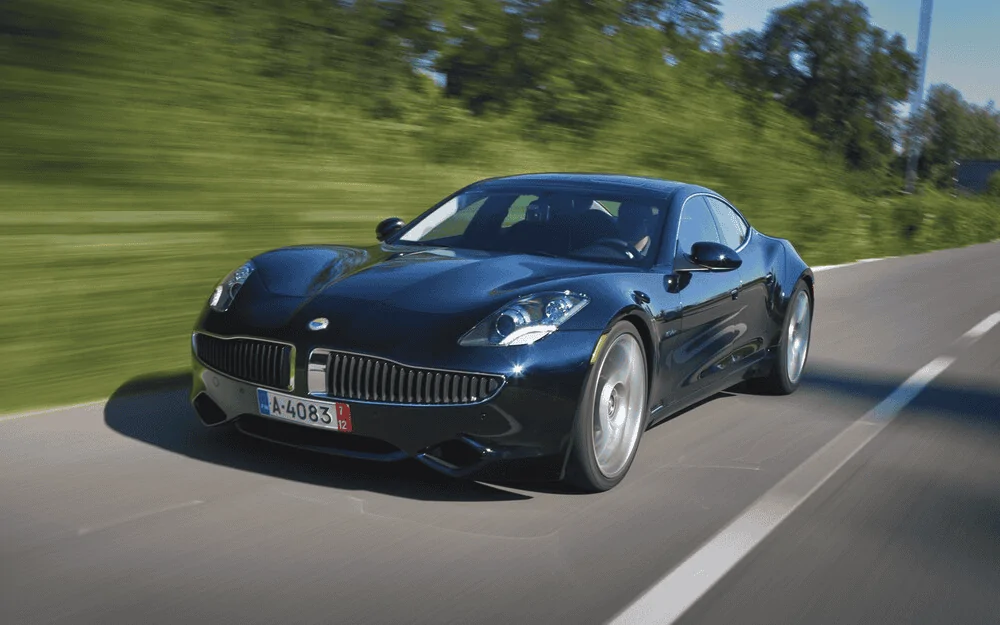
There have been some more fun to drive (at least compared to a volt, which actually isn't fully a series hybrid) series hybrid offerings, but even they are relatively slow and heavy:

Jeep Wrangler JL Why the 2.0T? 1648139828289
 

Zandcwhite

Well-Known Member
First Name
Zach
Joined
Sep 4, 2019
Threads
11
Messages
8,307
Reaction score
14,200
Location
Patterson, ca
Vehicle(s)
2019 jlur
There have been some more fun to drive (at least compared to a volt, which actually isn't fully a series hybrid) series hybrid offerings, but even they are relatively slow and heavy:

1648139828289.webp
The series hybrids are definitely more fun to drive than the generator hybrids like the volt and prius prime. Of course the koenigsegg regerra takes hybrid performance to supercar levels. https://www.koenigsegg.com/car/regera/
 

gato

Well-Known Member
Joined
Apr 4, 2021
Threads
28
Messages
2,416
Reaction score
3,723
Location
New England
Vehicle(s)
2021 JLUR
Whenever a technology is on it's way out (e.g. diesel engines on light, non-towing, non-hauling vehicles), people always try to come up with ways to extend it's life.

Look at what Toyota on a few others are doing trying to create an artificial manual transmission for EVs that don't need one.

Diesel engines have simply crashed and burned for light, non-towing/non-hauling vehicles. In the US we think diesel is a novelty and some are in the honeymoon phase with them. But in Europe where up until 2015 diesels were 70-80% of new passenger vehicle sales it has crashed to single digits, as soon as the governments cracked down on VW-style emissions cheating.

A diesel is simply non viable, due to weight, emissions control complexities and cost, except in corner cases (long distance towing/hauling). Hybrids are at best a transitioning technology and will eventually be phased out also. Combining the two would be an investment that no automaker will make.

The future of the mainstream automobile is turbo-gasoline direct injection engines and pure EVs. Those are the only powerplants receiving any meaningful investment, and 80%+ in on the latter.
 

Sponsored

mllcb42

Well-Known Member
First Name
Matt
Joined
Oct 25, 2021
Threads
2
Messages
967
Reaction score
1,405
Location
Florida
Vehicle(s)
4xe HA, 392XR
The series hybrids are definitely more fun to drive than the generator hybrids
Generator hybrids are series hybrids.

Neither the volt or the prius prime are generator hybrids. They're both, like the 4xe, series/parallel hybrids that can operate as either a series hybrid or a parallel hybrid. Unlike the 4xe, they spend a lot more of their life living on the series side of things than on the parallel side of things though.
 

Zandcwhite

Well-Known Member
First Name
Zach
Joined
Sep 4, 2019
Threads
11
Messages
8,307
Reaction score
14,200
Location
Patterson, ca
Vehicle(s)
2019 jlur
Generator hybrids are series hybrids.

Neither the volt or the prius prime are generator hybrids. They're both, like the 4xe, series/parallel hybrids that can operate as either a series hybrid or a parallel hybrid. Unlike the 4xe, they spend a lot more of their life living on the series side of things than on the parallel side of things though.
It's a series and parallel hybrid, or a hybrid hybrid? Seems overly complicated to me.
 

mllcb42

Well-Known Member
First Name
Matt
Joined
Oct 25, 2021
Threads
2
Messages
967
Reaction score
1,405
Location
Florida
Vehicle(s)
4xe HA, 392XR
It's a series and parallel hybrid, or a hybrid hybrid? Seems overly complicated to me.
There are series hybrids, which are what you're referring to as a "Generator hybrid" where the gas engine is used for creating electricity and not connected to the wheels. The bmw i3 rex, fisker karma, etc fall into this category.

There are parallel hybrids where the gas engine drives the wheels and the electric engine drives the wheels (or one at a time). Mild hybrids like the regular prius fall into this category (there are probably some phevs that do too).

There are series/parallel hybrids where the vehicle can behave as either a series hybrid by having the gas engine drive a generator disconnected from the wheels or as a parallel by driving directly. The volt, the prius prime, the 4xe, etc all fall into this category.
 

BXFXJeep

Well-Known Member
Joined
Jun 13, 2019
Threads
20
Messages
3,713
Reaction score
4,654
Location
Toronto, ON
Vehicle(s)
2021 4xe Sahara
The 2.0 option make vehicles easier to export, might be the reason many manufacturers are increasingly using a 2.0 power plant.

Engines like 3.6 usually get hit with 100% duties, and other heavy penalties when exported to the developing countries, like in the Caribbean and South America.
Sponsored


Top