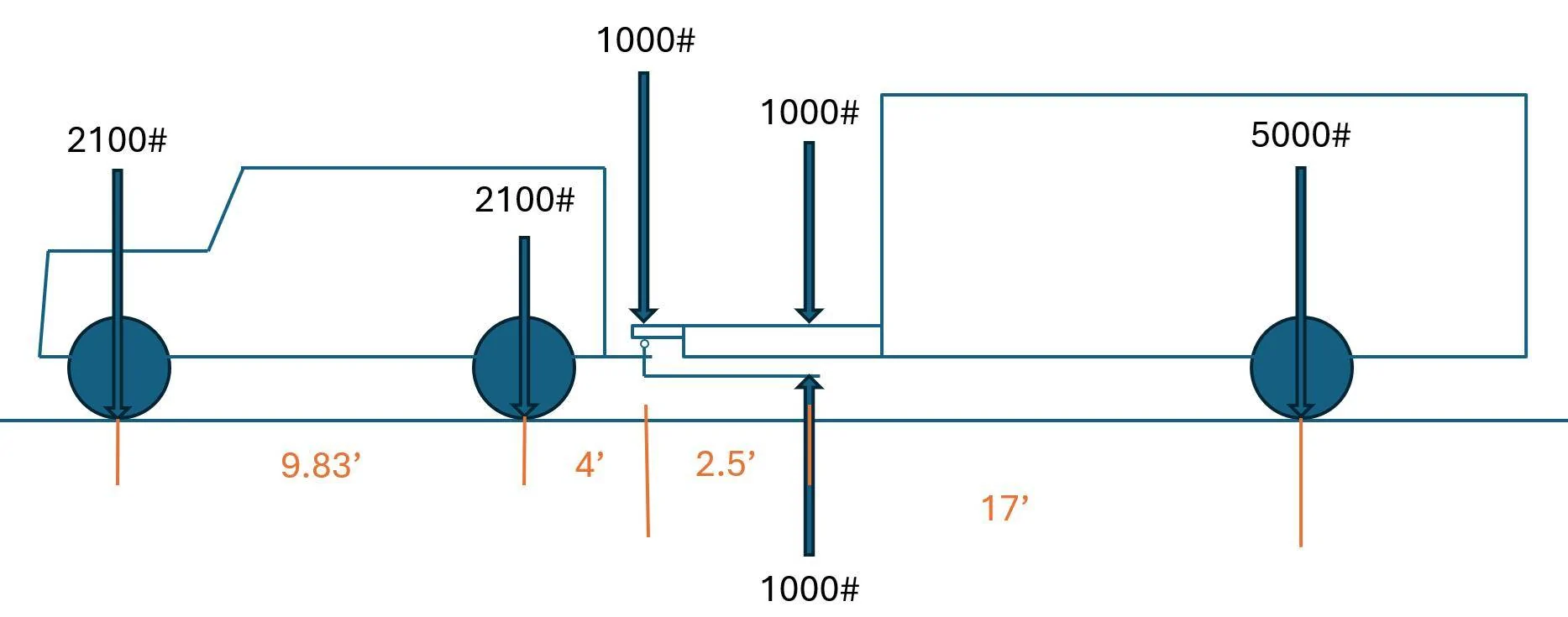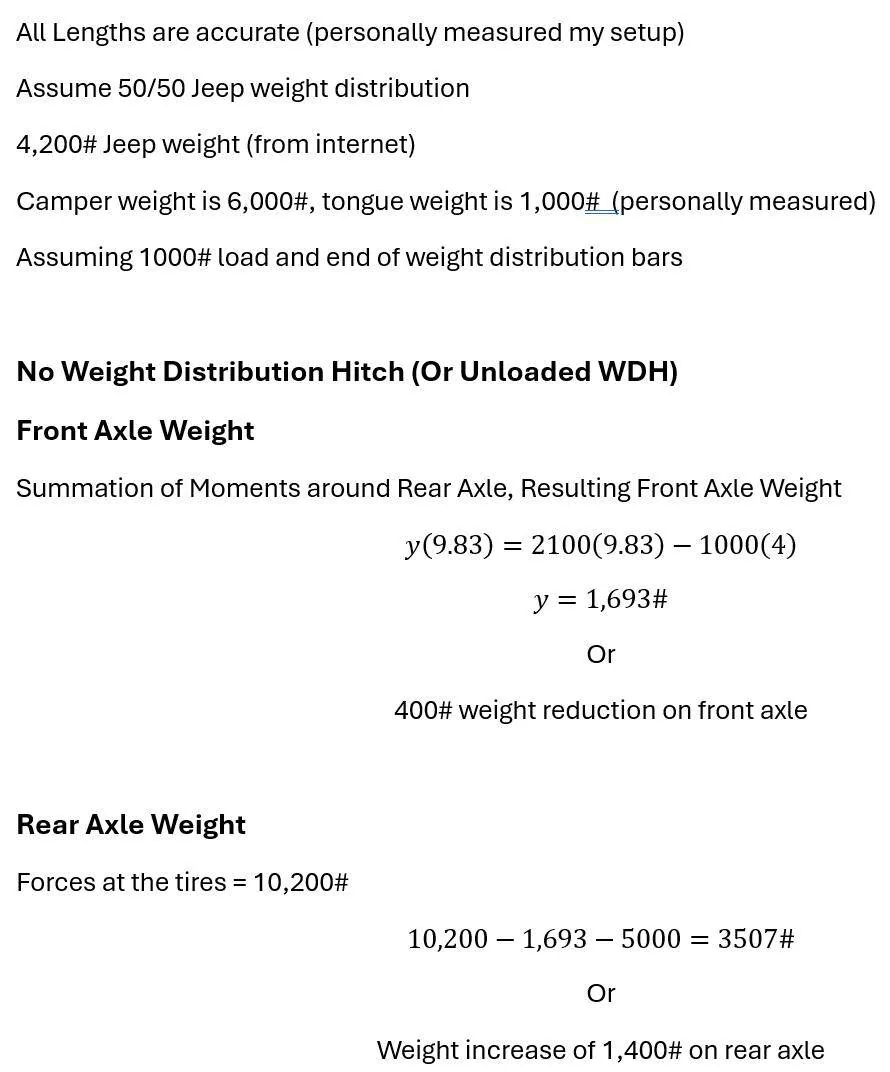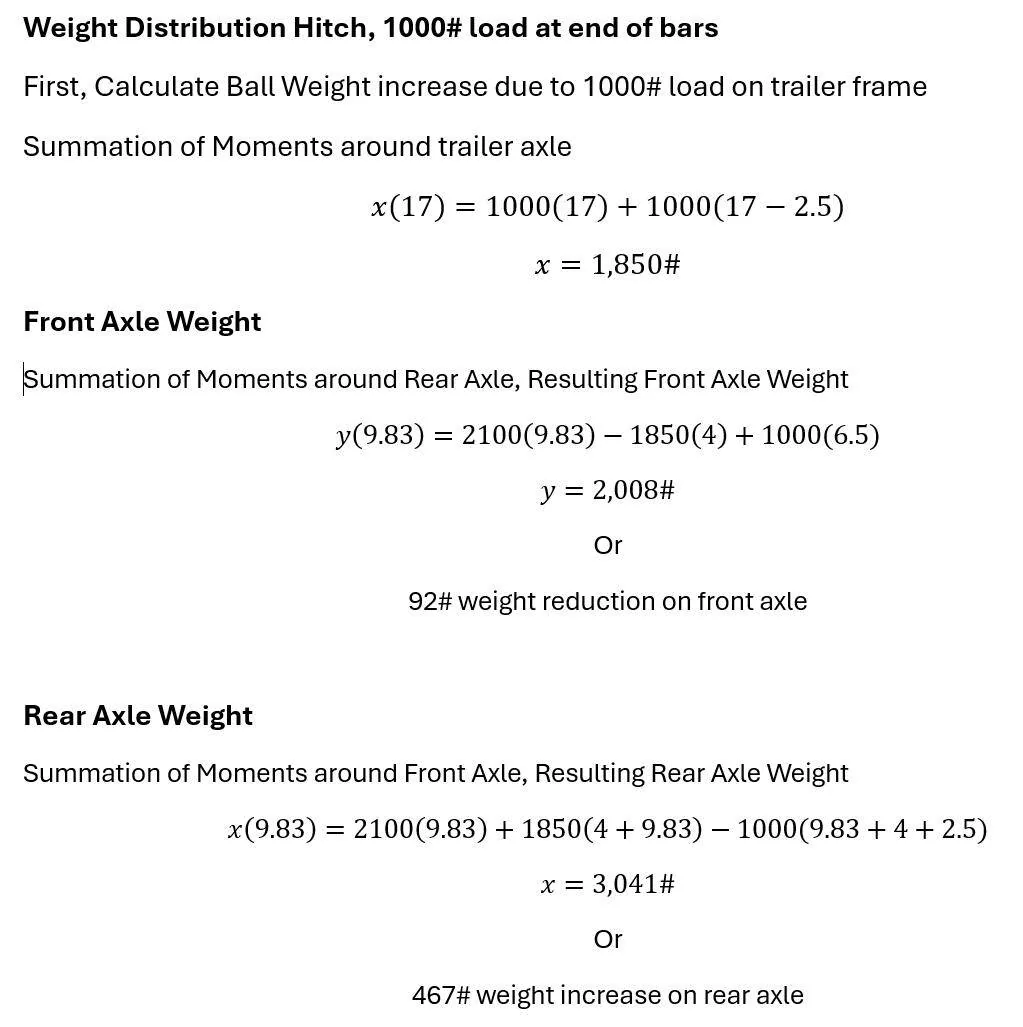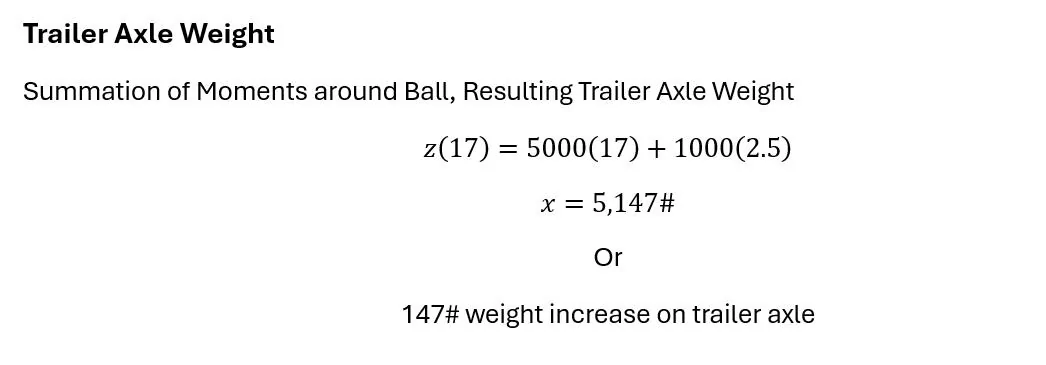
OP
OP

Yellow Cake Kid
Well-Known Member
- Thread starter
- #16
Hi,Actually, this wouldn't provide much of the same benefit as a WD hitch. What this would do is add more total weight to the tow vehicle and shift the center of mass forward, depending on how far out the weight is attached, but wouldn't result of a transfer any of the weight from the rear of the vehicle. The WD hitch does this by (from an elementary perspective) rotating the shank of the hitch downward relative to the ball to apply torque. This generates torsion which acts to shifft the load applied to the hitch both forward and back, similar to how a leaf spring works. It's at it's most reductive level essentially a mechanical leaf spring.
I just returned from a vacation and have been scratching my head, trying to figure out how to respond to this statement because it is generally understood that introducing an applicable amount of torque to a static body is not dependent on a specific point of connection.
The force introduced by the spring bars measured as pounds per foot and the force of gravity measured as weight are both examples of force.
In other words, your explanation that adding weight to the front would add weight is correct, and doing so would shift the center of mass forward. Still, these observations do not necessarily support the conclusion that a fore-aft weight transfer does not occur.
Force is force.
The video demonstration I mentioned and linked to above highlights this concept. The weight measurements were all made with the weight distribution of the tow hitch's weight included, as it was installed regardless of whether the spring bars were connected or disconnected.
The difference in perceived total weight recorded in that test can be attributed to summing the total downward force in the system. The difference results from increased leverage when the trailer tongue is suspended by the vehicle axles and the downward vector of the rotational force introduced by the tensioning of the springs in the spring bar assembly.
Notice how the total gets "heavier" as the downward force increases.
Total weight measured before connecting vehicle and trailer: 11585 pounds
Total weight measured with vehicle and trailer connected but weight distribution springs disconnected: 11695 pounds
Total weight measured with a Weight Distribution Hitch connected: 11725 pounds
I would like to see the test replicated. I wish I had access to all those scales. I find the subject interesting.
Sponsored