Sponsored

This Confuses Me

OP
OP

AndySpill

Well-Known Member
First Name
Andy
Joined
Oct 24, 2023
Threads
71
Messages
1,654
Reaction score
1,270
Location
Pittsburgh
Vehicle(s)
2018 JL Sahara
And still wondering ”why” the rocket scientists as Stellantis though adding a motorcycle battery and extra electrical components made more sense than just simply putting in a more powerful main battery. (‘Course what do I know, I only worked as an engineer for 45 years?)
My theory: Stellantis needed to pass the EPA's test to qualify for the mileage reporting benefits of having a non-latching ESS system, not make a system that actually would work, with more expensive components whose costs would have to in part be passed on the consumer. They knew it unwise to do ESS with one battery like so many other manufacturers given home many owners outfit their rigs with current drawing appliances like winches and lights, and you name it that simply don't get put on other ESS equipped vehicles.

Again, my theory.
Sponsored

 
OP
OP

AndySpill

Well-Known Member
First Name
Andy
Joined
Oct 24, 2023
Threads
71
Messages
1,654
Reaction score
1,270
Location
Pittsburgh
Vehicle(s)
2018 JL Sahara
Another AUX delete ESS thread.

1703944517735.gif
Disagree Don. Rather this is (at least it was intended to be) a "why yank fuse 42 when disconnecting the Aux battery thread?

Nobody's disagreeing that the Aux battery should be disconnected for those not wanting to run ESS. Agreed: that ship has sailed and then some. What's being debated is the pros and cons of how/if to do the other things (pulling Fuse 42 or even jumpering N1 and N2 in the PDC: the original technique) that comes along with taking the Aux battery out of the loop.
 

Bobby Hank

Well-Known Member
First Name
Robert
Joined
Oct 14, 2023
Threads
45
Messages
691
Reaction score
1,224
Location
Gulf Breeze Florida
Vehicle(s)
2024 JL Wrangler Rubicon X 2D
Occupation
Educator
That's an explanation, even if I might draw a different conclusion, I can respect. You bought tech to turn ESS off without seeing EVIC lights telling you that its off.
It’s one of the reasons. I had already gotten adept at hitting the button myself on start-up.
I also wanted to use fogs and brights together, kill the 3 honks leaving the Jeep while running, have a hood alarm, extended garage opener function, and be able to use lockers in 2WD and 4WD high.
 
OP
OP

AndySpill

Well-Known Member
First Name
Andy
Joined
Oct 24, 2023
Threads
71
Messages
1,654
Reaction score
1,270
Location
Pittsburgh
Vehicle(s)
2018 JL Sahara
All this talk about turning off ESS….
I haven’t even seen my ESS come on in well over a year and a half, at least. Maybe two? ?‍♂
I think you're missing the point, no offense intended. This thread is a discussion concerning what if anything to do beyond taking your Aux battery out of the vehicle's power plant (if you choose to go that route) and what steps if any (pulling Fuse 42, jumpering N1 and N2, not doing those things, buying ESS off tech) that come along with it.

I used to push the button to turn it off each time when I would get in to drive it, right after I bought the Jeep brand new back in June 2021… it worked for the first 6? months….now it never happens. Ever. It’s like my Jeep has somehow “learned” I don’t like it, and doesn’t even try do it anymore. Really.
I think you're conflating turning ESS off, or the vehicle not engaging it for you because your Aux battery lacks voltage, with the idea that turning ESS off being a smart path to take after disconnecting the Aux battery. They are two separate things. Push the ESS off button, don't, buy aftermarket tech to do it, don't, it's all good and has nothing to do with the fact that the Aux battery may cannibalize your main battery.

I haven’t disconnected anything electrical or pulled any fuses. The only mechanical upgrades I’ve done are rubi takeoff suspension and 33” Falken tires / pro comp wheels. Sometimes I run the heat/AC, sometimes I don’t. Run topless multiple weeks a year when I can; don't ever see ESS. And no, haven’t had any electrical issues or gremlins, either. Charging / alternator is working well, and no dashboard lights.
I'm going to try to paraphrase you and I may fail badly, sorry. You don't like ESS and it doesn't turn on so case closed. Reality, it hasn't been turning on for you likely because your Aux battery voltage is too low and that battery may be taxing your main battery.

I did figure out early on (at least with my Jeep) that “how” you brake can keep it from coming on too, though.
Steve: I can't drive this point home enough. Keeping ESS from engaging, or not, has no bearing on the possibility of the Aux battery cannibalizing the main provided that battery is connected. Some owners may want ESS, trickle charge their JLs batteries, do long high speed trips: it's all good to me. My simple premise is if you're going to disconnect the Aux battery, why pull /fuse 42?


Like if you maintain very light brake pedal pressure and slow to stops gently at stop signs / lights, it won’t come on. I did this for a while early on when driving and eventually it just stopped coming on altogether. Maybe that’s how it learned? Drive like an old geezer long enough and it just gives up? ?‍♂ Haha I don’t know…. I know I stopped braking like that to test it a while ago - brake normally now… still nothing. No button pushes. No ESS ever.

Is my Jeep magic? ?
Nope, your Aux battery probably isn't getting voltage levels consistent with allowing ESS to engage.
 
OP
OP

AndySpill

Well-Known Member
First Name
Andy
Joined
Oct 24, 2023
Threads
71
Messages
1,654
Reaction score
1,270
Location
Pittsburgh
Vehicle(s)
2018 JL Sahara
Let me try approaching this from a different angle. If someone told me, accurately of course, that when EVIC lights come on in the dash, like the ESS off light I've discussed, that other things, like (pure guess) remote start won't work, then THAT would definitely be a good reason I would respect to pull Fuse 42 and turn ESS off yourself: button push and/or tech to do it.

Still more, liek I've said, anyone who says, "I hate EVIC lights," I respect that.

And I can respect, "I wanted a JL Tazer for other things, and since I have it, Iet it turn ESS off and I will pull Fuse 42 to avoid the ESS off EVIC light."

But are there greater implications to that ESS off light in the EVIC coming on that I am, in my ignorance missing, beyond "the light's annoying."
 

Sponsored

SargeDiesel

Well-Known Member
First Name
Michael
Joined
Jul 27, 2022
Threads
10
Messages
961
Reaction score
1,023
Location
Birmingham, AL
Vehicle(s)
JTRD
That's an explanation, even if I might draw a different conclusion, I can respect. You bought tech to turn ESS off without seeing EVIC lights telling you that its off.
Yeah, you lost me at "toys like the Tazer".

Most people that deleted the Aux , do so because they don't like how the system works and how it can potentially leave them stranded.

Seperate issue:

They purchase an ESS eliminator for the same reasons. They don't like the system, they don't want to use the ESS and they don't want to push an "off" button at every start of the vehicle and they do not want a malfunction light continuously illuminated .

Separate issue:

They pull fuse 42 because they don't want to be reminded of the lack of ESS functionality everytime they start their vehicle or so they don't have to push start multiple times in order to simply crank the vehicle... I do not agree with you that many do it in order to NOT use the main battery... because with the proper sized battery, it will have more than enough capacity to provide enough power to properly support the ESS function.

I'm not sure I understand the point of the post... is it to share your knowledge/confusion on NOT pulling fuse 42 or because you really want to know why people buy ESS eliminators ?... based on your comments and knowledge, it seems you already know both answers.
 
Last edited:

JLfromCA

Well-Known Member
First Name
JL
Joined
Dec 15, 2023
Threads
4
Messages
507
Reaction score
640
Location
California
Vehicle(s)
2019 Mojito! 2 Door Rubicon/2024 Sarge Green 392
This is a warning light debate . If you don’t care about warning lights, you could do the hood latch switch , remove aux battery to disable ESS and have a warning light. You can lower your air pressure to whatever you like as long as you don’t care about the warning light. The taser or j scan fixes that. Many of us here , me included don’t like the warning light.This seems like a warning light debate thread. The proper way to not have a warning light is pull fuse, 42 and disconnect the negative or live with the warning light bottom line.
 
OP
OP

AndySpill

Well-Known Member
First Name
Andy
Joined
Oct 24, 2023
Threads
71
Messages
1,654
Reaction score
1,270
Location
Pittsburgh
Vehicle(s)
2018 JL Sahara
Yeah, you lost me at "toys like the Tazer".

Most people that deleted the Aux , do so because they don't like how the system works and how it can potentially leave them stranded.
... the "system" here being (at least by my definition) the dual dissimilar size AGM batteries in parallel, not ESS, which can be on or off with one or two batteries


They purchase an ESS eliminator for the same reasons. They don't like the system, they don't want to use the ESS and they don't want to push an "off" button at every start of the vehicle and they do not want a malfunction light continuously illuminated .
...and my point is that if they leave Fuse 42 intact--yes--the first crank attempt will fail but all those thereafter will succeed on the first try, provided the main battery has power, and the EVIC will display an ESS off light and turn ESS off for the operator, rendering need for the tech that turns ESS off moot.

Which brings me to my original thought. Why do people buy ESS off tech? Is it that they don't like the ESS off light in the EVIC, or perhaps are there other downsides aside from this light, that I am unaware of, that suggest the keeping that light from appearing would be good, or perhaps because some people don't realize that there is a free way to turn ESS off that doesn't require pushing the ESS off button each time they crank or buying tech to do so for them?


Separate issue:

They pull fuse 42 because they don't want to be reminded of the lack of ESS functionality everytime they start their vehicle or so they don't have to push start multiple times in order to simply crank the vehicle...
I can't disagree with you Michael on why people buy ESS off tech. You've stated an opinion that my be true. But they only have to push start more than once, one time. Once the JL puts the ESS off light in the EVIC it cranks on the first try thereafter provide the main battery has the power to effect the crank.

I do not agree with you that many do it in order to NOT use the main battery... because with the proper sized battery, it will have more than enough capacity to provide enough power to properly support the ESS function.
I'm not sure what "it" you refer to. The only "it" that seems to make sense to me here is "run ESS with two batteries." That said, I agree with you that a larger single battery might allow ESS to run better, but I do agree with Stellantis' design to do ESS with two batteries on the JL, I just wish that 1) the batteries were of equal size, and 2) the vehicle periodically switched which battery was Aux, and which was the main.

Wranglers, need I tell you, are unique in the number of electrical current hungry things people customize them with. A single battery ESS system on most sedans IMHO is fine given that their owners far less likely to outfit these vehicles with such accessories. But with a Wrangler, the "perfect storm" of the biggest and best single battery, on a cold day, that's a few years old, powering accessories during an ESS event, could still find the battery's voltage drop, and the ESS event terminate, after the point where the battery has enough capacity to still crank the engine.

I'm not sure I understand the point of the post... is it to share your knowledge/confusion on NOT pulling fuse 42 or because you really want to know why people buy ESS eliminators ?... based on your comments and knowledge, it seems you already know both answers.
Perhaps its both, perhaps it's my ignorance. I suspect that people buy ESS eliminators as a product of three possible reasons:

1) I, the OP fail to realize good reason why keeping the ESS off light from appearing in the EVIC is a smart thing,
2) People fail to realize that if they want ESS turned off, without pushing the button each time that they crank, that there is a way that the vehicle will turn ESS off for you: just don't pull Fuse 42, and don't spend money on ESS eliminator tech, or
3) People don't like lights in their EVIC.
 
OP
OP

AndySpill

Well-Known Member
First Name
Andy
Joined
Oct 24, 2023
Threads
71
Messages
1,654
Reaction score
1,270
Location
Pittsburgh
Vehicle(s)
2018 JL Sahara
This is a warning light debate . If you don’t care about warning lights, you could do the hood latch switch , remove aux battery to disable ESS and have a warning light. You can lower your air pressure to whatever you like as long as you don’t care about the warning light. The taser or j scan fixes that. Many of us here , me included don’t like the warning light.This seems like a warning light debate thread. The proper way to not have a warning light is pull fuse, 42 and disconnect the negative or live with the warning light bottom line.
Is it, or is it also in part for some owners ignorance that there's a free way to turn ESS off, or is keeping that light from appearing in the dash useful is some way I don't appreciate?

I admit to not knowing.
 
Last edited:
OP
OP

AndySpill

Well-Known Member
First Name
Andy
Joined
Oct 24, 2023
Threads
71
Messages
1,654
Reaction score
1,270
Location
Pittsburgh
Vehicle(s)
2018 JL Sahara
The Jeep battery system functions as one battery except when the vehicle is in a stop/start event. In that case, the small battery keeps cab items running. The 2 batteries are joined again for the vehicle restart.
This is not exactly true, and clarification would be picky, I think, were it not relevant to what's being discussed. Dual AGM battery JLs also, as per factory, separate the batteries just prior to cold crank to test the Aux battery. If the Aux battery is disconnected but Fuse 42 isn't, this test will fail and the vehicle won't crank (on the first try but for early model 2018's not flashed.) Thereafter, future cranks happen on the first try.

Many Jeep owners have eliminated the complications of have 2 batteries by removing the aux battery negative cable.

Pulling fuse F42 is not necessary. Pulling F42 disconnects the Power control Relay. This keeps the auto start (AKA - Avengers) light from showing an alarm.

Removing the aux battery and fuse F42 does NOT change the way auto stop/start works. Your Jeep will function as designed.
All true Andy, but not on my point which is: why do people pull Fuse 42 and buy ESS off tech when keeping the fuse in place would turn ESS off for them? Is it ignorance, distaste of an EVIC ESS off light or some factor I don't appreciate, like "idiot lights" in the dash negatively effecting the operation of other aspects of the vehicle that I'm unaware of.

I can appreciate people's desire to not see "idiot lights" in the dash: there amber warning motif raising concern. But this one's telling you that something you want (ESS off) has been done for you: a good thing.

The sum of the power (Cold Cranking Amps) of the 2 Mopar batteries is somewhere between 800 and 900 CCA. A single H7 battery can be bought that is as powerful as the 2 Mopar batteries together.
Again true. Heck, I'll do you better, let's assume a single battery could be acquired with CCA's exceeding those of the two batteries fully charged. That would not necessarily be a better setup than two batteries: not the crappy two battery setup Stellantis made, but one with equally sized batteries (like Genesis Offroad offers) perhaps where the roles each battery plays as Aux and Main battery switch off.

Unlike in a sedan, unlikely to be customized like many Wranglers, electrical current hungry JL aftermarket appliances could rob just such a super battery, on a cold day, almost at the end of its useful life, of enough current that by the time ESS early terminates due to the voltage drop from running these appliances, that the once super battery lacks the juice to crank the engine. This (to get off topic) is why the two battery solution makes sense to me, just not the dissimilar sized one Stellantis designed, where one of the batteries is preserved during the ESS event for the primary purposes of re-cranking the engine after the ESS event is over.


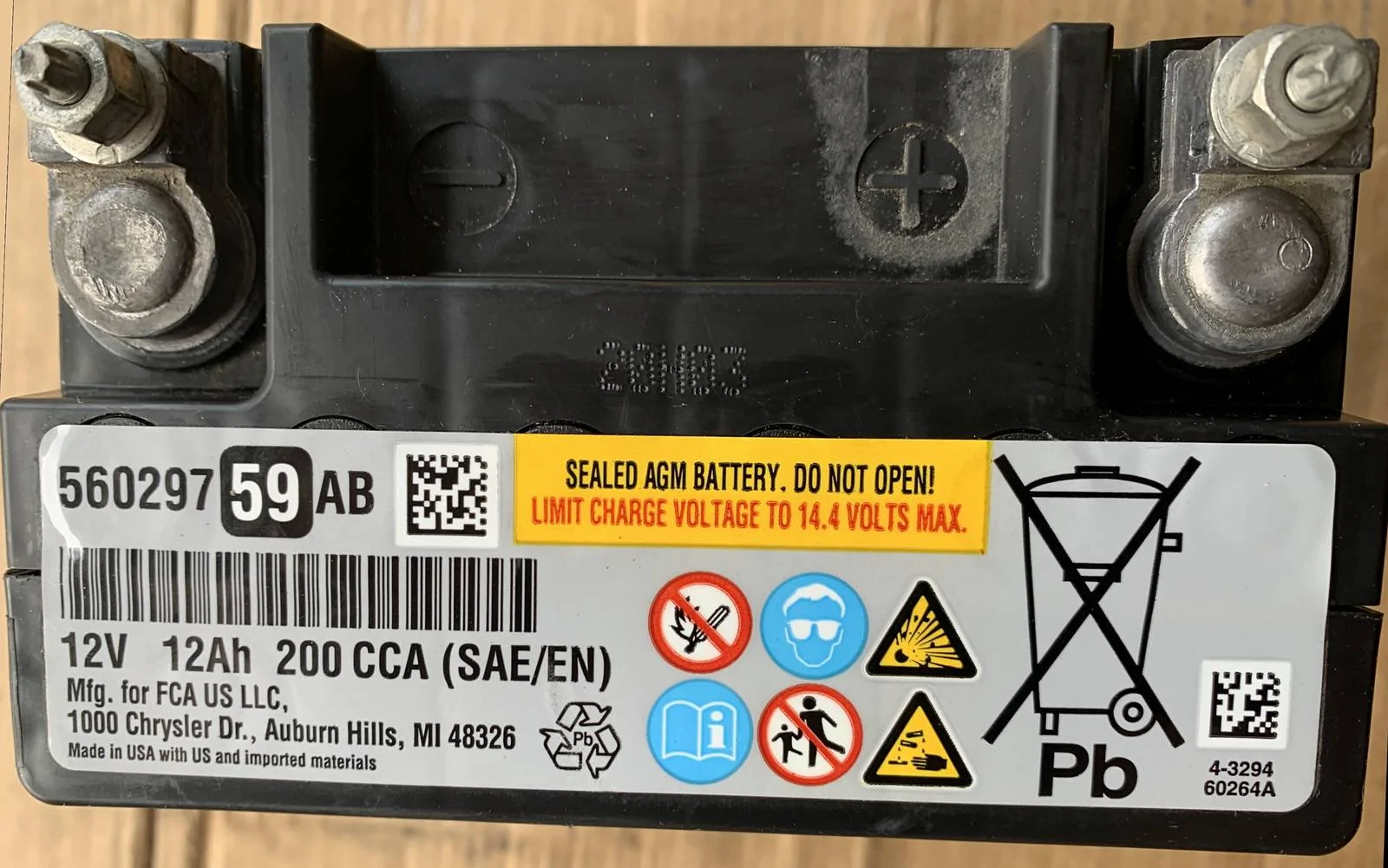
Aux battery:
i-LLJV7dx-X3.jpg


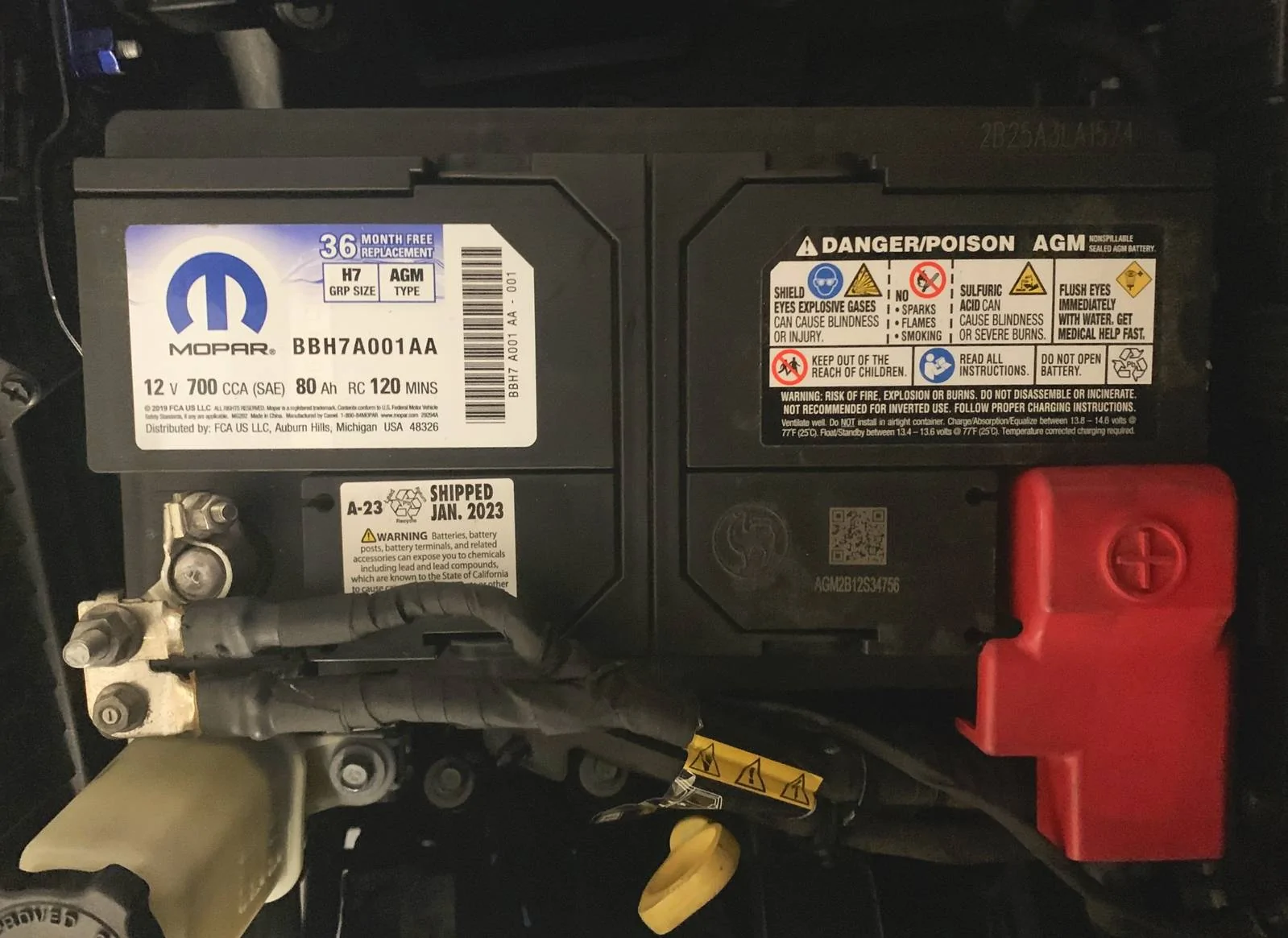
Mopar main battery (this one is 700 CCA - some are delivered with lesser batteries):
i-H58dQk7-X3.jpg


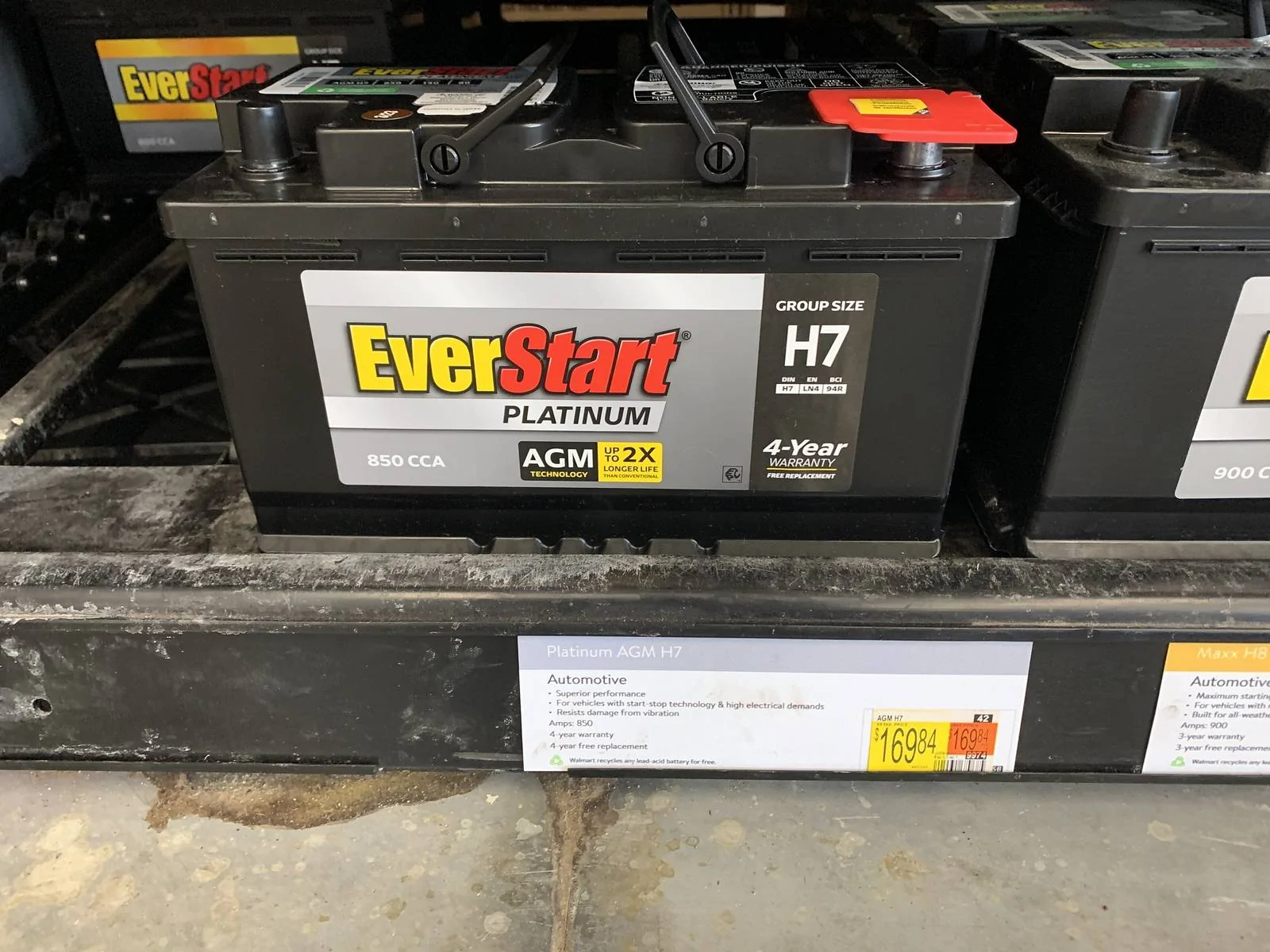
Everstart battery from Walmart:
i-4rrpkhs-X3.jpg


https://www.jeepgladiatorforum.com/...teries-and-charging-system.75512/post-1231320
 

Sponsored

andy29847

Well-Known Member
First Name
Andy
Joined
Oct 22, 2022
Threads
15
Messages
440
Reaction score
714
Location
Trenton, SC
Vehicle(s)
2020 JLUR
What am missing, other than people don't like to see idiot lights in the dash so they're taking the Fuse 42 pull and ESS off tech purchase route?
I run one battery and hit the ESS off button the first time I think about it. I have considered buying one of the stop/start off devices but I can't bring myself to write the check.

I've tried driving with the aux battery disconnected and the F42 fuse in. It works like you say. I don't mind the "Avenger" light just above the gas gauge. What I don't like is the message screen displaying "service stop/start system" while I drive. I believe that this message will always appear on start. A driver can scroll away from the message which is almost the same as turning off the stop/start using the button every time you drive. :) Unknown for me is if the constant "service stop/start system" will prevent a driver from seeing another more important message. Also, in the event that a Jeep driver ever has to take their vehicle in for service, chances are the service tech is going to react to the "service stop/start system" message.

FWIW, I believe that my Jeep, the one where I deleted the aux battery and removed the F42 fuse, operates exactly as designed except for the cold crank test. I think the cold crank test is still made, it's just that there is no battery separation step. The cold crank test sees the main battery. In the event the main battery fails the cold crank test, the Jeep probably would not start anyway. Boosting the Jeep (with one battery) should work just like the other cars and trucks I have had over the decades.
 

andy29847

Well-Known Member
First Name
Andy
Joined
Oct 22, 2022
Threads
15
Messages
440
Reaction score
714
Location
Trenton, SC
Vehicle(s)
2020 JLUR
Again true. Heck, I'll do you better, let's assume a single battery could be acquired with CCA's exceeding those of the two batteries fully charged. That would not necessarily be a better setup than two batteries: not the crappy two battery setup Stellantis made, but one with equally sized batteries (like Genesis Offroad offers) perhaps where the roles each battery plays as Aux and Main battery switch off.

Unlike in a sedan, unlikely to be customized like many Wranglers, electrical current hungry JL aftermarket appliances could rob just such a super battery, on a cold day, almost at the end of its useful life, of enough current that by the time ESS early terminates due to the voltage drop from running these appliances, that the once super battery lacks the juice to crank the engine. This (to get off topic) is why the two battery solution makes sense to me, just not the dissimilar sized one Stellantis designed, where one of the batteries is preserved during the ESS event for the primary purposes of re-cranking the engine after the ESS event is over.
You mean you want an RV? :)
 

andy29847

Well-Known Member
First Name
Andy
Joined
Oct 22, 2022
Threads
15
Messages
440
Reaction score
714
Location
Trenton, SC
Vehicle(s)
2020 JLUR
Be advised that if you disconnect the aux battery without pulling the F42 fuse, you will get a stop/start alarm. You should see both the "Avengers" light above your fuel gauge and an message in the comm center between the gauges. If you are like me, and after trying this method you decide to pull F42, then you have to clear the alarm by removing the negative battery cables for at least 30 seconds.
 

SargeDiesel

Well-Known Member
First Name
Michael
Joined
Jul 27, 2022
Threads
10
Messages
961
Reaction score
1,023
Location
Birmingham, AL
Vehicle(s)
JTRD
Is it, or is it also in part for some owners ignorance that there's a free way to turn ESS off, or is keeping that light from appearing in the dash useful is some way I don't appreciate?

I admit to not knowing.
Andy

I don't think you are missing anything, you seem well informed.

IMO,

Most know pulling fuse 42 isn't absolutely necessary in order to turn off the ESS... but they pull it to do away with dash lights and other ESS system warnings. The only true usefulness of pulling fuse 42 I can see, is if the lights/warnings bother you.

Me personally, I don't want to see the warning lights and I don't want to have to push my ignition button more than once to crank the vehicle.

In my case, I just don't care for the ESS system in general. I still have both oem batteries installed and I also have an ESS eliminator installed. I installed it because I don't want any extra dash lights, I want my ESS system to remain off as designed and I want my ESS to remember to remain off without me having to push the ESS on/off button at every start.

I am not ready to separate or delete the aux battery or make any other mods concerning battery or ESS at the moment, so this works for me.

The biggest reason and one I haven't seen mentioned yet, in favor of the ESS eliminator tech, is I can still turn on/off my ESS whenever I want and I can have that setting remembered until I decide to change it... for me, it makes my purchase well worth it.
 
OP
OP

AndySpill

Well-Known Member
First Name
Andy
Joined
Oct 24, 2023
Threads
71
Messages
1,654
Reaction score
1,270
Location
Pittsburgh
Vehicle(s)
2018 JL Sahara
You mean you want an RV? :)
I think..I could be wrong..that this means that I want two batteries, like in an RV, a "house" one often stored inside the living space and LiFePO4 to run appliances, because it doesn't off gas but is resistant to use below freezing, and some form of a Lead Acid (in a JL an AGM) under the hood, better resistant to cold but with need to ventilate.

If so--:)--and let me clarify, I'd more want a Genesis Offroad like Setup that merely alternates which equally sized AGM battery under the hood plays the role of main, and which of Aux: no fancy offroad power mgmt needed for me.
Sponsored


Top