Sponsored

Start/Stp Unavailable...P0365

Cassie

New Member
First Name
Cassandra
Joined
Jun 20, 2021
Threads
1
Messages
4
Reaction score
0
Location
31635
Vehicle(s)
Jeep Wrangler JL
Hello! I have read through so many forums looking for a solid answer and didn't come across any.. hopefully someone will have the answer! I am by far not a mechanic.. I'm a YouTube mechanic haha
Does anyone have a solid answer for the start/stop unavailable? I have replaced my aux battery (terrible to get to) and when I went to get my core back..the original was good! It goes off for a bit and then comes right back on. I'm at a loss on this one..
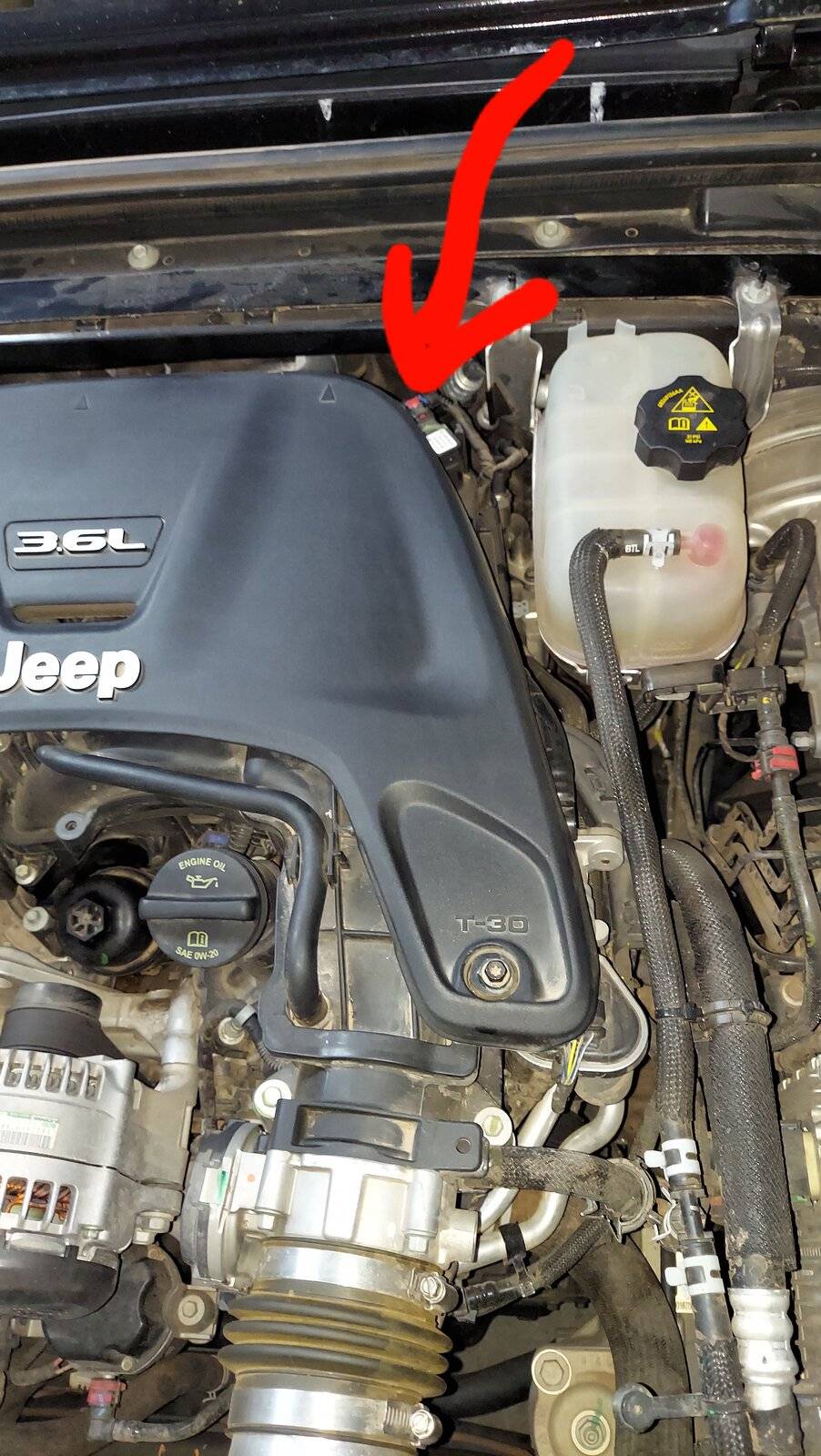
I also have the P0365--camshaft position sensor circuit bank 1 sensor 2. Having a hard time getting to it (this is driver side correct?), but if I can get to it....would this possibly solve both of my issues? I did take the cover off when trying to get to it. The arrow is pointing down under all of that for those that don't know where it is located.
Any tips on how to get to this sensor an easier way, or what else I can do to fix these issues are GREATLY appreciated!!

Jeep Wrangler JL Start/Stp Unavailable...P0365 20210620_180303
Sponsored


Yellow Cake Kid

Well-Known Member
Joined
Nov 20, 2019
Threads
107
Messages
980
Reaction score
617
Location
USA
Vehicle(s)
Jeep
I don't have a direct answer to share, but it may be helpful to understand that a basic battery load tester can tell you if a battery is DOA dead, but it is not very effective at actually estimating if a battery is good.
 
OP
OP

Cassie

New Member
First Name
Cassandra
Joined
Jun 20, 2021
Threads
1
Messages
4
Reaction score
0
Location
31635
Vehicle(s)
Jeep Wrangler JL
I don't have a direct answer to share, but it may be helpful to understand that a basic battery load tester can tell you if a battery is DOA dead, but it is not very effective at actually estimating if a battery is good.
The new battery is installed, but because he said the original was good was assuming that was not my issue to begin with
 

Yellow Cake Kid

Well-Known Member
Joined
Nov 20, 2019
Threads
107
Messages
980
Reaction score
617
Location
USA
Vehicle(s)
Jeep
If the Jeep is a couple years old and you use the ESS function then I suggest that you can feel good about having replaced the extra battery. How about the primary battery, obviously it still starts the Jeep, but if the computer is occasionally reluctant to trust it too run an ESS cycle the most likely reason is that it senses that the primary battery is no longer in tip top form.

Good luck!
 
OP
OP

Cassie

New Member
First Name
Cassandra
Joined
Jun 20, 2021
Threads
1
Messages
4
Reaction score
0
Location
31635
Vehicle(s)
Jeep Wrangler JL
If the Jeep is a couple years old and you use the ESS function then I suggest that you can feel good about having replaced the extra battery. How about the primary battery, obviously it still starts the Jeep, but if the computer is occasionally reluctant to trust it too run an ESS cycle the most likely reason is that it senses that the primary battery is no longer in tip top form.

Good luck!
I didn't even think about the main battery!! I've never had any issues starting...does the battery indicator in the dash menu thing show voltage for main or aux battery? It still shows the same as when I bought her a couple years ago so I never though about the main
 

Sponsored

Yellow Cake Kid

Well-Known Member
Joined
Nov 20, 2019
Threads
107
Messages
980
Reaction score
617
Location
USA
Vehicle(s)
Jeep
It shows the current state of the charging system and the alternator output. this measurement can offer some clues about the state of the battery(s), but does not actually indicate the standing charge on the batteries.

The Jeep can control how hard the alternator will work to suit different circumstances.

When the dash says something like 14.2v it indicates that the Jeep has the alternator running at a robust output because the battery(s) need to be charged and/or the power draw of all your systems e.g. lights, AC, radio etc. require the energy to be bolstered by the charging system.

When the dash says something like 13v it indicates that the alternator is running at minimal output because the battery(s) does not need further charging and the power is sufficient to run all the systems.

If you drive short trips, and especially if you use ESS, the batteries are unlikely to ever be fully charged and so the system is always operating in a state of playing catch up. You may rarely see the dash indicator read lower than 14v because the system is always trying to reload the battery(s).

The subject of battery life cycle and life span is a lot more complicated than any single post can explain, but that is the basic idea.

An interest in battery health is complicated by the fact that testing batteries is an inexact science.

Having said that, the vehicle's onboard Intelligent Battery Sensor is intended to acquire lots of high quality data while the battery is in the actual operating environment, and process the data using algorithms that have proven to be effective.

The point being; if the vehicle system indicates that the battery is not ready to run a ESS cycle, it is highly likely that the vehicle understands the circumstance better than we can just by using typical battery measuring tools commonly available in a mechanics bay.

That is why I suggest that the start stop warning is a compelling clue that the primary battery may not be in top form.
 
OP
OP

Cassie

New Member
First Name
Cassandra
Joined
Jun 20, 2021
Threads
1
Messages
4
Reaction score
0
Location
31635
Vehicle(s)
Jeep Wrangler JL
It shows the current state of the charging system and the alternator output. this measurement can offer some clues about the state of the battery(s), but does not actually indicate the standing charge on the batteries.

The Jeep can control how hard the alternator will work to suit different circumstances.

When the dash says something like 14.2v it indicates that the Jeep has the alternator running at a robust output because the battery(s) need to be charged and/or the power draw of all your systems e.g. lights, AC, radio etc. require the energy to be bolstered by the charging system.

When the dash says something like 13v it indicates that the alternator is running at minimal output because the battery(s) does not need further charging and the power is sufficient to run all the systems.

If you drive short trips, and especially if you use ESS, the batteries are unlikely to ever be fully charged and so the system is always operating in a state of playing catch up. You may rarely see the dash indicator read lower than 14v because the system is always trying to reload the battery(s).

The subject of battery life cycle and life span is a lot more complicated than any single post can explain, but that is the basic idea.

An interest in battery health is complicated by the fact that testing batteries is an inexact science.

Having said that, the vehicle's onboard Intelligent Battery Sensor is intended to acquire lots of high quality data while the battery is in the actual operating environment, and process the data using algorithms that have proven to be effective.

The point being; if the vehicle system indicates that the battery is not ready to run a ESS cycle, it is highly likely that the vehicle understands the circumstance better than we can just by using typical battery measuring tools commonly available in a mechanics bay.

That is why I suggest that the start stop warning is a compelling clue that the primary battery may not be in top form.
Well..that most likely solves that issue! It was bouncing around 14.1-14.2 today.. and after I thought about it.. usually is around 13! Thank you!!! ..any inputs for the check engine light/code I am getting haha
 

Yellow Cake Kid

Well-Known Member
Joined
Nov 20, 2019
Threads
107
Messages
980
Reaction score
617
Location
USA
Vehicle(s)
Jeep
No, I'll probably learn something by following what you figure out with that.

One last comment; while the general statement that a 14+v dash readout indicates the alternator is producing high output, a really bad battery system can cause such a severe voltage drop that the charging system can not raise above some lower voltage level, such as 13v.

This can seem contradictory to what I explained above, but it is a quirk that you could encounter and observe if a battery placed an out of the ordinary demand on the charging system and the charging system was being unduly strained.

I mention this because it is rare to see the dash read the 13v range unless you drive on the highway for an hour or more, and you mentioned that it may have been a common occurrence on your Jeep.

Replacing the small battery may have been more helpful to your charging system than it seemed at first.
Sponsored


Top