Sponsored

Lets talk Anti-Seize

roaniecowpony

Well-Known Member
Joined
Dec 4, 2018
Threads
192
Messages
12,886
Reaction score
20,361
Location
SoCal
Vehicle(s)
2018 JLUR, 14 GMC 1500 CC All TERRAIN
Occupation
Retired Engineer
We all have either seen aftermarket parts that specify anti-seize or just instinctively know its a good idea to use it. But I never really thought much about what type of anti-seize.

Well, i have too much time on my hands now, being a retired engineer, and having just bought some Icon Rebound Pro beadlock wheels that specify anti-seize on those many bolts, I had to think about what kind of anti-seize.

Im sure, like many of you,
the only can of anti-seize I had was copper/grease stuff that all the auto parts stores carry. Well, in reading a bit, copper anti-seize in a steel and aluminum joint isn't a great combination in terms of corrosion. In fact , it's a lot less than great.

So reading more, a zinc anti-seize is more suitable in providing corrosion protection while still preventing thread galling of steel bolts in aluminum.

So all you beadlock guys might want to look at your anti-seize can.
Jeep Wrangler JL Lets talk Anti-Seize 20230518_033025
Sponsored

 
OP
OP
roaniecowpony

roaniecowpony

Well-Known Member
Joined
Dec 4, 2018
Threads
192
Messages
12,886
Reaction score
20,361
Location
SoCal
Vehicle(s)
2018 JLUR, 14 GMC 1500 CC All TERRAIN
Occupation
Retired Engineer

Ang1Sgt

Well-Known Member
First Name
Chris
Joined
Aug 27, 2022
Threads
16
Messages
491
Reaction score
1,068
Location
Rochester, New York
Vehicle(s)
2020 Willys 2 door, 2024 Subaru Outback,
Occupation
Retired X2
Vehicle Showcase
1
It’s a wonder what we do when we retire isn’t it! LOL!

I always thought that the Zinc Anti-Seize came about due to the price increase of copper based stuff. At AutoZone and places like that I’ve only seen the Zinc stuff so that is what I assumed.

As an Aircraft weapons specialist for over 18 years we never used any anti-Seize due to the need to have self locking screws in many areas as well as properly torqued fasteners. But this was in very specialized areas of the aircraft that were also repaired and time compliance inspections also.

I have jars of both types because back in the 60’s when I was wrenching on this, the copper stuff is all we had!
 
OP
OP
roaniecowpony

roaniecowpony

Well-Known Member
Joined
Dec 4, 2018
Threads
192
Messages
12,886
Reaction score
20,361
Location
SoCal
Vehicle(s)
2018 JLUR, 14 GMC 1500 CC All TERRAIN
Occupation
Retired Engineer
I just ordered that Marelube stuff. Although I no longer own any mares.
 

Sponsored

Pinion

Well-Known Member
First Name
Rob
Joined
Mar 17, 2021
Threads
10
Messages
6,375
Reaction score
43,597
Location
Hull, MA
Vehicle(s)
1971 FJ40, 22 Rubicon Unlimited
Occupation
Project Manager
That jar will last the rest of your life.
 
OP
OP
roaniecowpony

roaniecowpony

Well-Known Member
Joined
Dec 4, 2018
Threads
192
Messages
12,886
Reaction score
20,361
Location
SoCal
Vehicle(s)
2018 JLUR, 14 GMC 1500 CC All TERRAIN
Occupation
Retired Engineer

OSCAR II

Well-Known Member
Joined
Dec 29, 2020
Threads
3
Messages
622
Reaction score
438
Location
NJ
Vehicle(s)
14 JKF
When I started working in refineries they had always spec'd nev r seez brand on everything, conduit, fittings, bolts.
Then the spec's changed to loctite copper never seeze. I still use that on battery terminals.
But over the last ...20 years the plants have all switched to STL8. Its good stuff, I've read the properties on but its been to remember.

But one thing about any of them especially with aluminum. Make sure your threads are clean, start your hardware by hand and go easy. The never seeze acts like a thread cutting lube and you can cross thread, take out threads real quick! Seen it to many times.
 

Sponsored

CarbonSteel

Well-Known Member
Joined
Jul 21, 2019
Threads
305
Messages
5,795
Reaction score
8,212
Location
Colorado
Vehicle(s)
2001 Cherokee; 2023 Bronco Wildtrak; 2024 Grand Cherokee 4xe
Vehicle Showcase
1
In a former life, I worked in the heavy petrochemical/refinery sector and have a can of Fel-Pro C-100 Molybdenum Di-Sulfide anti-seize from the early 1980's that I still use today. It was one of the only anti-seize lubricants that could withstand the heat of the ethylene furnaces and still allow the B7 studs to be removed--heat resistance to 2400°F and was used where copper contamination was an issue.

As a testament to its anti-seize abilities, I can remember removing some studs from a Haveg 66 pipe which carried highly corrosive chlorinated hydrocarbons and had been in production for about 15 years.

The nuts on the studs had long since lost their flats but had enough metal remaining that they would not just break off and we could not cut them with grinders or a torch due to the explosive atmosphere. I was able to remove the remnants of the nuts with a couple of pairs of 20" channelock pliers without breaking the Haveg piping which is a casted fiberglass style piping.

I believe that Fel-Pro was purchased by Loctite and the closest thing to C-100 I see in their current line-up is LB 8009.
 

Old Jeeper

Banned
Banned
Banned
First Name
Don
Joined
Jul 7, 2022
Threads
43
Messages
2,841
Reaction score
4,209
Location
Port Charlotte, FL, Naples Fl, 17 Oaks Ranch, Tex
Vehicle(s)
2024 JLR-X 2023 JLR, 2021 JTR. 20 F 450 KR,
Occupation
US Army Infantry, IT Engineer
We all have either seen aftermarket parts that specify anti-seize or just instinctively know its a good idea to use it. But I never really thought much about what type of anti-seize.

Well, i have too much time on my hands now, being a retired engineer, and having just bought some Icon Rebound Pro beadlock wheels that specify anti-seize on those many bolts, I had to think about what kind of anti-seize.

Im sure, like many of you,
the only can of anti-seize I had was copper/grease stuff that all the auto parts stores carry. Well, in reading a bit, copper anti-seize in a steel and aluminum joint isn't a great combination in terms of corrosion. In fact , it's a lot less than great.

So reading more, a zinc anti-seize is more suitable in providing corrosion protection while still preventing thread galling of steel bolts in aluminum.

So all you beadlock guys might want to look at your anti-seize can.
20230518_033025.jpg
First of all its a complex world of grades and applications.

? Will you be using bolts with aluminum wheels? That requires a special formula due to, unlike metal corrosion.

All that said I have run Alum wheels and I used Gold Zfinc bolts because they are less affected by, unlike metal corrosion.

TIP: I never used anti-seize instead twice a year I replaced all my bolts and did maintenance on my wheels but removing the ring and cleaning around the rims and the backside of the rings. (use a brass wire wheel for that). I replaced my bolts twice a year until I bought a set of Rock Bolt Rings, WOW I loved them. I was a SERIOUS rock crawler off-roading constantly, I was out there 7 days a week, 52 weeks a year for 8 years, from Mexico to Utah, Texas to Cali.

Takeaway Bead Locks can be a headache and if you ignore them they come to haunt you. Also, BUY the best bead locks you can afford. I ran Walker Evans, why? His were custom-built for his racing team trucks, that ran and won the Baja 1000. I met him and I saw his wheels and asked I could get a set and no he did not have any in Jeep pattern. I said Walker, you are missing one helluva large Jeep market (this was when Rock Crawling was the rage TJ Rubicons 2003 > into the early JKs). So he did and I managed to get one of the very first sets of his wheels.

As for Anti-seize, if you maintain x 2 a year and replace bolts with Gold Zinc and I used a brush to clean out the thread holes and I left a light spray & wipe WD 40. This gives enough lubricity in to ensure a smooth install and then it evaporates and leaves no residue. Also if you properly toque them you should not need it. That said torquing properly is not the domain of most Jeepers as it a very slow and precise effort, most of your afternoon.

Here is the procedure I use: I torque down and I do it based upon my Lock Ring distance from the wheel rim. This require a very slow pace, around 1/4 turn of the wrench at a time going clockwise back and forth across opposite the sister botls around the diameter.

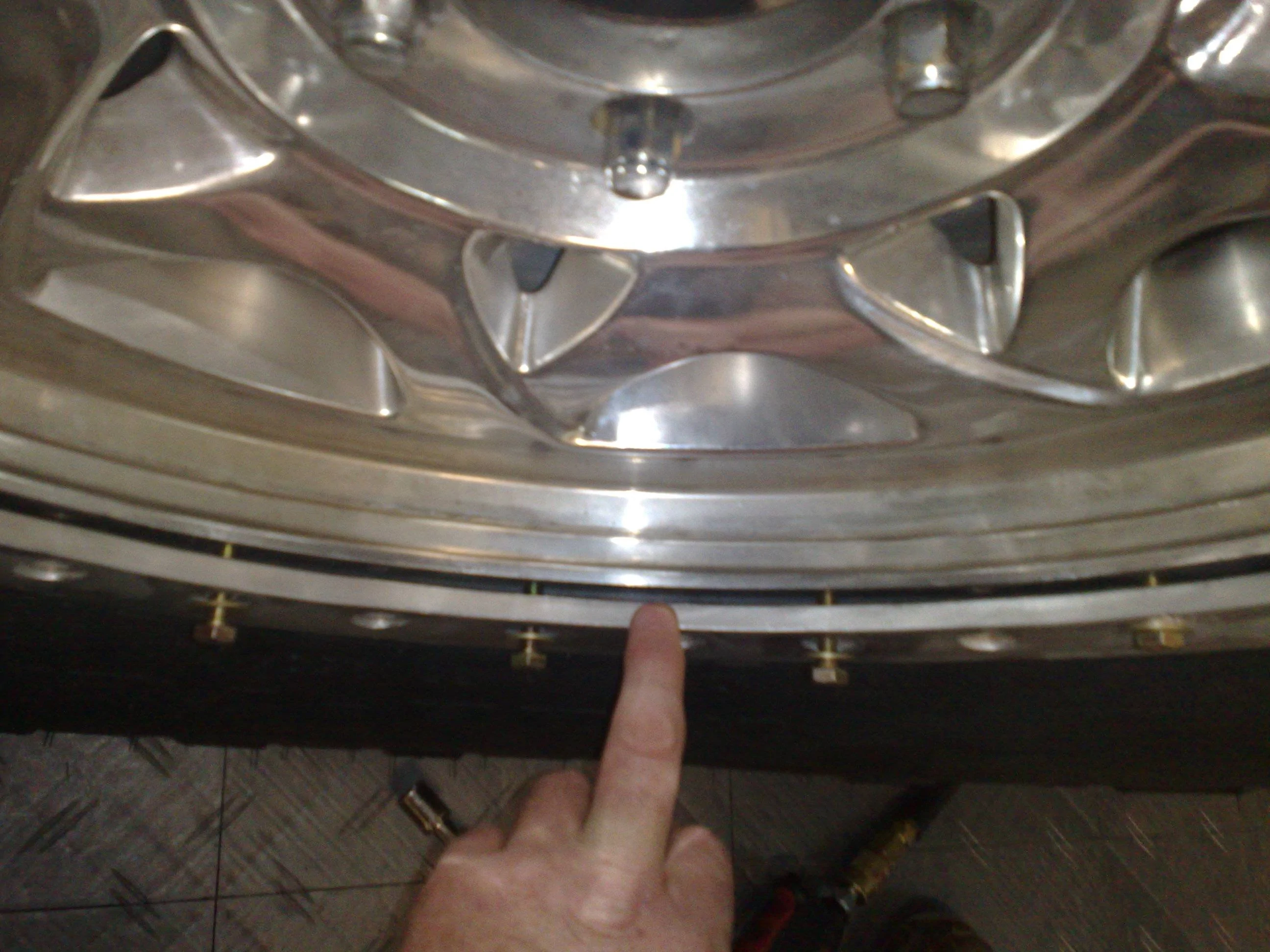
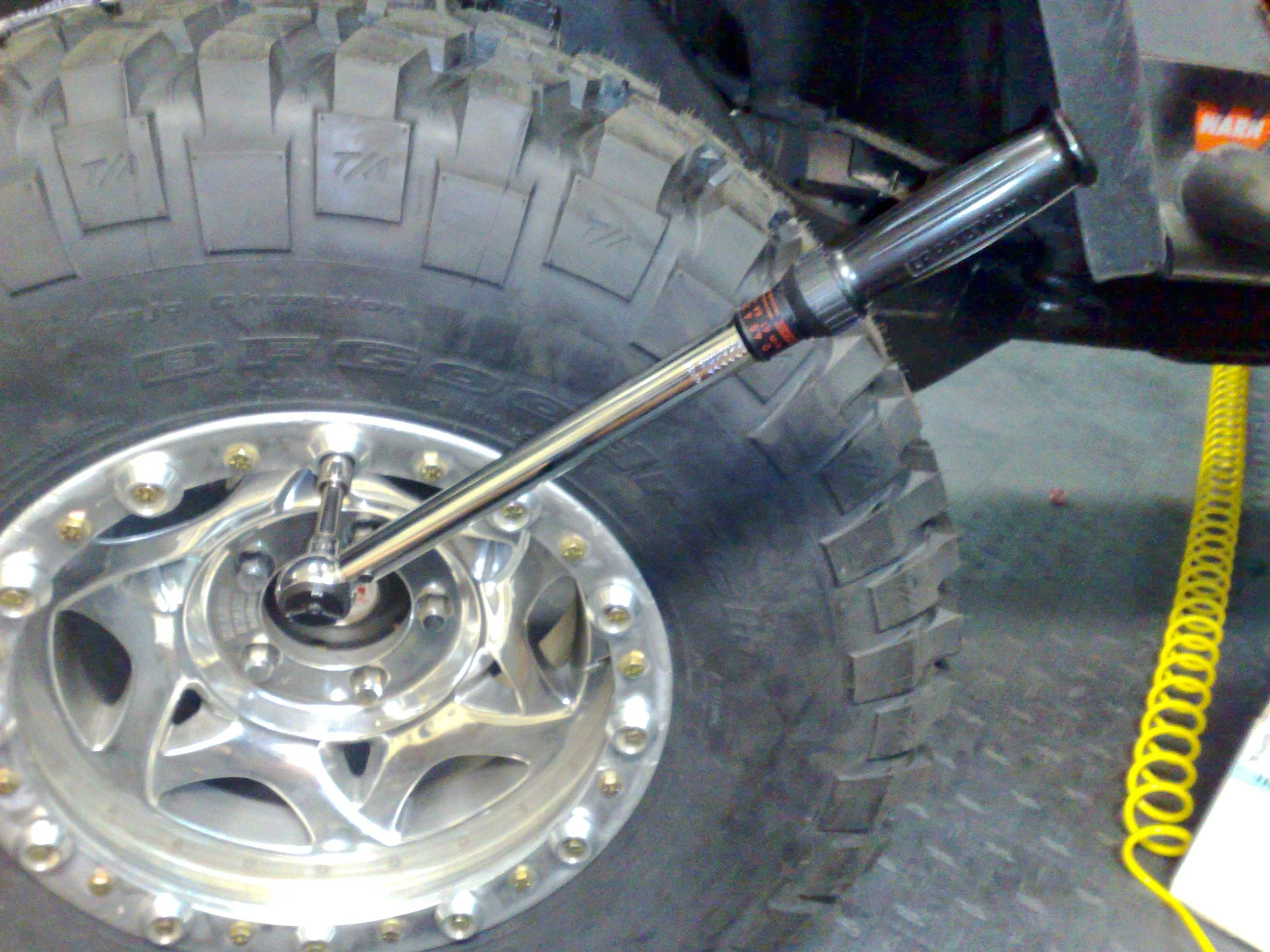
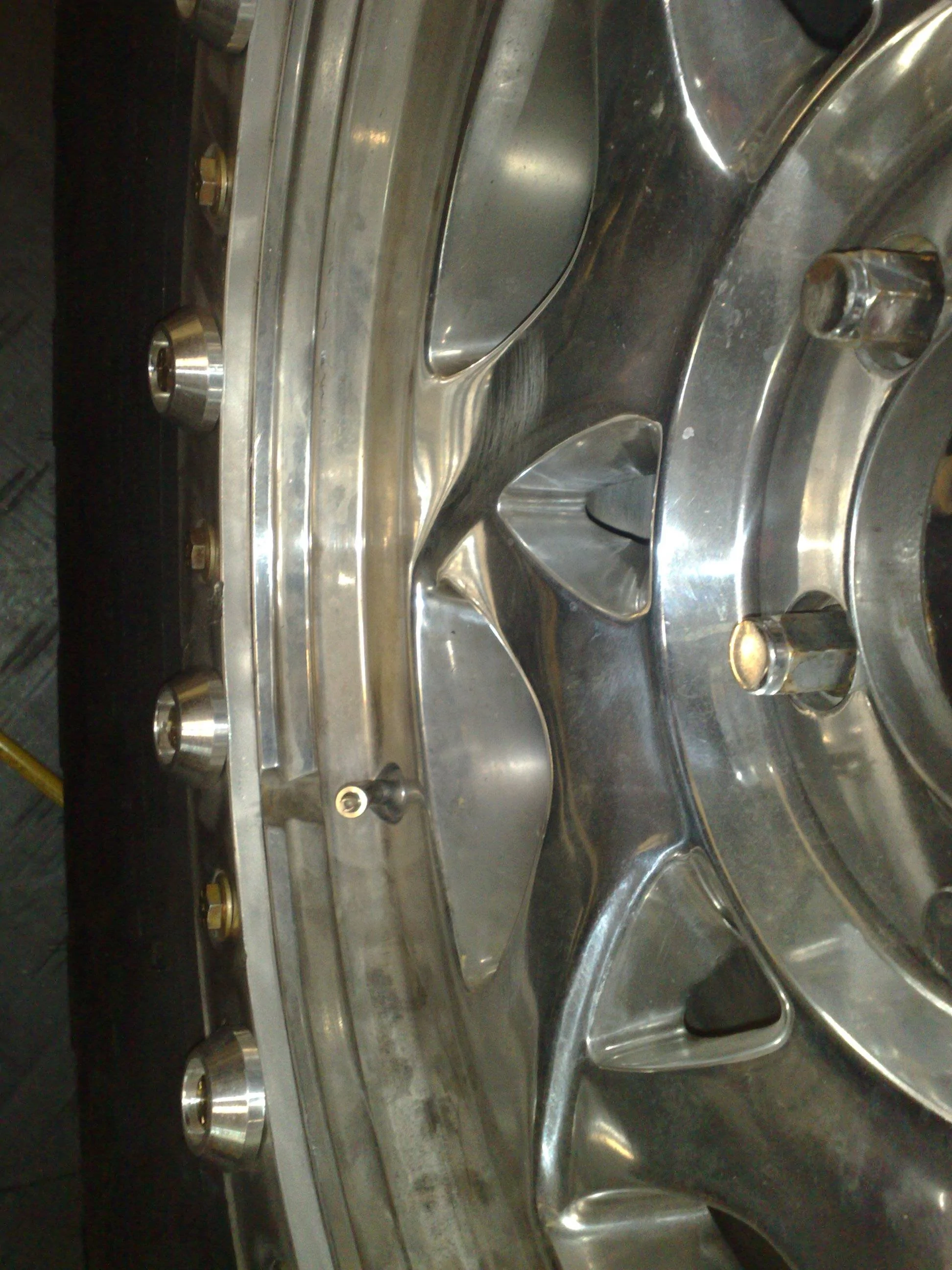
Look at this pic and to the right of my finger you note the ring is closer to the wheel to the left is a bit more wide as I am going around the wheel at this point and I turn the torque wrench 1/4 turn at a time after I have started with my finger, this is the point at which I switch to the torque wrench.

Hope this helps you make a decision. You MAY wish to look at this solution: https://www.iconvehicledynamics.com/innerlock/


Jeep Wrangler JL Lets talk Anti-Seize 21102008125


These are the Rock Bolt Rings I ran, I got tired of beating my bolts heads on the rocks to the point I had to hammer on the socket, another reason why I replaced bolts x 2 yearly


Jeep Wrangler JL Lets talk Anti-Seize 21102008129


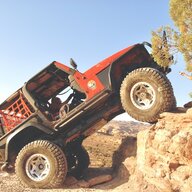
Here you can see how they stick out, they will climb the rock, one of the best investments I ever made for rock crawling

Jeep Wrangler JL Lets talk Anti-Seize 21102008131


The following is just some data you may be interested in as you are an engineer...retired engineer here. FYI I learned to Torque and I used Anti Sezie NUCLEAR GRADE as a Nuclear Warhead Electrical-Mechanical Engineer.

NTI-SEIZE GRADES
Silver Grade Anti-Seize is a general purpose, high temperature anti-seize lubricant for protecting metal parts against rust, corrosion, galling and seizure at temperatures to 1800° F. It is silver in color and contains copper, aluminum and graphite. Because of fine grade fillers, Silver Grade is particularly suitable for fine threaded and other closely mated parts. It is not recommended for applications where copper is prohibited.

Nickel Grade Anti-Seize is a premium anti-seize lubricant recommended for protecting metal fittings from rust, corrosion, galling and seizure at temperatures up to 2600° F. Formulated from nickel (20%) and graphite, Nickel Anti-Seize provides excellent chemical and oxidation resistance. It is recommended for high temperature, chemically corrosive applications and where the use of copper is prohibited.

Food Grade Anti-Seize is an aluminum complex based anti-seize which is specifically used in applications where incidental food contact is possible. Like Silver Grade, Food Grade Anti-Seize protects metal parts against rust, corrosion, galling and seizure at temperatures up to 1800° F. Food Grade meets NSF H1 requirements for incidental food contact.

Copper Grade Anti-Seize a combination of copper (10%) flake, graphite and other extreme pressure additives. Copper Grade Anti-Seize is copper in color and is not recommended for applications where copper is prohibited. Like Silver Grade, Copper Anti-Seize protects metal parts against rust, corrosion, galling and seizure at temperatures up to 1800° F. It is electrically conductive and does not compromise the integrity of soft metals.

Nuclear Grade Anti-Seize is a premium anti-seize that contains chemically pure nickel and offers superior protection against rust and corrosion. Nuclear Grade is contains no copper, lead, sulfur, halogens, or other ingredients that may poison reactor catalyst beds. Recommended for nuclear fittings, valves and steam mani-folds. Provides maximum protection from high heat up to 2600°F and aggressive chemicals. Nuclear Grade Anti-Seize meets General Electric D50YP12, Westinghouse and Bectel’s nuclear specifications and is tested to MIL-A-907E. It is formulated for use in Class 1, 2, and 3 non-wetted applications for auxiliary equipment in nuclear power plants.

Other Anti-Seize Types for specialty applications:

Nonmetallic compounds allow for exposure to high salt, humidity and generally marine environments. Suited for applications which utilize high nickel alloys and zinc coated fasteners. Nonmetallic Anti-Seize can be used to protect metal surfaces from corrosion related to exposure to the elements. Typically used in the offshore oil rigs and shipping industries.

Zinc Grade is for aluminum threaded components. Used to prevent seizing during assembly or disassembly of threaded or unthreaded components fabricated from aluminum or its alloys, engaged with components fabricated from similar or dissimilar metals. It is also intended to provide corrosion protection to the metal surfaces. This type is typically used in airplane manufacturing.

You may want to view these tables and compounds:

https://www.grainger.com/category/lubrication/anti-seize-compounds
Sponsored


Top