Sponsored

Genesis Offroad Upgrade--But Does it "Math"

AndySpill

Well-Known Member
First Name
Andy
Joined
Oct 24, 2023
Threads
75
Messages
1,679
Reaction score
1,284
Location
Pittsburgh
Vehicle(s)
2018 JL Sahara
I have the Genesis Offroad 2018+ Jeep JL / JTStock Battery Relocation Kit and run stock *configuration* dual batteries and wiring. What I mean by "stock configuration dual batteries" is that my batteries are high end Group 94R/H7 and Aux 14 brand non-Mopar batteries, but they have long since replaced the factory MOPAR batteries (3 times) since 2018 vehicle purchase. (FWIW I don't have the tow package/beefier alternator. My vehicle came with the smaller Group H6/48 main battery.)

When the time comes (for me) to replace these batteries again, which I will do (as recommended) in tandem, might it make more sense, since I want to keep the vehicle's battery *wiring* (if not the battery group sizes) stock, to upgrade to two Group 25 batteries and Genesis Offroad's Stock Battery Replacement Lid?

Doing so over replacing the stock size batteries is about an additional $300 expense with the increased battery cost and updated Genesis Offroad hardware.

I realize that costs come in all different forms. Two such costs are labor and reliability, and yet I think it best to not factor those in. The work involved this upgrade is trivial for me and it's not as if I've had to replace a main battery because my Aux catabolized it: maybe that's in part due to my rigid at most 3 year battery swaps and trickle charging.

Do you think this upgrade is cost effective, or maybe not but might have been if I did it earlier in the vehicle's life? Do you think if I swap the role each Group 25 battery plays every, say, 6 months (main or Aux) that it might increase battery longevity, or are AGM battery swaps every 3 years in the JL, regardless of the Group Type battery used, pretty much the norm.

For better or worse, I'm an extremely infrequent short trips driver.

TIA
Sponsored

 

MikesMojito

Well-Known Member
First Name
Mike
Joined
Oct 7, 2025
Threads
8
Messages
92
Reaction score
174
Location
DFW
Vehicle(s)
2025 JLU Willys XR
Occupation
Health Informatics
If you've already relocated, I personally dont see the financial benefit to swapping to the beefier version unless you have alot of draw.

I thought to two mains system acted like a "single" battery while maintaining factory preformance?

I've only ever looked at it though, no real world experience.
 

Nokones

Well-Known Member
First Name
Kenny
Joined
Dec 31, 2023
Threads
20
Messages
1,093
Reaction score
1,185
Location
Sun City West, AZ
Vehicle(s)
23 Rubi, 21 Silverado, 13 Grand Sport, Cayman GTS,
Occupation
Unemployed For The Rest Of My Life from a career of spreading love, cheer, and joy to lots of special individuals that were asking for attention..
Clubs
 
What accessories are you running? If none, I don't believe there is no reason to change.
 

GATORB8

Well-Known Member
First Name
Matt
Joined
May 30, 2021
Threads
29
Messages
8,891
Reaction score
11,825
Location
CLT NC
Vehicle(s)
21 JLURe, 06 LJ, 25 HDZR2
Maintaining the ESS, I'm sure matching the batteries would increase longevity to prevent parasitic cross draw. I don't know that there is a reliable way to identify by how much, though.

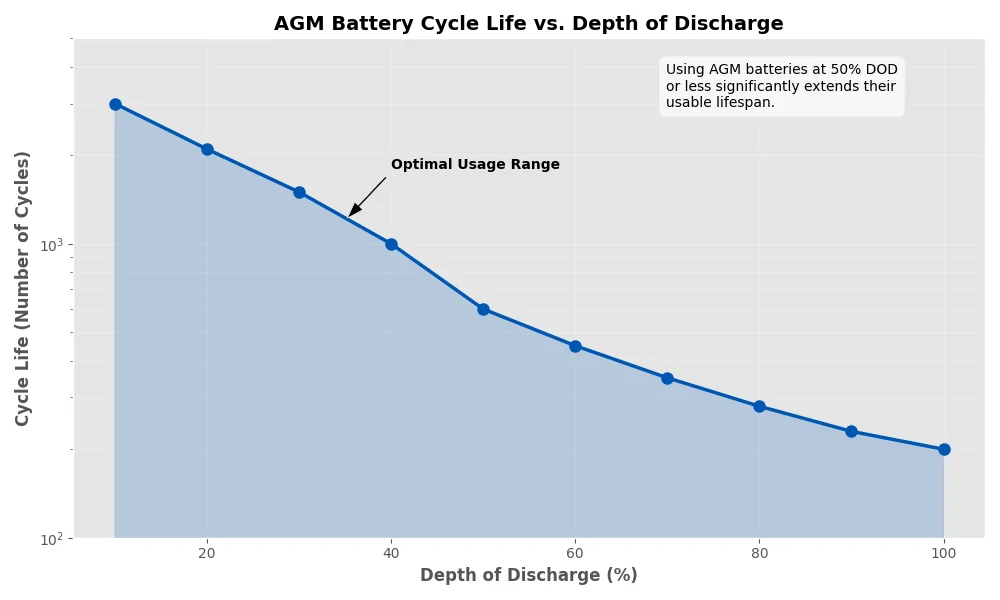
You are significantly reducing the depth of discharge on the Aux by upsizing it, which also should improve lifespan.

Jeep Wrangler JL Genesis Offroad Upgrade--But Does it "Math" 1784643124382-ol


On the other hand you are actually increasing the depth of discharge on the main because you'll be reducing capacity by 20-25% moving to a Group 25.

I believe the start event probably draws the same or less depth of discharge than the Aux for the engine off portion, so the reduced main capacity would have less of an impact to longevity than the benefit of the upsized aux.

Couple that with the added benefit of overall increase in capacity, sure makes it seem like a solid system upgrade.
 

bd100

Well-Known Member
Joined
Feb 14, 2024
Threads
2
Messages
247
Reaction score
279
Location
USA Midwest
Vehicle(s)
JT
If you are frequently leaving them on a charger / maintainer then I bet you don't have to replace them after 3 years, and you probably also will be fine with the stock config.
 

Sponsored

OP
OP

AndySpill

Well-Known Member
First Name
Andy
Joined
Oct 24, 2023
Threads
75
Messages
1,679
Reaction score
1,284
Location
Pittsburgh
Vehicle(s)
2018 JL Sahara
Maintaining the ESS, I'm sure matching the batteries would increase longevity to prevent parasitic cross draw. I don't know that there is a reliable way to identify by how much, though.

You are significantly reducing the depth of discharge on the Aux by upsizing it, which also should improve lifespan.

1784643124382-ol.webp


On the other hand you are actually increasing the depth of discharge on the main because you'll be reducing capacity by 20-25% moving to a Group 25.

I believe the start event probably draws the same or less depth of discharge than the Aux for the engine off portion, so the reduced main capacity would have less of an impact to longevity than the benefit of the upsized aux.

Couple that with the added benefit of overall increase in capacity, sure makes it seem like a solid system upgrade.
Thanks for the "deep dive" Matt.

I appreciate that I might be "splitting hairs" here but a while back there was a really in depth thread on how the dual battery ESS system truly runs, posted on the sister site Gladiator Forum. https://www.jeepgladiatorforum.com/forum/threads/how-the-ess-battery-system-works-3-6-engine.101575/.

People who actually took diagnostic equipment to the vehicle found that the post ESS crank was the only time the main battery was ever left to its own devices to crank the engine.

For all I know, effecting this upgrade I describe, and pulling Fuse 42, so that the two group 25 batteries are never isolated, might be the closest to creating what Stellantis should have all along: a single big enough battery capable of handling ESS events and normal operation.

I say this because under reliable reports, the ESS battery got added by Stellantis because the vehicle electronics, like the entertainment system, got squirrelly in voltage drops consistent with running ESS off of one, apparently insufficient for the need, battery: a problem IMHO that would have been better rectified by Stellantis incorporating less voltage sensitive components (or other solutions to this issue) as evidenced by similar size stock batteries running ESS events in the Ford Bronco.
 

The Last Cowboy

Well-Known Member
First Name
Joe
Joined
Jul 2, 2020
Threads
35
Messages
7,531
Reaction score
14,861
Location
San Antonio, TX
Vehicle(s)
2020 JL Willys 2 door
Occupation
Straight shooter with a crooked grin
There is is simply no reason to keep an auxiliary battery in the system, unless you really like ESS. Eliminate the aux, and spend the extra money on a Tazer.
 

THAW

Well-Known Member
First Name
Foster
Joined
Oct 28, 2022
Threads
6
Messages
2,421
Reaction score
3,391
Location
PNW - prefer Middle of Nowhere
Vehicle(s)
23 JL4DrRubicon
For all I know, effecting this upgrade I describe, and pulling Fuse 42, so that the two group 25 batteries are never isolated, might be the closest to creating what Stellantis should have all along: a single big enough battery capable of handling ESS events and normal operation.
The above configuration will subject Jeep electronics to starter voltage sag. Perhaps the larger capacity AUX (ESS) battery will provide some buffering, or reduce overall sag because of the increased CCA of the combined batteries.

As to the main question, I don't think you're going to save money locking yourself into pairs of group 25 AGM batteries, since they're a somewhat uncommon group size (which could cause non-monetary issues as well).
 

Terrymo

Well-Known Member
First Name
Terry
Joined
Jun 17, 2022
Threads
50
Messages
11,432
Reaction score
35,714
Location
SoCal
Vehicle(s)
2023 JLURXR 3.6 ET
Clubs
 
The above configuration will subject Jeep electronics to starter voltage sag. Perhaps the larger capacity AUX (ESS) battery will provide some buffering, or reduce overall sag because of the increased CCA of the combined batteries.

As to the main question, I don't think you're going to save money locking yourself into pairs of group 25 AGM batteries, since they're a somewhat uncommon group size (which could cause non-monetary issues as well).
Without getting involved in the rehashing of aux battery trivia and keeping things simple. If you bought just the tray, what is the largest single battery group size that would fit In lieu of running two group 25. Is there any value to that as opposed to just carrying an oversized NOCO Boost pack?
 

THAW

Well-Known Member
First Name
Foster
Joined
Oct 28, 2022
Threads
6
Messages
2,421
Reaction score
3,391
Location
PNW - prefer Middle of Nowhere
Vehicle(s)
23 JL4DrRubicon
Without getting involved in the rehashing of aux battery trivia and keeping things simple. If you bought just the tray, what is the largest single battery group size that would fit In lieu of running two group 25. Is there any value to that as opposed to just carrying an oversized NOCO Boost pack?
Interesting question; based on the dimensions you might be able to fit a single Group 31, but the terminal clamps probably won't reach the terminals. A single group 27 should work. But, I believe Mr. Spill is dead set on having an AUX (ESS) battery (even though pulling fuse F42 essentially defeats the purpose).

To me, the only situation in which not carrying a jump pack makes sense is having 2 batteries in the factory and/or Genesis tray, with one not connected to the Jeep (a sort of built-in jump pack).
 
Last edited:

Sponsored

OP
OP

AndySpill

Well-Known Member
First Name
Andy
Joined
Oct 24, 2023
Threads
75
Messages
1,679
Reaction score
1,284
Location
Pittsburgh
Vehicle(s)
2018 JL Sahara
The above configuration will subject Jeep electronics to starter voltage sag. Perhaps the larger capacity AUX (ESS) battery will provide some buffering, or reduce overall sag because of the increased CCA of the combined batteries.
I'm not sure how connecting two group 25 batteries in parallel at all times differs from how Genesis Offroad's Gen 3 kit operates when the vehicle is cranked. Maybe I've missed something.

I mean, sure, there are difference regarding automatic and manual battery separation and connection when running appliances with this Gen 3 kit, particularly while parked, and differences on the voltages when the batteries connect and disconnect based on things like the optional engine on sensor, or the manual switch that forces the batteries to be parallel, but at its core, aren't ESS events running off of both batteries in parallel in the Gen 3 kit, and exactly why they are subject, given identical voltages of what the vehicle "sees" as the Aux and main battery with this kit, to the 6 ESS event per cold crank limitation?

And thus, when the vehicle is cranked isn't the Gen 3 similar to my thoughts about hardwiring the Group 25s in parallel?

Maybe Gen 3 owners that run ESS events experience such voltage sag (?). Maybe there are differences between the Gen 3's normal engine on operation and connecting two Group 25s in parallel that I'm not appreciating.

Of course this is academic as it doesn't sound like the upgrade can be justified with the almighty dollar.
 

THAW

Well-Known Member
First Name
Foster
Joined
Oct 28, 2022
Threads
6
Messages
2,421
Reaction score
3,391
Location
PNW - prefer Middle of Nowhere
Vehicle(s)
23 JL4DrRubicon
Maybe Gen 3 owners that run ESS events experience such voltage sag (?).
They do.

Pulling fuse F42 prevents the PCR from isolating Jeep electronics from starter current during ESS restarts

In the case of GEN 3 installation, the AUX (ESS) battery positive cable terminal is moved to the CR[an]K battery positive terminal/post, which has the same electrical effect as pulling fuse F42.
 

alphawolff

Well-Known Member
Joined
Jul 31, 2023
Threads
1
Messages
3,542
Reaction score
6,016
Location
california
Vehicle(s)
2021 JLU
There is is simply no reason to keep an auxiliary battery in the system, unless you really like ESS. Eliminate the aux, and spend the extra money on a Tazer.
ditto considering a single early battery replacement will cost more than your stop/start fuel savings over your entire ownership combined, not including the inconvenience factor.

the dual battery stop start system is such a red herring. you think you're saving money on fuel then BAM $1000 battery replacement and possible tow.
 
OP
OP

AndySpill

Well-Known Member
First Name
Andy
Joined
Oct 24, 2023
Threads
75
Messages
1,679
Reaction score
1,284
Location
Pittsburgh
Vehicle(s)
2018 JL Sahara
ditto considering a single early battery replacement will cost more than your stop/start fuel savings over your entire ownership combined, not including the inconvenience factor.

the dual battery stop start system is such a red herring. you think you're saving money on fuel then BAM $1000 battery replacement and possible tow.
I'd tend to agree were I not trickle charging both hood batteries from a solar panel that's already charging (and was originally purchased to charge) a house battery that runs my dash camera while my vehicle is parked.

Were the solar panel purchased primarily to trickle charge the hood batteries or were an A/C trickle charger used to effect same, its purchase price and electric costs to operate would have to be be relevant costs considered, as I imagine are things like wear and tear on the vehicle's starter system and engine, etc. from ESS.
 

alphawolff

Well-Known Member
Joined
Jul 31, 2023
Threads
1
Messages
3,542
Reaction score
6,016
Location
california
Vehicle(s)
2021 JLU
I'd tend to agree were I not trickle charging both hood batteries from a solar panel that's already charging (and was originally purchased to charge) a house battery that runs my dash camera while my vehicle is parked.

Were the solar panel purchased primarily to trickle charge the hood batteries or were an A/C trickle charger used to effect same, its purchase price and electric costs to operate would have to be be relevant costs considered, as I imagine are things like wear and tear on the vehicle's starter system and engine, etc. from ESS.
99.999999% of owners don't do this
Sponsored


Top