
Sponsored

58Willys
Well-Known Member
- First Name
- Geoff
- Joined
- Jan 2, 2022
- Threads
- 6
- Messages
- 1,177
- Reaction score
- 1,461
- Location
- Western Washington
- Vehicle(s)
- 2018 JL Sport
You need completely disconnect both positive and negative leads from both batteries, and isolate the grounds. If replacing the aux, you most likely need to replace the main as well.
churlk
Member
- Thread starter
- #3
The main battery has been reading fine (13.7-13.9). Its the aux which has been effecting the start/stop completely and sometimes the jeep all together from starting.
When say isolate the ground? What does that mean?
I assume I will disconnect neg. from main and then pos. from main and then disconnect neg. from aux and pos from aux and then attach the new battery in the opposite way. (Positive first then Negative) Is this correct?
When say isolate the ground? What does that mean?
I assume I will disconnect neg. from main and then pos. from main and then disconnect neg. from aux and pos from aux and then attach the new battery in the opposite way. (Positive first then Negative) Is this correct?

Htfan
Well-Known Member
- First Name
- Jeff
- Joined
- Nov 18, 2019
- Threads
- 19
- Messages
- 1,373
- Reaction score
- 1,353
- Location
- Orange County, CA
- Vehicle(s)
- 2018 JLU Sport S - 3.6L
- Vehicle Showcase
- 1
What are you reading for voltage measurement? The dash display? This is showing the smart alternator charging voltage, not the health of the battery.The main battery has been reading fine (13.7-13.9).
churlk
Member
- Thread starter
- #5
The main battery was checked at autozone and was running 13.7. When running the dash is also showing it running about the same. The dash is only showing the aux isn't working because it is charging, but I've been driving it with no change in the battery or the SS turning back on. I had some issues originally with the Jeep not turning on at all (all lights coming on but error message with aux- wipers going etc.) The main has been replaced 3 times in the past 3 years but it was sitting on a lot for most of the time which is why. I don't beleive they ever replaced the Aux, which is why I was thinking that could solve my issue.
Sponsored


Terrymo
Well-Known Member
With the engine off test for voltage at the battery terminals. A fully charged AGM battery will not be 13.7 volts. Closer to 12.6 to 12.8 max.The main battery was checked at autozone and was running 13.7. When running the dash is also showing it running about the same. The dash is only showing the aux isn't working because it is charging, but I've been driving it with no change in the battery or the SS turning back on. I had some issues originally with the Jeep not turning on at all (all lights coming on but error message with aux- wipers going etc.) The main has been replaced 3 times in the past 3 years but it was sitting on a lot for most of the time which is why. I don't beleive they ever replaced the Aux, which is why I was thinking that could solve my issue.
munkeymike
Well-Known Member
This is the correct answer unless you actually use ESS a lot. For most of us here, deleting the aux saves a lot of money and headaches down the road.Don't replace the aux battery, just eliminate it. Lots of threads on here with details on how to do that.

Heimkehr
Well-Known Member
- First Name
- James
- Joined
- Sep 3, 2020
- Threads
- 48
- Messages
- 11,134
- Reaction score
- 22,556
- Location
- Pennsylvania
- Vehicle(s)
- 2021 JLU 2.0T
The traditional definition in this context means to cover the Negative cable end(s) with electrical tape, or wrap them securely in a rag that won't come loose. The idea here is to protect against unintended electrical discharge, should the cable ends accidently make contact with anything while the batter(ies) are being replaced.When say isolate the ground? What does that mean?
------------------
To electrically isolate the ESS battery, while leaving it in situ (thus avoiding the trouble of removing or replacing it), you'd perform the following steps:
1. Remove the ESS Negative cable from its connection on the main battery's Negative lug. The ESS cable is the slightly thinner of the two Negative cables.
1a. Fold and secure the ESS Neg cable out of the way with a zip tie, after first wrapping the now exposed connector very well in electrical tape.
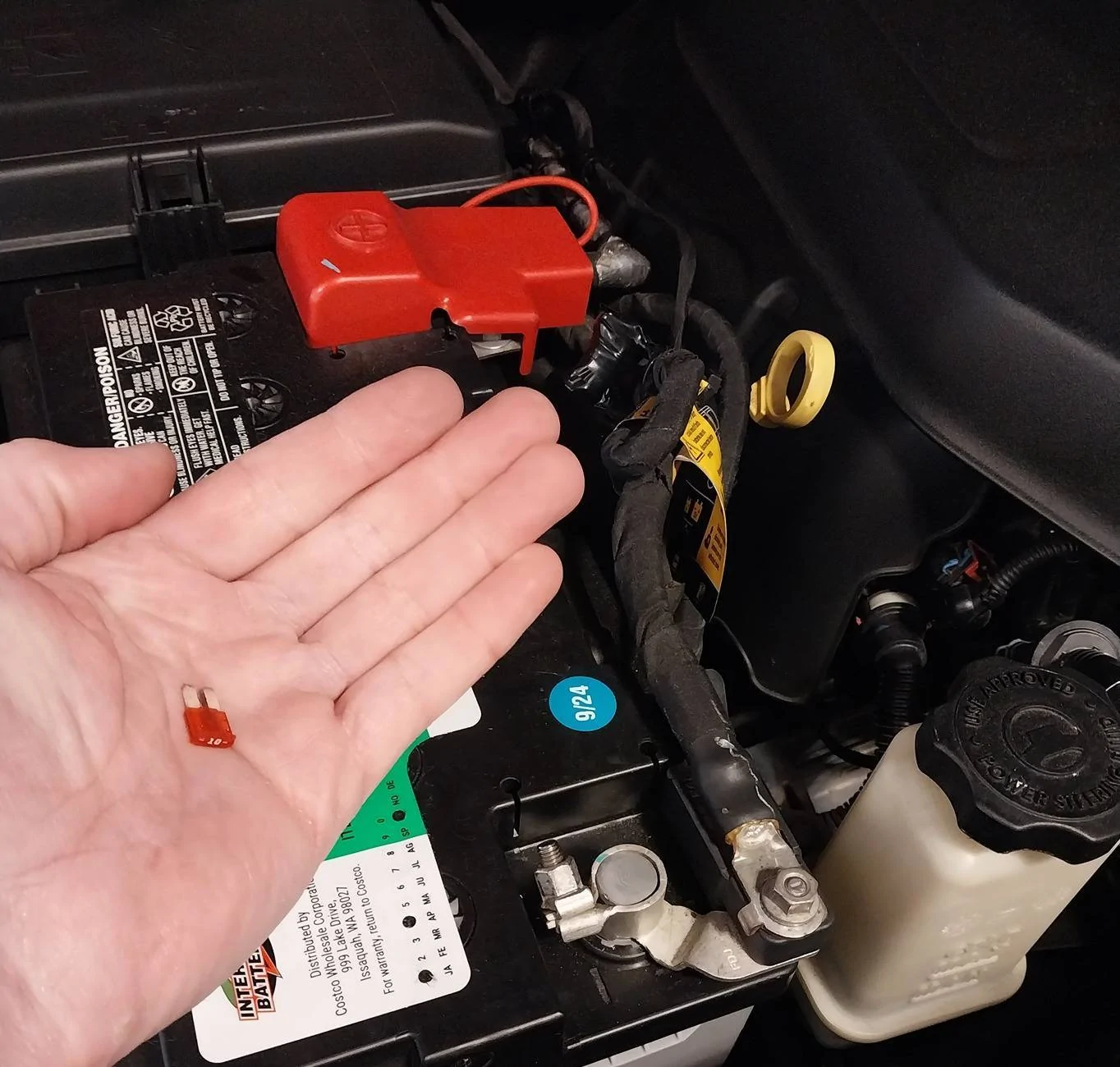
2. Remove Fuse F42 from the fuse box, aka PDC.
Isolating the ESS battery in this manner removes it from the vehicle's electrical system, at no expense to the owner but his time.
Here's what mine looks like after doing that very thing. Note the continued presence of the Intelligent Battery Sensor (IBS) under the main battery's Negative cable connection.

The Last Cowboy
Well-Known Member
- First Name
- Joe
- Joined
- Jul 2, 2020
- Threads
- 35
- Messages
- 7,511
- Reaction score
- 14,827
- Location
- San Antonio, TX
- Vehicle(s)
- 2020 JL Willys 2 door
- Occupation
- Straight shooter with a crooked grin
Since you're prepared to spend money on a new battery, don't buy an aux, buy a H7/94R to replace the main. Then bypass the aux altogether.
Sponsored
Heimkehr
Well-Known Member
- First Name
- James
- Joined
- Sep 3, 2020
- Threads
- 48
- Messages
- 11,134
- Reaction score
- 22,556
- Location
- Pennsylvania
- Vehicle(s)
- 2021 JLU 2.0T
...and make sure it's an AGM battery, no matter the brand or size that is purchased.Since you're prepared to spend money on a new battery, don't buy an aux, buy a H7/94R to replace the main. Then bypass the aux altogether.
If the OEM battery was an H6, the larger H7 will fit after removing a press-fit spacer in the bottom of the battery tray.
AndySpill
Well-Known Member
- First Name
- Andy
- Joined
- Oct 24, 2023
- Threads
- 74
- Messages
- 1,672
- Reaction score
- 1,284
- Location
- Pittsburgh
- Vehicle(s)
- 2018 JL Sahara
Do you indeed have not only a JL (as opposed to the JK you list in your profile) and if so, is it a JL with dual AGM batteries, as not all flavors of the JL are equipped with these two types (AGM) of batteries? JKs don't come from the factory with dual AGM batteries.If I am looking to replace my aux battery, do I only need to disconnect the negative from the main before I pull the aux? Or do I need to take off both positive and negative from the main first?
If you indeed have a dual AGM battery JL then the minimum necessary disconnections IMHO, prior to replacing this battery are as follows:
Visualize the main battery's negative post. On it, on dual AGM battery JLs there will be two factory cables. One has as its other end the body ground on the passenger's side under the hood. Leave that cable connected.
The other cable has at its distal end a connection to the negative post of the Aux battery that you won't be able to see until you get to the Aux battery hidden below. It is this cable that I recommend you disconnect from the main battery's negative terminal and then temporarily wrap its conductive end in electric tape. This step is the "isolating the ground" one you were confused about prior that James I now see @Heimkehr guides you on above.
This step is both necessary and sufficient to disconnect the Aux battery from the vehicle's electrical system. You could remove more cables than this, but it is not necessary.
That said, how you access and replace the Aux battery, whether thru the fender or from above by removing the Power Distribution Center (PDC) (the former is recommended), once you replace your Aux battery then remove the electric tape from above and reconnect this cable to the negative post of the main battery. If you plan to bypass the Aux battery keep this cable wrapped, and yank Fuse 42 as James describes above.
By what means have you determined this voltage, for example from the dash reading? If you indeed have a dual AGM battery JL, unless you disconnect the Aux battery like I described, the voltage reading you are getting is a composite of both batteries, not the main battery's voltage, and guidance in posts above about testing voltage at the (presumptively main) battery terminals--if you have a dual AGM battery JL--will not give you accurate results unless you first disconnect the above mentioned cable.The main battery has been reading fine (13.7-13.9). Its the aux which has been effecting the start/stop completely and sometimes the jeep all together from starting.
If you only have a main AGM battery this guidance though is accurate.
If you indeed have a dual AGM battery JL you can test the Aux battery's voltage by placing the tester's positive leads on the main battery's positive post and the loose cable discussed above before wrapping it with electric tape. That's not a typo. The positive of the tester, to test the Aux, can go on the main battery's positive post.
And while on the subject of testing, I'd use a load tester, not a multimeter to test the batteries.
All this aside, please heed James advice above about simply bypassing the Aux battery if you have no desire to run ESS events. Replacing your main battery on such dual AGM battery JLs, but not the Aux battery can cause that new main battery to be irrevocably cannibalized by the Aux battery given their inherently parallel connection in the JL, if you don't bypass that old Aux battery.
Please write back if you need guidance on how to tell if your JL indeed has two AGM batteries. For example, the eTorque JL has two batteries, one main and one 48 Volt non-AGM (absorbent glass mat) one.
churlk
Member
- Thread starter
- #13
Thank you! I think I want to try to keep the AUX attached to try to save what I can on gas mileage if I am mainly making shorter trips in the jeep. At least that is my hope with the SS.The traditional definition in this context means to cover the Negative cable end(s) with electrical tape, or wrap them securely in a rag that won't come loose. The idea here is to protect against unintended electrical discharge, should the cable ends accidently make contact with anything while the batter(ies) are being replaced.
------------------
To electrically isolate the ESS battery, while leaving it in situ (thus avoiding the trouble of removing or replacing it), you'd perform the following steps:
1. Remove the ESS Negative cable from its connection on the main battery's Negative lug. The ESS cable is the slightly thinner of the two Negative cables.
1a. Fold and secure the ESS Neg cable out of the way with a zip tie, after first wrapping the now exposed connector very well in electrical tape.
2. Remove Fuse F42 from the fuse box, aka PDC.
Isolating the ESS battery in this manner removes it from the vehicle's electrical system, at no expense to the owner but his time.
Here's what mine looks like after doing that very thing. Note the continued presence of the Intelligent Battery Sensor (IBS) under the main battery's Negative cable connection.

The traditional definition in this context means to cover the Negative cable end(s) with electrical tape, or wrap them securely in a rag that won't come loose. The idea here is to protect against unintended electrical discharge, should the cable ends accidently make contact with anything while the batter(ies) are being replaced.
------------------
To electrically isolate the ESS battery, while leaving it in situ (thus avoiding the trouble of removing or replacing it), you'd perform the following steps:
1. Remove the ESS Negative cable from its connection on the main battery's Negative lug. The ESS cable is the slightly thinner of the two Negative cables.
1a. Fold and secure the ESS Neg cable out of the way with a zip tie, after first wrapping the now exposed connector very well in electrical tape.
2. Remove Fuse F42 from the fuse box, aka PDC.
Isolating the ESS battery in this manner removes it from the vehicle's electrical system, at no expense to the owner but his time.
Here's what mine looks like after doing that very thing. Note the continued presence of the Intelligent Battery Sensor (IBS) under the main battery's Negative cable connection.
churlk
Member
- Thread starter
- #14
...and make sure it's an AGM battery, no matter the brand or size that is purchased.
If the OEM battery was an H6, the larger H7 will fit after removing a press-fit spacer in the bottom of the battery tray.
I do actually have both. A gecko JL and a JK. The JL I just purchased a few weeks ago and it sat on a lot for 3 years basically. 21' with 5K miles. So it's had its main changed 3x already, but I don't believe they have ever touched the aux.Do you indeed have not only a JL (as opposed to the JK you list in your profile) and if so, is it a JL with dual AGM batteries, as not all flavors of the JL are equipped with these two types (AGM) of batteries? JKs don't come from the factory with dual AGM batteries.
If you indeed have a dual AGM battery JL then the minimum necessary disconnections IMHO, prior to replacing this battery are as follows:
Visualize the main battery's negative post. On it, on dual AGM battery JLs there will be two factory cables. One has as its other end the body ground on the passenger's side under the hood. Leave that cable connected.
The other cable has at its distal end a connection to the negative post of the Aux battery that you won't be able to see until you get to the Aux battery hidden below. It is this cable that I recommend you disconnect from the main battery's negative terminal and then temporarily wrap its conductive end in electric tape. This step is the "isolating the ground" one you were confused about prior that James I now see @Heimkehr guides you on above.
This step is both necessary and sufficient to disconnect the Aux battery from the vehicle's electrical system. You could remove more cables than this, but it is not necessary.
That said, how you access and replace the Aux battery, whether thru the fender or from above by removing the Power Distribution Center (PDC) (the former is recommended), once you replace your Aux battery then remove the electric tape from above and reconnect this cable to the negative post of the main battery. If you plan to bypass the Aux battery keep this cable wrapped, and yank Fuse 42 as James describes above.
By what means have you determined this voltage, for example from the dash reading? If you indeed have a dual AGM battery JL, unless you disconnect the Aux battery like I described, the voltage reading you are getting is a composite of both batteries, not the main battery's voltage, and guidance in posts above about testing voltage at the (presumptively main) battery terminals--if you have a dual AGM battery JL--will not give you accurate results unless you first disconnect the above mentioned cable.
If you only have a main AGM battery this guidance though is accurate.
If you indeed have a dual AGM battery JL you can test the Aux battery's voltage by placing the tester's positive leads on the main battery's positive post and the loose cable discussed above before wrapping it with electric tape. That's not a typo. The positive of the tester, to test the Aux, can go on the main battery's positive post.
And while on the subject of testing, I'd use a load tester, not a multimeter to test the batteries.
All this aside, please heed James advice above about simply bypassing the Aux battery if you have no desire to run ESS events. Replacing your main battery on such dual AGM battery JLs, but not the Aux battery can cause that new main battery to be
by the Aux battery given their inherently parallel connection in the JL, if you don't bypass that old Aux battery.Do you indeed have not only a JL (as opposed to the JK you list in your profile) and if so, is it a JL with dual AGM batteries, as not all flavors of the JL are equipped with these two types (AGM) of batteries? JKs don't come from the factory with dual AGM batteries.
If you indeed have a dual AGM battery JL then the minimum necessary disconnections IMHO, prior to replacing this battery are as follows:
Visualize the main battery's negative post. On it, on dual AGM battery JLs there will be two factory cables. One has as its other end the body ground on the passenger's side under the hood. Leave that cable connected.
The other cable has at its distal end a connection to the negative post of the Aux battery that you won't be able to see until you get to the Aux battery hidden below. It is this cable that I recommend you disconnect from the main battery's negative terminal and then temporarily wrap its conductive end in electric tape. This step is the "isolating the ground" one you were confused about prior that James I now see @Heimkehr guides you on above.
This step is both necessary and sufficient to disconnect the Aux battery from the vehicle's electrical system. You could remove more cables than this, but it is not necessary.
That said, how you access and replace the Aux battery, whether thru the fender or from above by removing the Power Distribution Center (PDC) (the former is recommended), once you replace your Aux battery then remove the electric tape from above and reconnect this cable to the negative post of the main battery. If you plan to bypass the Aux battery keep this cable wrapped, and yank Fuse 42 as James describes above.
By what means have you determined this voltage, for example from the dash reading? If you indeed have a dual AGM battery JL, unless you disconnect the Aux battery like I described, the voltage reading you are getting is a composite of both batteries, not the main battery's voltage, and guidance in posts above about testing voltage at the (presumptively main) battery terminals--if you have a dual AGM battery JL--will not give you accurate results unless you first disconnect the above mentioned cable.
If you only have a main AGM battery this guidance though is accurate.
If you indeed have a dual AGM battery JL you can test the Aux battery's voltage by placing the tester's positive leads on the main battery's positive post and the loose cable discussed above before wrapping it with electric tape. That's not a typo. The positive of the tester, to test the Aux, can go on the main battery's positive post.
And while on the subject of testing, I'd use a load tester, not a multimeter to test the batteries.
All this aside, please heed James advice above about simply bypassing the Aux battery if you have no desire to run ESS events. Replacing your main battery on such dual AGM battery JLs, but not the Aux battery can cause that new main battery to be irrevocably cannibalized by the Aux battery given their inherently parallel connection in the JL, if you don't bypass that old Aux battery.
Please write back if you need guidance on how to tell if your JL indeed has two AGM batteries. For example, the eTorque JL has two batteries, one main and one 48 Volt non-AGM (absorbent glass mat) one.
Please write back if you need guidance on how to tell if your JL indeed has two AGM batteries. For example, the eTorque JL has two batteries, one main and one 48 Volt non-AGM (absorbent glass mat) one.
A couple questions:
-It has the MOPAR battery installed and the Aux I know that for sure. Is there a third battery you are speaking about?
-I am not sure if I want to bypass right now, so I want to try to keep the aux for now. Hopefully saving gas on short trips. You recommended going from above rather than the fender option?
-Also, just confirming after removing and taping both cables from the negative terminal, I can leave the positive alone on the main?
And thank you very much for your detailed post. I appreciated it!
Heimkehr
Well-Known Member
- First Name
- James
- Joined
- Sep 3, 2020
- Threads
- 48
- Messages
- 11,134
- Reaction score
- 22,556
- Location
- Pennsylvania
- Vehicle(s)
- 2021 JLU 2.0T
It's best to access the ESS battery through the fender liner (i.e., by pulling it back a bit.) Disturbing the fuse box, aka PDC, is more trouble than it's worth.You recommended going from above rather than the fender option?
Sponsored


