Sponsored

Sway bar disconnects question

Bill_P

Well-Known Member
First Name
Bill
Joined
Jan 24, 2022
Threads
8
Messages
795
Reaction score
1,396
Location
Orange Va
Vehicle(s)
2018 JLU, 2023 JLUWSXR
Occupation
Can't tell you..shhh
Okay so I want to get Apex Auto Link sway bar disconnects. I've checked them out and I know the 8-inch ones work for my stock XR. Would I mess anything up if I get the 10-inch ones just in case later I want to lift it. I know the sway bars should be as close to horizontal as you can get it but will 2 in really make that much difference?
Sponsored
 

Old Jeeper

Banned
Banned
Banned
First Name
Don
Joined
Jul 7, 2022
Threads
43
Messages
2,841
Reaction score
4,211
Location
Port Charlotte, FL, Naples Fl, 17 Oaks Ranch, Tex
Vehicle(s)
2024 JLR-X 2023 JLR, 2021 JTR. 20 F 450 KR,
Occupation
US Army Infantry, IT Engineer
Okay so I want to get Apex Auto Link sway bar disconnects. I've checked them out and I know the 8-inch ones work for my stock XR. Would I mess anything up if I get the 10-inch ones just in case later I want to lift it. I know the sway bars should be as close to horizontal as you can get it but will 2 in really make that much difference?
FWIW: I do not like full disconnect.

There is a reason WHY they have swaybars on car and every car I have owned had on, beginning in my first car in 1964.

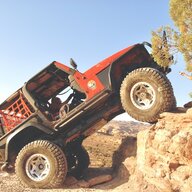
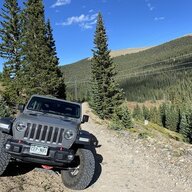
I wheel hard and often and my world is the 7++ trails.

I use this on my wheeling Jeep: https://www.amazon.com/CURRIE-ANTIROCK-FRONT-18-UP-WRANGLER/dp/B07GQ58Z14

It's the Currie RockJock and I recommend it as much as I despise the Curries. I do buy there products they great, they are stupid money which why they are all millionaires and JERKS! I don't that get in the way of a good product.

Check it out. I bought the very first one at the Off Road Expo show from Currie himself and it works for 9 years and almost 100k miles of wheeling across the US!

Your Jeep your money and if choose different I will pat you back and say go for it.
 

Rodeoflyer

Well-Known Member
First Name
Bert
Joined
Dec 16, 2019
Threads
43
Messages
1,946
Reaction score
1,509
Location
Conifer, Colorado
Vehicle(s)
2020 Jeep JLUR; 2016 Ram Powerwagon
Vehicle Showcase
1
There's nothing wrong with disconnects.. you get the best of both worlds. It's just a MAJOR pita imo to have to mess with them in snow/mud etc. Like old jeeper said, I prefer REAL swaybars on road and fully disconnected off road. The anti-rocks kind of straddle the fence but I assume you're not in the $1000 for both front and rear camp :).

And for your intial question, 2'' won't make a difference. I'd just buy the longer ones.
 
OP
OP
Bill_P

Bill_P

Well-Known Member
First Name
Bill
Joined
Jan 24, 2022
Threads
8
Messages
795
Reaction score
1,396
Location
Orange Va
Vehicle(s)
2018 JLU, 2023 JLUWSXR
Occupation
Can't tell you..shhh
There's nothing wrong with disconnects.. you get the best of both worlds. It's just a MAJOR pita imo to have to mess with them in snow/mud etc. Like old jeeper said, I prefer REAL swaybars on road and fully disconnected off road. The anti-rocks kind of straddle the fence but I assume you're not in the $1000 for both front and rear camp :).

And for your intial question, 2'' won't make a difference. I'd just buy the longer ones.
I didn't think it would be that big of a deal. I just don't want to shell out $450 only to find out I need bigger if I lift and have to drop another $450. $1000 would spin my wife into an undiscovered dimension of pissed off right now, so Apex links it is ?
 

Rodeoflyer

Well-Known Member
First Name
Bert
Joined
Dec 16, 2019
Threads
43
Messages
1,946
Reaction score
1,509
Location
Conifer, Colorado
Vehicle(s)
2020 Jeep JLUR; 2016 Ram Powerwagon
Vehicle Showcase
1
Oh you have a sport (non rubi)? Then yes, manual or the anti-rock is a good recommendation.

I would be careful with any aftermarket front link that's electronically activated but that's just me. I had to go look at those. they seem to get really good reviews though.. so who am I to judge.

I would just go with manuals if I were you and you don't live in an area where deep snow/slush is an issue.
 

Sponsored

OP
OP
Bill_P

Bill_P

Well-Known Member
First Name
Bill
Joined
Jan 24, 2022
Threads
8
Messages
795
Reaction score
1,396
Location
Orange Va
Vehicle(s)
2018 JLU, 2023 JLUWSXR
Occupation
Can't tell you..shhh
Oh you have a sport (non rubi)? Then yes, manual or the anti-rock is a good recommendation.

I would be careful with any aftermarket front link that's electronically activated but that's just me. I had to go look at those. they seem to get really good reviews though.. so who am I to judge.

I would just go with manuals if I were you and you don't live in an area where deep snow/slush is an issue.
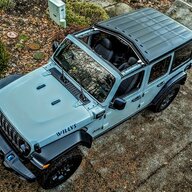
Mine is a Willy's XR. I hade Skyjacker manuals on my '18. I might decide to do a spacer after I put the bumper and winch on it and the Apex get really good reviews.
 

jeepoch

Well-Known Member
First Name
Jay
Joined
Nov 13, 2019
Threads
1
Messages
1,052
Reaction score
2,941
Location
Longmont, CO
Vehicle(s)
2019 JL Wrangler Sport S 3.6L Auto 2 door, 2.5" lift, 35s
@Bill_P,

Bill,

Any sway bar that fully disconnects will allow you the greatest amount of (full) articulation. Any automatic disconnect will need to limit suspension travel to some degree, in order to reconnect.

The sway bar is used to mechanically connect both sides of the suspension together. At highway speeds this is a good thing. It will minimize 'roll' or sway. Both sides of the suspension will be limited to the amount of free travel depending on what the other side is doing. When off-road it's a bad thing because it will greatly minimize articulation. Both sides are then free to travel independently without restriction. Clearly, anything that will prevent either wheel from being firmly planted on the ground will obviously reduce possible traction. The greater the articulation, the better the chances of having both wheels gripping and thus achieving better motive effort.

So any kit that completely disconnects the sway bar altogether is the best possible solution for off-roading. The kind or type will generally only affect how 'quick' they'll disengage (or reengage). Remember, the more automatic the mechanism is, the easier to disconnect and reconnect but the less articulation will likely be the result.

I own the Teraflex Quick Disconnect kit which uses parking studs with Cotter Pins. This kit provides parking studs for both the normal (connected) or up out of the way so the links can't dangle (disconnected). Both links are really easy to disconnect, but at times can be a bitch connecting them back up (at least when I'm alone). I carry a crow bar in order to pry between the sway bar and the frame on the driver's side when this occurs. This works well and is straightforward to accomplish but I have to crawl underneath the rig to reconnect. Not to bad unless, It's wet and muddy. But then, I usually take my time and find a good place to do this.

With two people it's peanuts. The second person just hangs or pushes up on the open driver's side door for leverage. Once the suspension moves to the right height, the link slides in over the stud and the Cotter Pin gets inserted.

Again, I always connect the passenger side link first. With a 'free to move' sway bar, it's trivial to connect. Then the driver's side link last. I find that's the side I can coax back on with the best leverage, either via the pry bar or door hang.

Also, never take a chance at running on-road with a disconnected sway bar. Even the most casual cornering conditions above 20 to 25mph can easily cause a roll or loss of control. So rule of thumb; on-road -> always connected, off-road -> depends on the terrain.

Lastly, and to formally answer your question, the link length shouldn't much matter. A connected sway bar is in fact 'mechanically' connecting both sides together regardless of it's position. It really won't matter as long as it doesn't interfere with any other vehicle motion, suspension component, frame or otherwise. However, only you'll be able to predict or determine that based upon your specific lift and suspension components.

Hope this helps.
Jay
 
OP
OP
Bill_P

Bill_P

Well-Known Member
First Name
Bill
Joined
Jan 24, 2022
Threads
8
Messages
795
Reaction score
1,396
Location
Orange Va
Vehicle(s)
2018 JLU, 2023 JLUWSXR
Occupation
Can't tell you..shhh
@Bill_P,

Bill,

Any sway bar that fully disconnects will allow you the greatest amount of (full) articulation. Any automatic disconnect will need to limit suspension travel to some degree, in order to reconnect.

The sway bar is used to mechanically connect both sides of the suspension together. At highway speeds this is a good thing. It will minimize 'roll' or sway. Both sides of the suspension will be limited to the amount of free travel depending on what the other side is doing. When off-road it's a bad thing because it will greatly minimize articulation. Both sides are then free to travel independently without restriction. Clearly, anything that will prevent either wheel from being firmly planted on the ground will obviously reduce possible traction. The greater the articulation, the better the chances of having both wheels gripping and thus achieving better motive effort.

So any kit that completely disconnects the sway bar altogether is the best possible solution for off-roading. The kind or type will generally only affect how 'quick' they'll disengage (or reengage). Remember, the more automatic the mechanism is, the easier to disconnect and reconnect but the less articulation will likely be the result.

I own the Teraflex Quick Disconnect kit which uses parking studs with Cotter Pins. This kit provides parking studs for both the normal (connected) or up out of the way so the links can't dangle (disconnected). Both links are really easy to disconnect, but at times can be a bitch connecting them back up (at least when I'm alone). I carry a crow bar in order to pry between the sway bar and the frame on the driver's side when this occurs. This works well and is straightforward to accomplish but I have to crawl underneath the rig to reconnect. Not to bad unless, It's wet and muddy. But then, I usually take my time and find a good place to do this.

With two people it's peanuts. The second person just hangs or pushes up on the open driver's side door for leverage. Once the suspension moves to the right height, the link slides in over the stud and the Cotter Pin gets inserted.

Again, I always connect the passenger side link first. With a 'free to move' sway bar, it's trivial to connect. Then the driver's side link last. I find that's the side I can coax back on with the best leverage, either via the pry bar or door hang.

Also, never take a chance at running on-road with a disconnected sway bar. Even the most casual cornering conditions above 20 to 25mph can easily cause a roll or loss of control. So rule of thumb; on-road -> always connected, off-road -> depends on the terrain.

Lastly, and to formally answer your question, the link length shouldn't much matter. A connected sway bar is in fact 'mechanically' connecting both sides together regardless of it's position. It really won't matter as long as it doesn't interfere with any other vehicle motion, suspension component, frame or otherwise. However, only you'll be able to predict or determine that based upon your specific lift and suspension components.

Hope this helps.
Jay
Thanks Jay. It sounds like the Apex would be a good choice for the stuff I intend on doing. Light to moderate trails, so I won't need monster flexing. Maybe later if I start doing more hardcore stuff I'll need to switch to different ones
 

jeepoch

Well-Known Member
First Name
Jay
Joined
Nov 13, 2019
Threads
1
Messages
1,052
Reaction score
2,941
Location
Longmont, CO
Vehicle(s)
2019 JL Wrangler Sport S 3.6L Auto 2 door, 2.5" lift, 35s
Thanks Jay. It sounds like the Apex would be a good choice for the stuff I intend on doing. Light to moderate trails, so I won't need monster flexing. Maybe later if I start doing more hardcore stuff I'll need to switch to different ones
Yep. Any amount of greater articulation is better than nearly none (like when stock). I have a 2019 2-door Sport, lifted on 35's. I find that I'm able to do many difficult mountain trails here in my home state of Colorado where stock Rubi's have trouble. The secret is fourfold:
1. Really great rubber.
2. Lift and additional clearance.
3. Extra articulation.
4. Good throttle management.

The last one generally boils down to skill and experience, but maintaining traction with no wheel slippage is the primary number one objective. Of course, I'm not overly stupid and try to do the really insane stuff where lockers are essential but I've not backed away from some really technical challenges either. Disconnected Sway Bars are like magic.

You'll find any obstacle way easier to negotiate when both wheels are making good ground contact independent of everything else.

Happy Jeeping.
Jay
 

bjeepz

Well-Known Member
Joined
Dec 21, 2023
Threads
3
Messages
172
Reaction score
160
Location
Canada
Vehicle(s)
2023 Rubicon Recon
I'm late to this one because I was driving a Mojave when this was posted... The JKS Flex Connect system is an interesting option.
 

JesseT

Well-Known Member
Joined
Apr 11, 2023
Threads
19
Messages
668
Reaction score
1,527
Location
PNW
Vehicle(s)
'24 4xe
Okay so I want to get Apex Auto Link sway bar disconnects. I've checked them out and I know the 8-inch ones work for my stock XR. Would I mess anything up if I get the 10-inch ones just in case later I want to lift it. I know the sway bars should be as close to horizontal as you can get it but will 2 in really make that much difference?
I'm a little late to the party here and you probably already made your choice, but I'm paying this in case anyone else comes across this thread. My understanding is that with the Apex autolynx the difference in length is not a length difference like it is with other aftermarket sway bar links. Both the 8" and the 10" are adjustable to multiple lengths depending on your lift. The difference between the two is how much suspension travel they can accommodate. The main thing I'd be worried about with running the 10" Autolynx on a stock suspension would be the extra sticking out the top hitting the fender liners.
Sponsored


Top