Sponsored

FCA Battery Going - Suggestions for someone getting into Overlanding?

jromanmd

Well-Known Member
First Name
Jon
Joined
Oct 16, 2022
Threads
26
Messages
458
Reaction score
606
Location
Annapolis
Website
www.instagram.com
Vehicle(s)
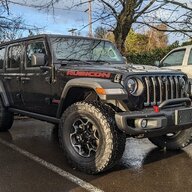
2023 Jeep Wrangler Rubicon
So, spent a few months reading a lot of posts here and doing some research on the side. I will post my findings. Hopefully it will help others in same situation.

I believe my factory-installed AGM battery is likely a Group 48/H6 size with a 75Ah rating. While 75Ah isn’t tiny, it may not be enough if to run multiple high-draw accessories—such as off-road lights, fridge/freezer units, radios, inverters, and other camping gear—especially for extended periods without the engine running.

What I Am Looking For

Higher Ampere-Hour (Ah) Rating: A battery with a higher Ah rating (80Ah to 100Ah or more, if available in the correct form factor). Without having to modify the battery tray, how large can I go?

NOTE: I will be installing a dedicated dual-battery system later in the year. Using a second, deep-cycle auxiliary battery (often with a DC-DC charger) to power my accessories will preserve the main battery. The auxiliary battery can be a larger, high-capacity AGM or lithium unit tailored for running gear. I am a drone pilot and travel outdoors very early and very late. Before and after Sunrise. I have lights all around the jeep including the rear hatch. All are LED but it really looks like my main drains very quickly. (12.4V - 12.0V w/in an hour).

Would Deep-Cycle batteries work? Or should I just use that as the secondary battery? I read. Hybrid or deep-cycle AGM batteries, or even lithium iron phosphate batteries, are much better suited for this.

Premium AGM or Advanced Technology: Looking for premium-brand AGMs known for their durability under heavy loads and frequent cycling. Lithium batteries are top-tier for longevity and capacity utilization, but they come at a premium and may require special charging solutions.


Recommended Battery Options

Odyssey Extreme Series (e.g., PC1500 or PC1750): Known for their high cranking power, excellent deep-cycle capabilities, and long service life. They often have higher Ah ratings and are extremely resilient to vibration and deep discharge.

X2Power (from Batteries Plus): These are often rebranded NorthStar batteries with top-tier AGM technology and a solid warranty.

Optima YellowTop: While some say Optima’s quality has varied over the years, the YellowTop line is still considered a decent deep-cycle AGM option, offering good reserve capacity and faster recharging. However, they may have slightly lower Ah ratings compared to some other premium AGMs of similar size.

Lithium Iron Phosphate (LiFePO4):
If you’re looking for the absolute best in longevity and usable capacity, a LiFePO4 battery is hard to beat. These batteries:

Offer a greater usable capacity (you can discharge them deeply without reducing lifespan as dramatically), are much lighter than AGM batteries, last for thousands of cycles (often 5-10 times longer than AGM). However, they typically require a DC-DC charger specifically designed for lithium profiles and are more expensive upfront.

I do have the FCA Upgraded 240Amp Alternator. But if you haven't noticed, I am not an expert in all of this. Wondering if I will have to upgrade that as well.

ANY suggestions and help is GREATLY appreciated to help me sort out this mess. It's almost as if I did too much research and just made it more confusing...
Sponsored

 

AndySpill

Well-Known Member
First Name
Andy
Joined
Oct 24, 2023
Threads
73
Messages
1,660
Reaction score
1,273
Location
Pittsburgh
Vehicle(s)
2018 JL Sahara
Higher Ampere-Hour (Ah) Rating: A battery with a higher Ah rating (80Ah to 100Ah or more, if available in the correct form factor). Without having to modify the battery tray, how large can I go?
Hi Jon:

There is a cleat in the battery tray for owners who optioned JLs that, like you, came with the smaller H6 battery, where the removal of this cleat--which is trivial--will allow you to install a slightly larger H7 battery.

I recommend that people, when replacing their battery opt for this larger size as prices are often the same or just slightly more for a beefer battery.

As it regards what if any secondary battery came your Wrangler we need to know what type of engine/system it is (e.g. straight 3.6L, etorque.) If you have a factory dual AGM battery system we need to talk about that Auxiliary battery behind the front passenger's tire as well.

That said, I shy away from recommending this H7 battery option for you so as to keep your costs down considering your short term goal of installing a dual-battery system. Unless you are very proficient in sourcing your own components, and you've suggested that you are not, I'd strongly consider Genesis Offroad's offerings, which involve dual Group 25 batteries. This system will allow you to manage the maximum power out of your batteries without shortening their life or creating a situation where you can't re-crank your engine to find the alternator recharging them.

Shane at Genesis Offroad seems to like the use of Odyssey and Full River/Throttle brand batteries with his system https://www.genesisoffroad.com/collections/batteries which are both Absorbent Glass Mat (AGM) type: a lead acid variant that specializes to delivering current as needed.

If you go the home grown component route I might shy away from Lithium Iron Phosphate (LiFePO4) chemistry given--short of heated batteries---their inability to charge at decent rates, without damage to the battery, at below freezing temperatures.

LiFePO4s are a great battery for some things. I'm not sure that under the hood, particularly for those living in 4 season climates is one of them.
 
OP
OP
jromanmd

jromanmd

Well-Known Member
First Name
Jon
Joined
Oct 16, 2022
Threads
26
Messages
458
Reaction score
606
Location
Annapolis
Website
www.instagram.com
Vehicle(s)
2023 Jeep Wrangler Rubicon
Hi Jon:

There is a cleat in the battery tray for owners who optioned JLs that, like you, came with the smaller H6 battery, where the removal of this cleat--which is trivial--will allow you to install a slightly larger H7 battery.

I recommend that people, when replacing their battery opt for this larger size as prices are often the same or just slightly more for a beefer battery.

As it regards what if any secondary battery came your Wrangler we need to know what type of engine/system it is (e.g. straight 3.6L, etorque.) If you have a factory dual AGM battery system we need to talk about that Auxiliary battery behind the front passenger's tire as well.

That said, I shy away from recommending this H7 battery option for you so as to keep your costs down considering your short term goal of installing a dual-battery system. Unless you are very proficient in sourcing your own components, and you've suggested that you are not, I'd strongly consider Genesis Offroad's offerings, which involve dual Group 25 batteries. This system will allow you to manage the maximum power out of your batteries without shortening their life or creating a situation where you can't re-crank your engine to find the alternator recharging them.

Shane at Genesis Offroad seems to like the use of Odyssey and Full River/Throttle brand batteries with his system https://www.genesisoffroad.com/collections/batteries which are both Absorbent Glass Mat (AGM) type: a lead acid variant that specializes to delivering current as needed.

If you go the home grown component route I might shy away from Lithium Iron Phosphate (LiFePO4) chemistry given--short of heated batteries---their inability to charge at decent rates, without damage to the battery, at below freezing temperatures.

LiFePO4s are a great battery for some things. I'm not sure that under the hood, particularly for those living in 4 season climates is one of them.
Wow...great info Andy! This is just what I needed to start figuring this out! Really Appreciate it. Also, would you recommend just bypassing the Aux completely?
 

AndySpill

Well-Known Member
First Name
Andy
Joined
Oct 24, 2023
Threads
73
Messages
1,660
Reaction score
1,273
Location
Pittsburgh
Vehicle(s)
2018 JL Sahara
Wow...great info Andy! This is just what I needed to start figuring this out! Really Appreciate it. Also, would you recommend just bypassing the Aux completely?
Hi again Jon:

Here is the skinny on the Aux battery, particularly as it relates to your desire for a dual battery setup.

The Genesis Offroad (GO) kit will, when both batteries are adequately charged, put them together in parallel (positive post connected, negative posts connected) even during engine start stop events (ESS), unlike the dual AGM battery factory configuration which separates them and runs such events off the Aux battery.

The dual AGM battery JL tests the voltage of each battery during ESS events and when it sees 6 ESS events in one cold engine crank, in which the batteries share identical voltages, as it will with batteries connected in parallel as per the GO kit that reflect one composite shared voltage, it will turn ESS off until the next engine cold crank. This doesn't happen under the factory configuration because the ESS/Aux battery has just powered alone an ESS event and likely has a voltage that's lower (dissimilar) than the main battery's voltage.

Even for the few who like ESS events, this is hardly a reason not to get the Genesis Offroad kit. Rather, a reason not to get it is if, unlike you, you are not running substantial numbers of appliances while the engine is off, particularly far from civilization, in which case this otherwise great toolset is overkill. The kit is for monitoring and maximizing your battery power without drawing too much current from the batteries to either shorten their life or prevent a cold crank. This it does extremely well.

If....and I say if...it is your intention to replace your main battery with an H7 before acquiring this kit and its batteries....and I would be inclined to not recommend you do so for financial reasons mentioned unless you need a new battery very soon before you can afford the GO kit ....if you proceed nonetheless, I see two choices. You either also replace the ESS/Aux battery as well, or you bypass it. Don't merely replace the main battery risks the old ESS/Aux battery's cannibalization of it, as most of the time in the factory setup these batteries too are connected in parallel. And if you give up the ESS/Aux battery its advised you don't run ESS events as follows:

Bypassing the Aux battery occurs with two steps. The first is to remove from the main battery's negative post the factory cable there that does NOT have as its other end the body ground connection on the passenger's front panel near the top of the engine bay. Keep this ground cable connected. Removing this other cable breaks a circuit with the ESS/Aux battery taking it out of the vehicle's electrical schematic to neither give nor receive charge.

Make sure to insulate the loose end of this cable you just removed.

The second step in this process is to remove Fuse 42 from the Power Distribution Center (PDC) that black box on the passenger's side under the hood that is your vehicle's intelligent fuse box. Removing this fuse (keep it in a safe place) prevents the Power Control Relay (PDC) from ever being energized: a relay that when provided power separates the two factory batteries, as happens normally during ESS events as well as an instant just prior to cold cranking.

With this fuse removed all calls for power to either or both batteries now go to all connected batteries if which you will have one: your new main H7.

Do turn ESS off with a button push each time you crank or with the acquisition of aftermarket tech to do this for you as it is ill advised to run a factory dual AGM battery JL with one battery and allow ESS events to occur--much that other vehicles run ESS with one battery.

If you take the step to acquire GO wares, Shane at Genesis Offorad, or others who have installed this kit on the forum can speak much better than I as to what state Fuse 42 needs to be in when this kit is installed, or if it even matters.

Good luck
 
Last edited:

2nd 392

Well-Known Member
First Name
Mike
Joined
Jun 20, 2021
Threads
15
Messages
10,054
Reaction score
16,831
Location
Ca
Vehicle(s)
Grand Cherokee srt.V10 Dodge 4x
A thought, Odyssey ODX 27 F, the same length and width but 1.4” taller than an H-7. Hot pulse CCA- 1750, HCA- 1290, CCA- 930, MCA- 1080, 20 hr nominal- 92 AH, 10 hr- 88 AH. reserve-195 min. A member reported it fit in both his JL & JT. Not cheap at $481 but cheaper and much easier than duals if it meets your needs.
 

Sponsored

Burtv

Well-Known Member
First Name
Burt
Joined
Apr 1, 2021
Threads
5
Messages
45
Reaction score
39
Location
Escalon
Vehicle(s)
2020 JLU Rubicon, 2019 JLU Rubicon, 1978 CJ7, Polaris Ranger XP, Mercedes S580
In my 2020 JLUR 3.6L I installed this Antigravity Lifepo4 Lithium 80 Ah with a backup battery built-in reserve for emergency starts. I've used the emergency built-in reserve a couple times, what a life saver. I've not had any problem at all and been running this setup for over a year. Plus its about 40lbs lighter. Down side is they are very expensive but if you shop around you can find for less than MSRP shown on their website. I paid about $1,100 for 80Ah H7.

https://antigravitybatteries.com/products/starter-batteries/automotive/ag-h7-rs/

The 5 Year Limited Warranty is on a pro-rated basis based from the original date of purchase. Only ONE battery replacement will be given under warranty. 1-3 Years — Free Replacement 4th year — 40% discount from retail MSRP 5th year — 30% discount from retail MSRP
 

AndySpill

Well-Known Member
First Name
Andy
Joined
Oct 24, 2023
Threads
73
Messages
1,660
Reaction score
1,273
Location
Pittsburgh
Vehicle(s)
2018 JL Sahara
In my 2020 JLUR 3.6L I installed this Antigravity Lifepo4 Lithium 80 Ah with a backup battery built-in reserve for emergency starts. I've used the emergency built-in reserve a couple times, what a life saver. I've not had any problem at all and been running this setup for over a year. Plus its about 40lbs lighter. Down side is they are very expensive but if you shop around you can find for less than MSRP shown on their website. I paid about $1,100 for 80Ah H7.

https://antigravitybatteries.com/products/starter-batteries/automotive/ag-h7-rs/

The 5 Year Limited Warranty is on a pro-rated basis based from the original date of purchase. Only ONE battery replacement will be given under warranty. 1-3 Years — Free Replacement 4th year — 40% discount from retail MSRP 5th year — 30% discount from retail MSRP
Hi Burt:

Curious. Do you ever find yourself taking your JL to climates outside of your Modesto area where temperatures drop below freezing?

I'm curious how these non-heated LiFePO4 batteries fair in such situations. TIA.
 

AndySpill

Well-Known Member
First Name
Andy
Joined
Oct 24, 2023
Threads
73
Messages
1,660
Reaction score
1,273
Location
Pittsburgh
Vehicle(s)
2018 JL Sahara
Wow...great info Andy! This is just what I needed to start figuring this out! Really Appreciate it. Also, would you recommend just bypassing the Aux completely?
Hi Jon:

I had another thought. Consistent with the following you can acquire the Genesis Offroad Gen 3 kit: that's the one with two Group 25 batteries and power management, in pieces, simply getting the batteries and new battery tray first:


Burtv

Well-Known Member
First Name
Burt
Joined
Apr 1, 2021
Threads
5
Messages
45
Reaction score
39
Location
Escalon
Vehicle(s)
2020 JLU Rubicon, 2019 JLU Rubicon, 1978 CJ7, Polaris Ranger XP, Mercedes S580
Hi Burt:

Curious. Do you ever find yourself taking your JL to climates outside of your Modesto area where temperatures drop below freezing?

I'm curious how these non-heated LiFePO4 batteries fair in such situations. TIA.
Yes, I've been in the Tahoe area for a week in lowest temps about the mid-teens and not running the Jeep for a couple days and no problems. The temp concerns were mine also before I purchased the Antigravity. I spoke to a company rep and asked about this. He said that they have customers in Wisconsin and have not reported any problems. He said the biggest problem is when people leave their vehicle in winter storage at low temps and don't use it for weeks at a time and the cold will effect the battery but if your using the battery on a semiregular basis should not have any problems. I'm sure this isn't considering super extreme cold climates. They do advise that you shouldn't leave the battery unused in very cold climate any longer than 10 days. Also advised that if you do and your vehicle wont start you should turn on the headlights and leave them on for a couple of minutes then turn off and try and start again. This will warm the battery and help it energize. Lithium is a different animal for sure.
 

AndySpill

Well-Known Member
First Name
Andy
Joined
Oct 24, 2023
Threads
73
Messages
1,660
Reaction score
1,273
Location
Pittsburgh
Vehicle(s)
2018 JL Sahara
Yes, I've been in the Tahoe area for a week in lowest temps about the mid-teens and not running the Jeep for a couple days and no problems. The temp concerns were mine also before I purchased the Antigravity. I spoke to a company rep and asked about this. He said that they have customers in Wisconsin and have not reported any problems. He said the biggest problem is when people leave their vehicle in winter storage at low temps and don't use it for weeks at a time and the cold will effect the battery but if your using the battery on a semiregular basis should not have any problems. I'm sure this isn't considering super extreme cold climates. They do advise that you shouldn't leave the battery unused in very cold climate any longer than 10 days. Also advised that if you do and your vehicle wont start you should turn on the headlights and leave them on for a couple of minutes then turn off and try and start again. This will warm the battery and help it energize. Lithium is a different animal for sure.
Thanks Burt:

It doesn't sound like Antigravity's requirements for best practices with their LiFePO4 products are burdensome.
 

Sponsored

THAW

Well-Known Member
First Name
Foster
Joined
Oct 28, 2022
Threads
4
Messages
2,261
Reaction score
3,122
Location
PNW - prefer Middle of Nowhere
Vehicle(s)
23 JL4DrRubicon
The Genesis Offroad (GO) kit will, when both batteries are adequately charged, put them together in parallel (positive post connected, negative posts connected) even during engine start stop events (ESS), unlike the dual AGM battery factory configuration which separates them and runs such events off the Aux battery.
The Genesis system doesn't connect the batteries based on SOC (state of charge).

By default, the Genesis system disconnects the batteries when it sees voltage below 12.7 for one minute, which would almost certainly occur during most/all 1+ minute ESS events even when both batteries are effectively fully charged (less the one-minute ESS drawdown).

Genesis offers an optional sensor wire for Gen 3 systems that changes the disconnection voltage threshold based on ignition status. This optional part isn't related to ESS per se, but it likely prevents disconnection of the batteries during all ESS events.
 
Last edited:

Bill_BCNtoNY

Well-Known Member
First Name
Bill
Joined
Jul 17, 2022
Threads
14
Messages
1,327
Reaction score
2,109
Location
NY
Vehicle(s)
Ocean Blue JLU Sahara 3.6
Occupation
Advisor to Boutique Consulting Firms and Solo Practitioners
A lot of the contributions from wiser people than me are flying way over my head… but I wanted to chime in to say that the Genesis kit is an incredibly high quality.

Installing it was a daunting task to a newbie like me and the video and materials give plenty of confidence I picked right.
 
Last edited:

THAW

Well-Known Member
First Name
Foster
Joined
Oct 28, 2022
Threads
4
Messages
2,261
Reaction score
3,122
Location
PNW - prefer Middle of Nowhere
Vehicle(s)
23 JL4DrRubicon
There is a cleat in the battery tray for owners who optioned JLs that, like you, came with the smaller H6 battery, where the removal of this cleat--which is trivial--will allow you to install a slightly larger H7 battery.
@jromanmd, if (as you suggested) your Jeep came with the 240 A alternator (in '23 it was part of the Tow Package), your OE battery is already an H7 (not the smaller H6). Also, if it's 75 Ah (as you suggested) that's another sign it's already an H7 (OE batteries labeled "75 Ah" are the larger 94R/H7 group size).
 
Last edited:

AndySpill

Well-Known Member
First Name
Andy
Joined
Oct 24, 2023
Threads
73
Messages
1,660
Reaction score
1,273
Location
Pittsburgh
Vehicle(s)
2018 JL Sahara
The Genesis system doesn't connect the batteries based on SOC (state of charge).

By default, the Genesis system disconnects the batteries when it sees voltage below 12.7 for one minute, which would almost certainly occur during most/all 1+ minute ESS events even when both batteries are effectively fully charged (less the one-minute ESS drawdown).

Genesis offers an optional sensor wire for Gen 3 systems that changes the disconnection voltage threshold based on ignition status. This optional part isn't related to ESS per se, but it likely prevents disconnection of the batteries during all ESS events.
You're a jerk looking for a fight.

I wrote "The Genesis Offroad (GO) kit will, when both batteries are adequately charged, put them together "

You wrote, in so many words, 'it's not state of charge, it's the voltage,' citing that actual voltage that determines connection/disconnection.'

And what Foster is the most common method of measuring state of charge.......?

voltage.

You seek to correct when all you've done is restate.

~~~~~~~~~~~~~~

It's like you understand the facts but not the essence of the message--and you do this regularly, more eager to correct than understand.

In this case that message (now pay attention Foster) was that the Gen 3 kit normally limits an operator to 6 ESS events per cold crank, and that in this poster's opinion such rare limitations , while I include only to be thorough for the OP's decision making, don't detract from the kit's fabulous indications as a way to maximize and monitor overlanding use of one's battery power plant while not compromising battery life and the ability to crank and get home.

But that's not good enough for you. This extremely trivial limitation of 6 ESS events in one cold crank, that I, one of the few who actually run ESS events, has never achieved trickle charging since 2018 (never does battery voltage prevent ESS events in my JL,) let alone all those out there who either have turned ESS off or find it not engaging due to low voltage readings on their stock ESS/Aux battery, Foster would like to point out that some of those longer ESS events with the Gen 3 kit, might actually result in the batteries separating, like factory configuration, and perhaps not contribute to this 6 ESS event limitation due to voltages differences between the batteries that can arise in such separations......

.....yesh

How many people do you think run into this 6 ESS event limitation regularly? Wait don't answer yet. Of them, how many who bought the Gen 3 kit for the right reasons discussed above actually care?

You seek to correctm and come across as smart but paradoxically convey the opposite when you pedantically split hairs on off the point rare nuance. But please, talk is cheap so let me provide yet another example.

Here you point out that " ESS event limits (per ignition cycle) are present for all methods of factory AUX (ESS) battery bypass."

https://www.jlwranglerforums.com/fo...ps-to-9-4v-when-cranking.140242/#post-2926804

Considering I and most forum members suggest turning off the ESS system when running with just the main battery how is this point relevant? Wait, don't answer.

Suggestion: before you go thinking that you're correcting people, even if you are (which you're not here) consider asking if its relevant or if you're acting like Sheldon on Big Bang Theory, full of facts but absent of social nuance.

Pointing out the limitations of an ESS system under a configuration in which it shouldn't be running is like saying that "you shouldn't smoke cigarettes in a surgical operating room because the surgeon might cough," losing sight of policy already in place to this effect for the far more important need to limit combustion in an oxygen rich environment.
 

THAW

Well-Known Member
First Name
Foster
Joined
Oct 28, 2022
Threads
4
Messages
2,261
Reaction score
3,122
Location
PNW - prefer Middle of Nowhere
Vehicle(s)
23 JL4DrRubicon
@AndySpill, writing word salads about systems you don't fully understand creates confusion.

And what Foster is the most common method of measuring state of charge.......?

voltage.
A load (e.g. Jeep electronics during an ESS event) lowers voltage, obscuring SOC measurement estimates.

The point is, the Genesis system ostensibly attempts to detect charging voltage (e.g. alternator power), which mostly lies outside normal battery state of charge parameters. Importantly, charging voltage isn't present during ESS events in alternator-equipped JLs.

Foster would like to point out that some of those longer ESS events with the Gen 3 kit, might actually result in the batteries separating, like factory configuration, and perhaps not contribute to this 6 ESS event limitation due to voltages differences between the batteries that can arise in such separations......
No. Now you've added confusion about product generations. More importantly, as I've previously attempted to explain to you, the 2nd/"aux" battery in the Genesis Dual Battery Kits (excluding their newer relocation/replacement products) is not fundamentally or functionality related to the Jeep's AUX (ESS) battery/system.


Bottom Line:
Genesis battery connection state is NOT related to stock JL battery connection state (except in less-common, newer kits expressly designed to relocate OE function). Your posts comparing these systems reflect misunderstanding and are misleading.
Sponsored

 
Last edited:


Top