
grimmjeeper
Well-Known Member
- First Name
- Roy
- Joined
- May 6, 2021
- Threads
- 13
- Messages
- 8,282
- Reaction score
- 41,354
- Location
- Castle Rock, CO
- Website
- www.grimmjeeper.com
- Vehicle(s)
- 2021 Wrangler, 1987 Comanche, 1997 F250
- Build Thread
- Link
- Occupation
- enginerd
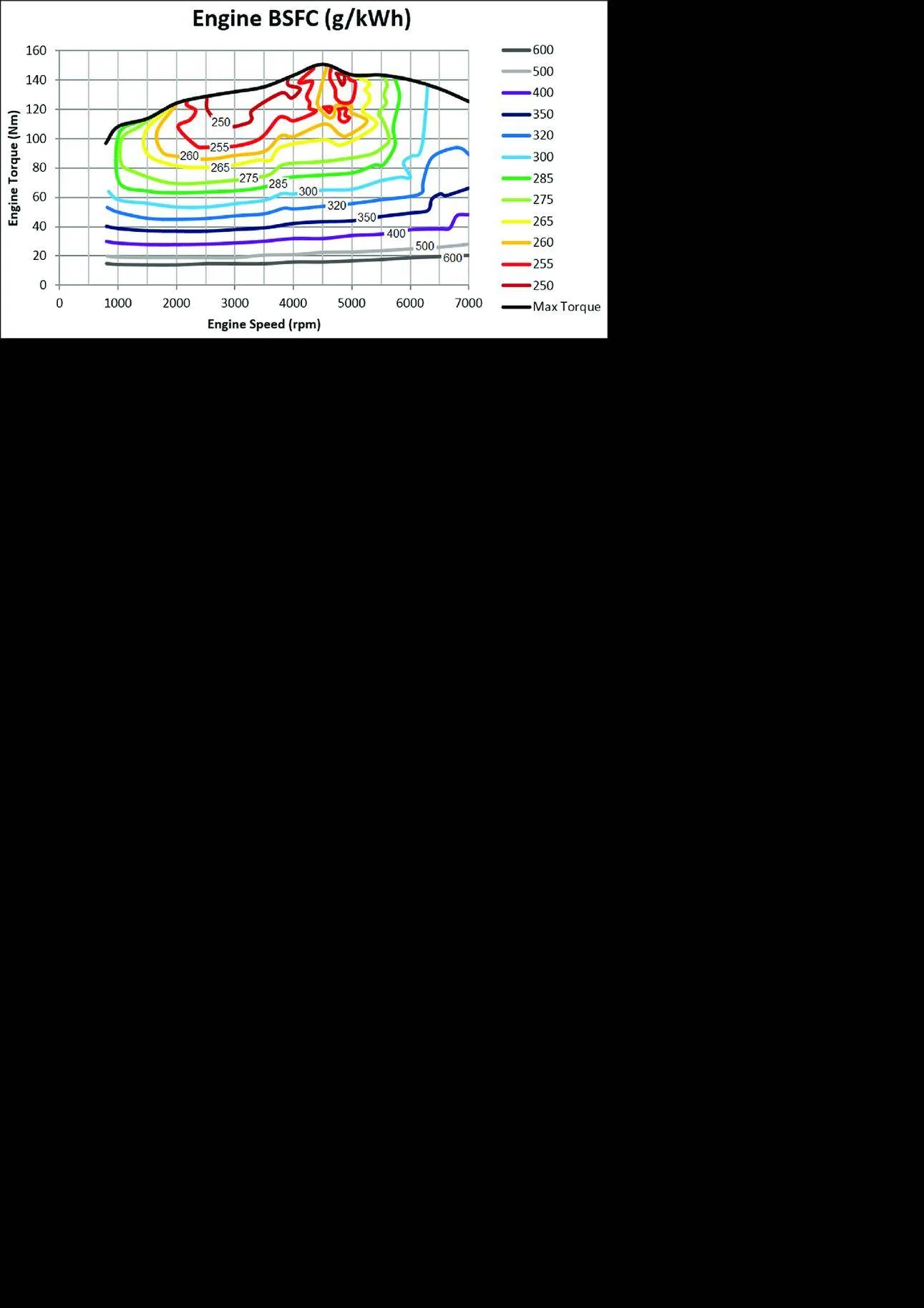
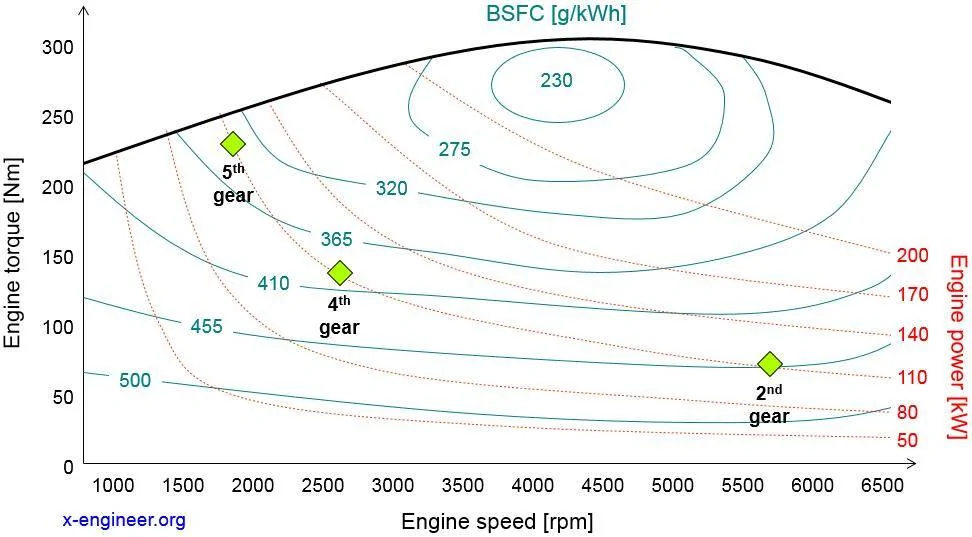
When you operate an engine at too low of an RPM you lose efficiency. For the 3.6, that's around 2,000 RPM. While you can get away with it on the EPA test loop that operates under very strict conditions that don't match the real world, you don't get any real world benefit when you operate an engine on the wrong end of the BSFC (Brake Specific Fuel Consumption) curve.On the JK 5-speed, I would agree, but with the 8-speed, there is certainly an argument to be made to keep the RPMs below 2,000 to maximize fuel efficiency, which OP stated is one of the reasons he is considering doing this in the first place.
The argument being made, which I agree with in this case, is that if 8th gear is running at 2,500 RPM on the freeway, then you are losing out on potential fuel economy.
If 8th gear is running at 1,800 RPM, you will benefit from improved fuel economy under low load conditions (i.e. flat or slightly downhill). If the load increases, the tranny will downshift for more torque as needed. Therefore, there is no loss in towing performance.
I would even take it a step further and say that if 8th is running at 2,500 RPMs on the freeway that the tranny has gears that are wasted. The entire benefit of having 8 speeds is to have closer ratios in the shifts. Downshifting 1 gear in an 8-speed might only raise the RPMs by 200 whereas downshifting in a 4-speed might be closer to 800, which might be WAY more than you need. That is why people tend to put lower gears in the older Jeeps so their RPMs aren't jumping crazy high just to maintain speed on a slight incline.
Hope that makes sense.
For every engine, there is an RPM where you make the most power with the least fuel. Sure, up above 3,000 RPM you're losing fuel economy. But with the 3.6, you pass the efficiency point before you drop below 2,000 RPM. The best efficiency point is different for every engine. It depends on the compression ratio, the head design, and valve timing (along with other details). To get the high end horsepower, the 3.6 sacrifices it's low end efficiency and power.
Hope that makes sense
Sponsored
Last edited: