
Sponsored
Deleted member 59498
Guest
Do you need one?

CarbonSteel
Well-Known Member
Pass on UPR. If anything like the 3.6L model, the hose connector will become brittle and crack and leak oil.
Argenti
Member
- Thread starter
- #5
I put one on my Challenger with the 392. If one is incorporated into the intake manifold, that is good but being that this a direct injection engine, I would like to install one. I have looked around a bit and found a few. This looks to be the best one-
https://www.mishimoto.com/jeep-wrangler-2018-20l-baffled-oil-catch-can.html
https://www.mishimoto.com/jeep-wrangler-2018-20l-baffled-oil-catch-can.html
Sponsored
Jeeperz Kreeperz
Well-Known Member
- Joined
- Jan 15, 2018
- Threads
- 47
- Messages
- 479
- Reaction score
- 508
- Location
- New Hampshire
- Vehicle(s)
- 2021 JLUR 4xe
I read good things about that one as well. I wasn’t really even shopping for one, but a barely used one popped up at a price I couldn’t pass up. I attempted to install it, and discovered the mounting bracket didn’t work at all. The mounting location on the 2.0L 4xe is actually quite different than on the 2.0L non-4xe. I reached out to Mishimoto, and they said they did not make a mount for the 4xe.I put one on my Challenger with the 392. If one is incorporated into the intake manifold, that is good but being that this a direct injection engine, I would like to install one. I have looked around a bit and found a few. This looks to be the best one-
https://www.mishimoto.com/jeep-wrangler-2018-20l-baffled-oil-catch-can.html
It would have required fabricating my own bracket, and I was busy at the time, so I quickly sold it for a nice profit. Not saying it won’t work…just know you’re going to have to do some of your own fabricating to mount it.


Borderline Jeep
Well-Known Member
- First Name
- Chris
- Joined
- Jul 6, 2022
- Threads
- 1
- Messages
- 70
- Reaction score
- 106
- Location
- Houston TX
- Vehicle(s)
- 2019 Jeep Rubicon
- Vehicle Showcase
- 1
I have the Mishimoto one and it's quality. I had one on my 3.6L and I pulled out a decent amount of oil. I liked the quality I also bought a Mishimoto one for my Mazda Miata and my new 2023 JL 2.0.
https://www.mishimoto.com/jeep-wrangler-2018-20l-baffled-oil-catch-can.html
https://www.mishimoto.com/jeep-wrangler-2018-20l-baffled-oil-catch-can.html
Borderline Jeep
Well-Known Member
- First Name
- Chris
- Joined
- Jul 6, 2022
- Threads
- 1
- Messages
- 70
- Reaction score
- 106
- Location
- Houston TX
- Vehicle(s)
- 2019 Jeep Rubicon
- Vehicle Showcase
- 1
Interesting. Where does it drain excess oil to?There's one built in under the intake manifold:

Sponsored
GATORB8
Well-Known Member
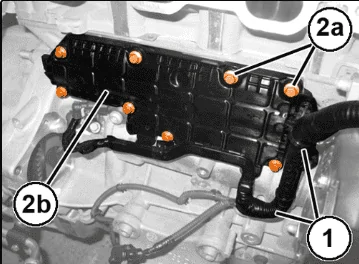
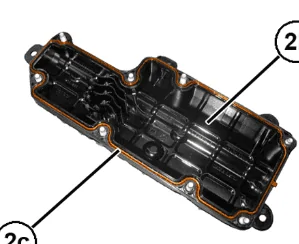
Hard to tell, the manual has a interior shot of the "engine oil vapor seperator" but not a shot of the block behind it:Interesting. Where does it drain excess oil to?

Fat_Tony_Ova_Hea
Member
- First Name
- Tony
- Joined
- Jul 7, 2022
- Threads
- 4
- Messages
- 24
- Reaction score
- 30
- Location
- Nassau County Long Island
- Vehicle(s)
- 2019 Wrangler Sahara
GATORB8
Well-Known Member
Found the operation description:Interesting. Where does it drain excess oil to?
OPERATION
There are two sides to the Positive Crankcase Ventilation (PCV) system. The dirty side of the system consists of the PCV Valve, installed on the Valve Cover Oil Separator, and the PCV Tube that connects between the PCV Valve and Intake Manifold. The clean air side of the system consists of the Make-Up Air (MUA) Tube that connects between the MUA Oil Separator in the Valve Cover and the Fresh Air Hose, and Crankcase Pressure Sensor.
NATURALLY ASPIRATED OPERATION
When the engine is running Naturally Aspirated, clean air flows from the Fresh Air Hose, through the MUA Tube and MUA Oil Separator, to the crankcase. The crankcase vapors are pushed into the other Oil Separator in the Valve Cover. Engine vacuum draws the vapors into the Intake Manifold through the PCV Valve and PCV Tube where they are burned.
BOOST OPERATION
During boost operation, a check valve in the PCV closes blocking flow through the PCV Tube. The crankcase vapors flow out through the MUA Oil Separator and MUA Tube into the Fresh Air Hose on the clean air side, then into the Turbocharger, and eventually into the Intake Manifold where they are burned.
Borderline Jeep
Well-Known Member
- First Name
- Chris
- Joined
- Jul 6, 2022
- Threads
- 1
- Messages
- 70
- Reaction score
- 106
- Location
- Houston TX
- Vehicle(s)
- 2019 Jeep Rubicon
- Vehicle Showcase
- 1
This is a lot of good information. Thank you for sharing. Does adding a catch can stop any of this from working? It appears, from the description, under boost the oil catch can will offer some additional protection.Found the operation description:
OPERATION
There are two sides to the Positive Crankcase Ventilation (PCV) system. The dirty side of the system consists of the PCV Valve, installed on the Valve Cover Oil Separator, and the PCV Tube that connects between the PCV Valve and Intake Manifold. The clean air side of the system consists of the Make-Up Air (MUA) Tube that connects between the MUA Oil Separator in the Valve Cover and the Fresh Air Hose, and Crankcase Pressure Sensor.
NATURALLY ASPIRATED OPERATION
When the engine is running Naturally Aspirated, clean air flows from the Fresh Air Hose, through the MUA Tube and MUA Oil Separator, to the crankcase. The crankcase vapors are pushed into the other Oil Separator in the Valve Cover. Engine vacuum draws the vapors into the Intake Manifold through the PCV Valve and PCV Tube where they are burned.
BOOST OPERATION
During boost operation, a check valve in the PCV closes blocking flow through the PCV Tube. The crankcase vapors flow out through the MUA Oil Separator and MUA Tube into the Fresh Air Hose on the clean air side, then into the Turbocharger, and eventually into the Intake Manifold where they are burned.

Similar threads
- Replies
- 10
- Views
- 1,252
