
Sponsored

Battery voltage and your Jeep

YBABRAT

Well-Known Member
Joined
May 12, 2024
Threads
55
Messages
1,409
Reaction score
1,355
Location
VIRGINIA
Vehicle(s)
2019 2 Door Rubicon X Wannabe
Occupation
None... but it pays well.
Alright, after a month of happy driving, and slowly diving into bits and bobs as I go through areas of upkeep. I thought a basic battery voltage of 14.2v to 14.3v was good on Jeep operation. Until recently, while removing Aux battery, and eliminating issues as I see them. I figured I would give the main battery a recondition with my smart charger. After a few hours, completion of the 1 year old battery, from its born on date stamp. I installed and gave a test run watching the voltage as I drove along. Initially after start up, voltage remained constant at 14.5v around 67° F. After idle warm up and driving along the Jeep Offroad page showed live time voltage readings. It would stay 95% of the time at 14.5v, with short and random 14.4v and 14.6v fluctuations. Basically what I was seeing is the charge system placing a 14.6v pulse when voltage dropped to 14.4v from battery top charge. The 14.5v reading is the average. Before I had done any battery maintenance, I had 14.3v when I first drove the car. After time it dropped to 14.2v. So that lower voltage had me thinking in checking the batteries out.

Just food for thought, as weak batteries are a major pain to deal with for Jeep issues. So far this topic is more informative than just... you need to replace your battery, without really knowing it's condition and what voltage is better.
Sponsored

 

andy29847

Well-Known Member
First Name
Andy
Joined
Oct 22, 2022
Threads
15
Messages
441
Reaction score
714
Location
Trenton, SC
Vehicle(s)
2020 JLUR
My biggest complaint about the Jeep battery system is that the voltmeter tells you very little about the condition of the batteries. I think that since we have and Intelligent Battery Sensor, a Smart Alternator, and computer control, the system should provide more info.

Another sure sign that the battery system is not that great is the fact that Jeep forums like this one have a separate section devoted to batteries.

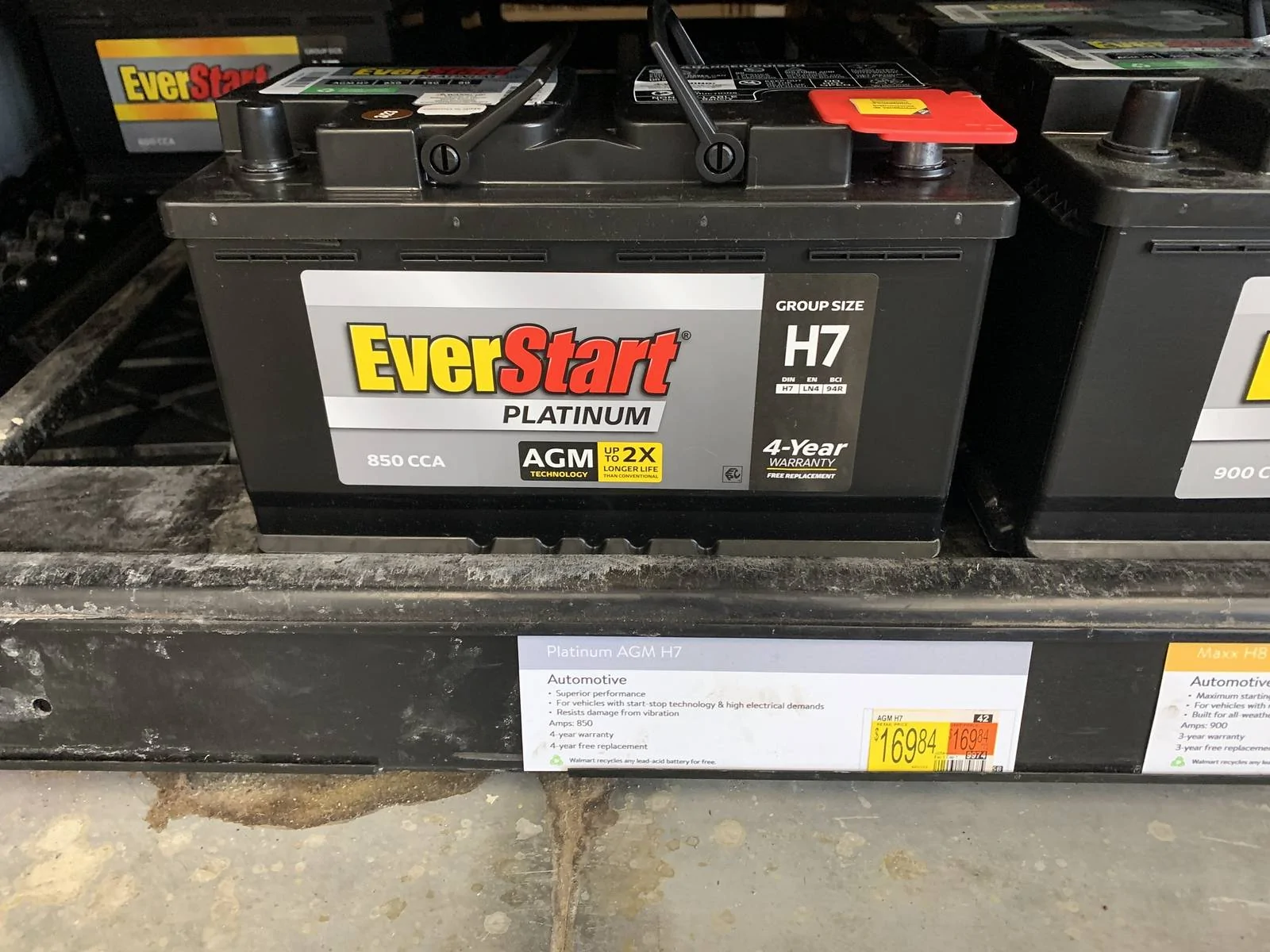
I recommend that when the original batteries go bad, replace them with a single H7/Group 94 battery, and pull fuse f42 to disable the Power Control Relay. You will have virtually the same power from a good H7/group 94 battery as you get from the 2 Mopar batteries and everything on your Jeep still operates as it came from the factory. You'll get a better battery warranty too.

If you really want to return to the old days, use a stop/start device to turn off the stop/start feature. I've done this with my Jeeps and I love it!

Jeep Wrangler JL Battery voltage and your Jeep i-4rrpkhs-X3
 
OP
OP

YBABRAT

Well-Known Member
Joined
May 12, 2024
Threads
55
Messages
1,409
Reaction score
1,355
Location
VIRGINIA
Vehicle(s)
2019 2 Door Rubicon X Wannabe
Occupation
None... but it pays well.
My biggest complaint about the Jeep battery system is that the voltmeter tells you very little about the condition of the batteries. I think that since we have and Intelligent Battery Sensor, a Smart Alternator, and computer control, the system should provide more info.

Another sure sign that the battery system is not that great is the fact that Jeep forums like this one have a separate section devoted to batteries.

I recommend that when the original batteries go bad, replace them with a single H7/Group 94 battery, and pull fuse f42 to disable the Power Control Relay. You will have virtually the same power from a good H7/group 94 battery as you get from the 2 Mopar batteries and everything on your Jeep still operates as it came from the factory. You'll get a better battery warranty too.

If you really want to return to the old days, use a stop/start device to turn off the stop/start feature. I've done this with my Jeeps and I love it!

i-4rrpkhs-X3.jpg
A quick answer to your rant on lack of battery testing on the smart electrical charging system. You can effectively determine how good your battery is by using a temprature/charge state chart. Your jeep has an outside temprature reading and you have voltage reading when setting ignition to on state. Look at chart to verify the percentage of battery life is current with your battery. You can use a smart charger to recover lost life. Though I will break it down further with a jeep dual battery system on aspects can hasten failure.

I was just about to make an addition... so here it is in comment.

Every Aux14 battery I have come across is not Deep Cycle. Don't confuse Group 24 as an Equivelent, as it may not fit in the box or fit the terminal studs.

Also top tier AGM Aux14 batteries only come in 3 year max warranty. While top tier AGM H6 or H7 if running the aux delete with pulled F42 fuse, can have up to a 5 year warranty. The two do not match on longevity, thus the Aux14 will slowly kill your main battery as the Aux battery ages quicker, it will place demands on the load and leach charge current.

Rule of thumb if keeping a dual battery setup... do not mix AGM with Flooded Cell batteries. Different charge states will effect charging cycles. You can mix LiFePo4 and AGM or Flooded Cell, because LiFePo4 batteries have a built in charge circuit. As long as adequate voltage is given to the positive terminal, the battery will control charge internally without any fancy additional circuitry.

I learned from extremes in climate (Heat and Cold) always have a battery backup jumper with additional ports for devices, a battery load tester, and a smart charger that does at least 7 automated modes to fully charge and revive depleted battery. Some can do all three types and lawn tractor / motor cycle flood cell batteries with a flood cell repair mode. Do not get any charger that is over 10A fast charge. Smart ones will ramp and detect before keeping a constant 10A. Anything higher than 10A will shorten a battery's life.

I had a double whammy... both batteries were not matched. The aux14 was agm and had been depleted when first obtained with key in hand. The main battery is flood cell. So charge state was not well. AGM holds a top charge memory similar to Nicad. That is why you don't deep cycle an AGM.

Anyway saving grace of the two was my main battery was manufactured 08/23. The car was on Jeep lot for almost 3 months. Very little service life done on main battery. An easy repair with a proper charger. The Aux14 revived but I cannot trust it with my existing flooded cell. I may replace with AGM but LiFePo H7, as it seems to be a no brainer for longevity and high current demands.
 

NWJeepr

Banned
Banned
Banned
Joined
Apr 28, 2023
Threads
29
Messages
3,638
Reaction score
7,877
Location
Twin Peaks
Vehicle(s)
2025 Wrangler 2-door
Lithium requires a different charging profile. Why would pairing a lithium battery with a flooded cell in a charging system designed for flooded cell, be a good idea?
 
OP
OP

YBABRAT

Well-Known Member
Joined
May 12, 2024
Threads
55
Messages
1,409
Reaction score
1,355
Location
VIRGINIA
Vehicle(s)
2019 2 Door Rubicon X Wannabe
Occupation
None... but it pays well.
Lithium requires a different charging profile. Why would pairing a lithium battery with a flooded cell in a charging system designed for flooded cell, be a good idea?
I explained in ending my earlier reply.

LiFePo4 car batteries have internal circuitry to charge separate from charging system. Just give them adequate voltage, and they will charge on their own, with any charging system delivering 14.5v to 16V.

On the other hand Jeeps have both Flooded Cell and AGM charging capabilities. Unfortunately it cannot charge both properly when combined. AGM is not as forgiving as Flooded Cell at recovery from deep cycle. There are many who don't realize a car battery should not be depleted beyond 12.2v. Even though there is plenty of voltage to operate things, the current is not there and when needed, as for starting or head lights, voltage will drop drastically, meaning "it is dead Jim".

Because AGM has a different profile on charge state and recovery. The charging system cannot determine both types. Usually it ends up being a snow ball effect. Sorry if I am driving a nail home... but this issue is probably overlooked by many. I was able to find it quicker than most, by being a bit resolute in checking my Jeep out.
 

Sponsored

NWJeepr

Banned
Banned
Banned
Joined
Apr 28, 2023
Threads
29
Messages
3,638
Reaction score
7,877
Location
Twin Peaks
Vehicle(s)
2025 Wrangler 2-door
I explained in ending my earlier reply.

LiFePo4 car batteries have internal circuitry to charge separate from charging system. Just give them adequate voltage, and they will charge on their own, with any charging system delivering 14.5v to 16V.

On the other hand Jeeps have both Flooded Cell and AGM charging capabilities. Unfortunately it cannot charge both properly when combined. AGM is not as forgiving as Flooded Cell at recovery from deep cycle. There are many who don't realize a car battery should not be depleted beyond 12.2v. Even though there is plenty of voltage to operate things, the current is not there and when needed, as for starting or head lights, voltage will drop drastically, meaning "it is dead Jim".

Because AGM has a different profile on charge state and recovery. The charging system cannot determine both types. Usually it ends up being a snow ball effect. Sorry if I am driving a nail home... but this issue is probably overlooked by many. I was able to find it quicker than most, by being a bit resolute in checking my Jeep out.
Interesting. That's not what I've learned regarding lithium batteries in automotive or RV use. LiFePo4 batteries typically require a separate charging circuit than what a typical BIM/alternator or inverter puts out. Good luck with your setup!
 

andy29847

Well-Known Member
First Name
Andy
Joined
Oct 22, 2022
Threads
15
Messages
441
Reaction score
714
Location
Trenton, SC
Vehicle(s)
2020 JLUR
A quick answer to your rant on lack of battery testing on the smart electrical charging system. You can effectively determine how good your battery is by using a temprature/charge state chart. Your jeep has an outside temprature reading and you have voltage reading when setting ignition to on state. Look at chart to verify the percentage of battery life is current with your battery. You can use a smart charger to recover lost life. Though I will break it down further with a jeep dual battery system on aspects can hasten failure.

I was just about to make an addition... so here it is in comment.

Every Aux14 battery I have come across is not Deep Cycle. Don't confuse Group 24 as an Equivelent, as it may not fit in the box or fit the terminal studs.

Also top tier AGM Aux14 batteries only come in 3 year max warranty. While top tier AGM H6 or H7 if running the aux delete with pulled F42 fuse, can have up to a 5 year warranty. The two do not match on longevity, thus the Aux14 will slowly kill your main battery as the Aux battery ages quicker, it will place demands on the load and leach charge current.

Rule of thumb if keeping a dual battery setup... do not mix AGM with Flooded Cell batteries. Different charge states will effect charging cycles. You can mix LiFePo4 and AGM or Flooded Cell, because LiFePo4 batteries have a built in charge circuit. As long as adequate voltage is given to the positive terminal, the battery will control charge internally without any fancy additional circuitry.

I learned from extremes in climate (Heat and Cold) always have a battery backup jumper with additional ports for devices, a battery load tester, and a smart charger that does at least 7 automated modes to fully charge and revive depleted battery. Some can do all three types and lawn tractor / motor cycle flood cell batteries with a flood cell repair mode. Do not get any charger that is over 10A fast charge. Smart ones will ramp and detect before keeping a constant 10A. Anything higher than 10A will shorten a battery's life.

I had a double whammy... both batteries were not matched. The aux14 was agm and had been depleted when first obtained with key in hand. The main battery is flood cell. So charge state was not well. AGM holds a top charge memory similar to Nicad. That is why you don't deep cycle an AGM.

Anyway saving grace of the two was my main battery was manufactured 08/23. The car was on Jeep lot for almost 3 months. Very little service life done on main battery. An easy repair with a proper charger. The Aux14 revived but I cannot trust it with my existing flooded cell. I may replace with AGM but LiFePo H7, as it seems to be a no brainer for longevity and high current demands.

You quoted me with you previous post. I don't know if you were answering my post or distributing general info. Regardless, I'd like to address some things that you wrote.

Regarding your statement about the temperature/charging state chart : There are 2 things that makes your statement more complicated than you indicate. First is that the 2 Jeep batteries are connected together. You have to disconnect the batteries to make a useful voltage measurement. Second, the "stop/start not working - battery charging" was the first waring that I had a "bad" battery. When I disconnected the batteries, let them sit long enough to drain off the surface charge, and then measured the batteries, they both measure 12.4v. On the battery charts I have seen, 12.4vDC is a good battery at 50-60% life span. For our Jeeps, the stop/start threshold is set near 12.4vDC.

I am confused about how "deep cycle batteries" got into the conversation. Deep cycle batteries are for boats and RVs (generally). Not for starting chores.

I have an Everstart (Walmart) 15A charger that works for the types of batteries sold in the American market. I bought it to use with the 6V golf cart batteries in my camper. It's a great tool.

My Walmart H7 battery came with a 4-year warranty.

It took 4 visits to the dealer to get my original batteries replaced under warranty. First they said it was OK. Then they replaced the aux battery. Then they replaced the main battery with a flooded lead acid battery, not an AGM battery. The 4th time they replaced both batteries with Mopar AGM batteries.

Best Regards.
 
OP
OP

YBABRAT

Well-Known Member
Joined
May 12, 2024
Threads
55
Messages
1,409
Reaction score
1,355
Location
VIRGINIA
Vehicle(s)
2019 2 Door Rubicon X Wannabe
Occupation
None... but it pays well.
You quoted me with you previous post. I don't know if you were answering my post or distributing general info. Regardless, I'd like to address some things that you wrote.

Regarding your statement about the temperature/charging state chart : There are 2 things that makes your statement more complicated than you indicate. First is that the 2 Jeep batteries are connected together. You have to disconnect the batteries to make a useful voltage measurement. Second, the "stop/start not working - battery charging" was the first waring that I had a "bad" battery. When I disconnected the batteries, let them sit long enough to drain off the surface charge, and then measured the batteries, they both measure 12.4v. On the battery charts I have seen, 12.4vDC is a good battery at 50-60% life span. For our Jeeps, the stop/start threshold is set near 12.4vDC.

I am confused about how "deep cycle batteries" got into the conversation. Deep cycle batteries are for boats and RVs (generally). Not for starting chores.

I have an Everstart (Walmart) 15A charger that works for the types of batteries sold in the American market. I bought it to use with the 6V golf cart batteries in my camper. It's a great tool.

My Walmart H7 battery came with a 4-year warranty.

It took 4 visits to the dealer to get my original batteries replaced under warranty. First they said it was OK. Then they replaced the aux battery. Then they replaced the main battery with a flooded lead acid battery, not an AGM battery. The 4th time they replaced both batteries with Mopar AGM batteries.

Best Regards.
Ok... yes your question is valid on determining charge state with two batteries. When the Aux14 is charged it should be the same for the primary. Though they must be matched. A Flooded Cell nominal charged state is about .4v lower than AGM. So that being a mixed environment charging is never going to work as intended. The same for Aux14 and H6 battery over time. Once the Aux14 becomes aged it will effect the charge state of the primary battery. I could result in over-charging or under-charging.

So how to figure out what battery needs attention when both are connected in the dual battery system?... Well, one needs disconnected for starters. Usually by the time you are ready to make a check, both batteries are in a compromised state. Albeit a small amount of internal loss to near unrecoverable loss.

Once the Aux14 negative cable is removed from the main battery terminal, you can use an digital battery state tester. I use an ODBMonster battery tester. It's cheap and easy to use, plus it is well built.

Now, my original post on this topic showed the voltage obtained with my recovered and fully charged 1 year old battery. Being we all here have the same charging systems outside of alternator capacity, we all should see 14.5v on the display. If you see it below 14.4v around 67° to 70°F then there is a problem with battery or alternator.

My post was to be simple as to make others think of why they don't see a proper voltage of 14.5v. If I knew that back when I first was handed a key, I would have tackled the issue much sooner than later. I was just fortunate I was curious enough not to wait for an issue.

Deep cycling came up on a Google search for Aux14 AGM. I noticed jeep had a weird combo of battery and alternator options. Some got AGM some did not. None should have both types. So deep cycle was a Google thing when looking up a replacement. Not everyone is keen to know better, just pointing out what is not common in discussion on this Jeep forum.

AGM should have been the only type used in Jeeps as oem. This mix of types by dealers of all things can make this issue worse than it is. AGM has better performance and longevity, just people expect more from battery when off-roading not thinking about 12v AGM having a depletion limit. Once it gets past that limit, it performs worse than a flooded cell in recovery.

The reason why I explained LiFePo4 is that companies are making LifePo4 smart batteries for cars. It takes away the issues we have been given with modernizing car electronics.

Here is a site that makes a smart LiFePo4 battery for extreme conditions.
https://www.relionbattery.com/knowledge/how-do-lifepo4-batteries-perform-in-cold-temperatures
 

ABRubi

Well-Known Member
Joined
Jan 22, 2022
Threads
0
Messages
118
Reaction score
247
Location
America
Vehicle(s)
22 JLUR
Just because lithium batteries have circuitry to allow charging with lead acid batteries does not mean they should be used together. Lithium voltage is 12.9 to 13.2 and lead acid is 12.2 to 12.8. All batteries wired together will seek equilibrium and the lithium's would be constantly discharging to the lead acid's
 
OP
OP

YBABRAT

Well-Known Member
Joined
May 12, 2024
Threads
55
Messages
1,409
Reaction score
1,355
Location
VIRGINIA
Vehicle(s)
2019 2 Door Rubicon X Wannabe
Occupation
None... but it pays well.
Just because lithium batteries have circuitry to allow charging with lead acid batteries does not mean they should be used together. Lithium voltage is 12.9 to 13.2 and lead acid is 12.2 to 12.8. All batteries wired together will seek equilibrium and the lithium's would be constantly discharging to the lead acid's
Sorry... I had a thought at the time of making that comment and did not state my thought to make it clear.

As for main battery not Aux14. But if you are going that route, it can be done with modern LiFePo4 batteries. Here us one type currently in production.

Sorry this is not the link I was looking for... it was a video on the tech and charge requirements. Not all LiFePo4 batteries are the same.
https://antigravitybatteries.com/products/starter-batteries/automotive/ag-h7-rs/
 

Sponsored

Mguy

Well-Known Member
Joined
Nov 29, 2023
Threads
6
Messages
408
Reaction score
386
Location
Far Away
Vehicle(s)
2020 JLUR 6spd MT
So much here . . . .

Resting AGM battery voltage, not system (dash) voltage, reflects battery state of charge, measured as a percentage. This is not the same as battery life or health. Resting AGM voltage can only be measured by disconnecting battery positive or negative, waiting 24 hours or so, and then using an external voltmeter (they're cheap). Generally, if an AGM battery takes a 3 stage charge and then holds it (stays at 12.6v or above) beyond 24 hours it is healthy and will last another year or so with good maintainence.

Edit in response to continuing posts on this thread: Trying to determine AGM start battery life, health, or state of charge from system voltage alone, without first having clear knowledge of system charging parameters, is a fool's errand.
 
Last edited:
OP
OP

YBABRAT

Well-Known Member
Joined
May 12, 2024
Threads
55
Messages
1,409
Reaction score
1,355
Location
VIRGINIA
Vehicle(s)
2019 2 Door Rubicon X Wannabe
Occupation
None... but it pays well.
So much here . . . .

Resting AGM battery voltage, not system (dash) voltage, reflects battery state of charge, measured as a percentage. This is not the same as battery life or health. Resting AGM voltage can only be measured by disconnecting battery positive or negative, waiting 24 hours or so, and then using an external voltmeter (they're cheap). Generally, if an AGM battery takes a 3 stage charge and then holds it (stays at 12.6v or above) beyond 24 hours it is healthy and will last another year or so with good maintainence.
Yes, and no... AGM has a nominal resting charge of 13v while Flooded Cell is 12.6v.

Yes both types need a resting period of no charge.

But what I am getting at with using the tools jeep has given. Voltage and temp, you can either do a at rest check or running. I chose running check. Reason is both batteries will effect charge state on a meter or on display. The Jeep Offroad page gives live data.

I never got until I restored my Flooded Cell to charge consistently at 14.5v.

It seemed ok at 14.3v which is within standards but until I got the Jeep I never had a numerical voltmeter on the instrument panel in my other cars. A needle is too vague. So I expected I was doing good with charge system. Now I know better with the overall charge voltage that I can monitor. If it should drop to 14.4v on the same temp range, I may take a look again with my tester to see it's life reading.

As a battery losses life the less it will store voltage. The charging system will try to push voltage but the battery converts it into heat rather than storing it.

I never intended to make this a text book, but give info on basics to monitor before an issue escalates into troubleshooting. Like watching the fuel gauge. We normally figure out how much before fill up, but never bother to measure exactly before fill up. The gauge is for reference, in by using it we keep from running out of gas unexpectedly. That is what I sort of expected with giving out a baseline to work with on monitoring your voltage readings.

To be honest... every battery I have purchased new from a big chain, needed a proper recovery charge. Voltage was not at full charge and a small amount of sulfide had built up from shelf storage. The ones I did not bother with and installed did not perform as well until I took the time to run a recovery charge.

There use to be a common rule... if you replace a battery you might as well replace an alternator. That was in a time where alternators were $35.00 and batteries were $65.0.0. It was in some ways overkill but still smart thinking. Replace one battery in a two battery system, you might as well replace both. The new one will be effected by the surviving one. Even two same type and brand batteries will be slightly different. Taking the time to do a recovery charge on both before installing will maximize their life in coexistance.

I think the trouble shooting part is inadvertently leaking into my content by unexpected questions.
 

THAW

Well-Known Member
First Name
Foster
Joined
Oct 28, 2022
Threads
4
Messages
2,260
Reaction score
3,120
Location
PNW - prefer Middle of Nowhere
Vehicle(s)
23 JL4DrRubicon
Being we all here have the same charging systems outside of alternator capacity, we all should see 14.5v on the display. If you see it below 14.4v around 67° to 70°F then there is a problem with battery or alternator.
Disagree.

Your advice appears to be based on anecdotal evidence collected immediately after you likely reset the IBS, and while running a (non-standard for JL) flooded acid battery.

I believe most JL owners with healthy AGM batteries won't see a system voltage that high at 70° F ambient.

It's worth noting the red print over yellow background on the OE battery label: "LIMIT CHARGE VOLTAGE TO 14.4 VOLTS MAX."
Jeep Wrangler JL Battery voltage and your Jeep 1000003241
 
OP
OP

YBABRAT

Well-Known Member
Joined
May 12, 2024
Threads
55
Messages
1,409
Reaction score
1,355
Location
VIRGINIA
Vehicle(s)
2019 2 Door Rubicon X Wannabe
Occupation
None... but it pays well.
I disagree.

Your advice appears to be based on anecdotal evidence collected immediately after you likely reset the IBS, and while running a (non-standard for JL) flooded acid battery.

I believe most JL owners with healthy AGM batteries won't see a system voltage that high at 70° F ambient.

It's worth noting the red print over yellow background on the OE battery label: "LIMIT CHARGE VOLTAGE TO 14.4 VOLTS MAX."
1000003241.jpg
I don't have an AGM installed. I pulled the Aux14 which is AGM. What I did was pull F42 fuse and isolated both positive and negative cables in aux14 box.

That is all I did to the car. My main battery is Flood Acid and needed a recovery charge on my smart charger. It took 2.5 hours even though it was charged and done by 7.30pm. I waited overnight and installed it by 8.00am. Unlike all other monitoring since 1st drive. Voltage never got higher than 14.3v. This time with a properly charged flooded cell battery. I am measuring a consistent 14.5v.

As for AGM, I never bothered obtaining a replacement, other than the aux14 before removal.

I did state that AGM has a different charge state and should not be in a mixed environment. Either all AGM or all Flooded Cell in dual battery setup.
 

Old Dogger

Well-Known Member
First Name
Bill
Joined
Nov 15, 2021
Threads
21
Messages
3,288
Reaction score
3,977
Location
Cave Creek Arizona
Vehicle(s)
2013 JKR, 2016 JKURHR 2018 JLR, 2025 Gladiator Mojave.
Occupation
Retired
A quick answer to your rant on lack of battery testing on the smart electrical charging system. You can effectively determine how good your battery is by using a temprature/charge state chart. Your jeep has an outside temprature reading and you have voltage reading when setting ignition to on state. Look at chart to verify the percentage of battery life is current with your battery. You can use a smart charger to recover lost life. Though I will break it down further with a jeep dual battery system on aspects can hasten failure.

I was just about to make an addition... so here it is in comment.

Every Aux14 battery I have come across is not Deep Cycle. Don't confuse Group 24 as an Equivelent, as it may not fit in the box or fit the terminal studs.

Also top tier AGM Aux14 batteries only come in 3 year max warranty. While top tier AGM H6 or H7 if running the aux delete with pulled F42 fuse, can have up to a 5 year warranty. The two do not match on longevity, thus the Aux14 will slowly kill your main battery as the Aux battery ages quicker, it will place demands on the load and leach charge current.

Rule of thumb if keeping a dual battery setup... do not mix AGM with Flooded Cell batteries. Different charge states will effect charging cycles. You can mix LiFePo4 and AGM or Flooded Cell, because LiFePo4 batteries have a built in charge circuit. As long as adequate voltage is given to the positive terminal, the battery will control charge internally without any fancy additional circuitry.

I learned from extremes in climate (Heat and Cold) always have a battery backup jumper with additional ports for devices, a battery load tester, and a smart charger that does at least 7 automated modes to fully charge and revive depleted battery. Some can do all three types and lawn tractor / motor cycle flood cell batteries with a flood cell repair mode. Do not get any charger that is over 10A fast charge. Smart ones will ramp and detect before keeping a constant 10A. Anything higher than 10A will shorten a battery's life.

I had a double whammy... both batteries were not matched. The aux14 was agm and had been depleted when first obtained with key in hand. The main battery is flood cell. So charge state was not well. AGM holds a top charge memory similar to Nicad. That is why you don't deep cycle an AGM.

Anyway saving grace of the two was my main battery was manufactured 08/23. The car was on Jeep lot for almost 3 months. Very little service life done on main battery. An easy repair with a proper charger. The Aux14 revived but I cannot trust it with my existing flooded cell. I may replace with AGM but LiFePo H7, as it seems to be a no brainer for longevity and high current demands.
Good advice....... 👍
Sponsored


Top