Sponsored

Officially done.

LLANERO

Well-Known Member
First Name
Dario
Joined
Apr 24, 2018
Threads
23
Messages
514
Reaction score
622
Location
Virginia Beach
Vehicle(s)
2018 JL
Right, I forgot I'm the one who doesn't have a clue on how to fix his Jeep.

I'll keep in mind from now on to make intelligent comments up to your level:

"I'm the smartest guy in the forum, I know more than the engineers who designed the JL. I've modded more than a 1000 Jeeps. But I'm selling my Jeep because I don"t have a clue on how to fix it. Although all the dumb a$$ members that only make stupid comments have managed to build Jeeps w/o DW or fixed it."

Is that intelligent enough for you?

If you were as smart as you think you are, you would have long time ago fixed the DW on your Jeep.

Or even better, accepted the buy back from Jeep, but your ego didn"t let you do that.

Keep the intelligent commnets comming LOL
 

OBD

Well-Known Member
First Name
Thomas
Joined
Sep 5, 2021
Threads
3
Messages
306
Reaction score
485
Location
Arkansas
Vehicle(s)
2021 Jl Wrangler ,2016Soul,Dyna,Sportster,HD
Honestly? The JL frame is made at I believe 3 different factories, I have measured several of these personally and have access to 850+ shops that do collision repair databases. The frames are all over the place. The spec for the over center adjustments on the boxes is +/- 12” lbs. that’s actually huge. The JK was +/- 4-5 if I remember correctly, it’s been a while and honestly I don’t feel like looking up the exact spec.

The over center adjustment is the setting on the top of the box…..the one everyone usually says to “adjust” and the steering will get better. Well it does IF you set it properly but there is ZERO chance you set it properly IN the vehicle. You actually need to set the input shaft tension before you even touch that. The input shat is normally why the over center adjustments are not on spec.

The boxes are all set by hand during final assembly, you can put 10 of them on a bench and would be lucky to get two that are set the same. There is a term called tolerance stacking, I honestly believe the reason why some have issues and others don’t is because they have the right group of parts so to speak. If that makes any sense.

DW is a harmonic, plain and simple, if you don’t allow the harmonic to start it won’t happen. To stop the harmonic sometimes you need something that is more solid, and sometimes softer, the steering damper is a perfect example of this. They actually made a stiffer version and then a softer version at one point of the recalls. I have a video in one of my old threads that shows the deflection of the Lt. Front rail when you turn the Jeep to the right with the Rt wheel blocked. The rail twisted almost 1/4” with a dial indicator. I have seen track bars move 1/16 of an inch and cause it. When you hit a bump with the Rt. Front it drives the track bar up and over to the Lt. If the frame moves 1/4” that’s like the track bar moving that much.

The owner of steer smarts shared a video with me a while back and it was a GoPro view of the front axle assembly when hitting a 2x4 in the street I believe it was. The tire rod and drag link went into crazy harmonics. When they played with the tow setup they found 1/16 toe out absorbed the harmonic. That’s why they recommended toe out which goes against EVERY recommended setting on just about every car on the planet, everyone thought they were nuts. But it was what it took to eliminate the harmonic.

I think you just need to figure out the exact combination on the particular Jeep you are working on. Sometimes you just get lucky and it happens. After everything I have done, tried, and witnessed anyone that says they can 100% fix it on a JL because theirs doesn’t is in the lucky category. I was 100% in that same camp prior to this Jeep.
Honestly? The JL frame is made at I believe 3 different factories, I have measured several of these personally and have access to 850+ shops that do collision repair databases. The frames are all over the place. The spec for the over center adjustments on the boxes is +/- 12” lbs. that’s actually huge. The JK was +/- 4-5 if I remember correctly, it’s been a while and honestly I don’t feel like looking up the exact spec.

The over center adjustment is the setting on the top of the box…..the one everyone usually says to “adjust” and the steering will get better. Well it does IF you set it properly but there is ZERO chance you set it properly IN the vehicle. You actually need to set the input shaft tension before you even touch that. The input shat is normally why the over center adjustments are not on spec.

The boxes are all set by hand during final assembly, you can put 10 of them on a bench and would be lucky to get two that are set the same. There is a term called tolerance stacking, I honestly believe the reason why some have issues and others don’t is because they have the right group of parts so to speak. If that makes any sense.

DW is a harmonic, plain and simple, if you don’t allow the harmonic to start it won’t happen. To stop the harmonic sometimes you need something that is more solid, and sometimes softer, the steering damper is a perfect example of this. They actually made a stiffer version and then a softer version at one point of the recalls. I have a video in one of my old threads that shows the deflection of the Lt. Front rail when you turn the Jeep to the right with the Rt wheel blocked. The rail twisted almost 1/4” with a dial indicator. I have seen track bars move 1/16 of an inch and cause it. When you hit a bump with the Rt. Front it drives the track bar up and over to the Lt. If the frame moves 1/4” that’s like the track bar moving that much.

The owner of steer smarts shared a video with me a while back and it was a GoPro view of the front axle assembly when hitting a 2x4 in the street I believe it was. The tire rod and drag link went into crazy harmonics. When they played with the tow setup they found 1/16 toe out absorbed the harmonic. That’s why they recommended toe out which goes against EVERY recommended setting on just about every car on the planet, everyone thought they were nuts. But it was what it took to eliminate the harmonic.

I think you just need to figure out the exact combination on the particular Jeep you are working on. Sometimes you just get lucky and it happens. After everything I have done, tried, and witnessed anyone that says they can 100% fix it on a JL because theirs doesn’t is in the lucky category. I was 100% in that same camp prior to this Jeep.
Sorry you are having this continuing nightmare.Having come from a production assembly environment that spanned thirty years,I can confidently agree...Parts Stack....is a reality. I kept multiple examples of product in which each and every part used during assembly met engineering specifications yet failed to perform as designed.Not only did engineering change specs but many times added assembly aids such as alignment bosses and such to improve performance.As much as we all love to mod our Jeeps....much of that crucial engineering goes out the window with every new mod.I wish you the very best with your next project.
 

SuperUltraMan

Banned
Banned
Banned
Joined
Mar 8, 2022
Threads
4
Messages
20
Reaction score
17
Location
North Carolina
Vehicle(s)
JT Gladiator Rubicon, JL Wrangler Rubicon
Well after 2 years of fighting with this thing, 1/2 a dozen gear boxes, track bars, stabilizers, tires,wheels, control arms. I’m done fighting it. Yesterday doing 70 on the expressway I hit a small bump, Jeep literally went across 3 lanes of rush hour traffic, over the curb and into the grass shoulder. Couldn’t get the death wobble to stop. Im shocked I didn’t hit anyone or cause a major accident,I’m done. I’m going to see what I can get for it the way it sits, if I can’t get any decent offers there will be a ton of parts listed in the for sale area. I have never fought a Jeep this much in my life.
I hate to say it but there will be a new Bronco sitting in my garage before long.
:headbang:
 

Sponsored

SuperUltraMan

Banned
Banned
Banned
Joined
Mar 8, 2022
Threads
4
Messages
20
Reaction score
17
Location
North Carolina
Vehicle(s)
JT Gladiator Rubicon, JL Wrangler Rubicon
Right, I forgot I'm the one who doesn't have a clue on how to fix his Jeep.

I'll keep in mind from now on to make intelligent comments up to your level:

"I'm the smartest guy in the forum, I know more than the engineers who designed the JL. I've modded more than a 1000 Jeeps. But I'm selling my Jeep because I don"t have a clue on how to fix it. Although all the dumb a$$ members that only make stupid comments have managed to build Jeeps w/o DW or fixed it."

Is that intelligent enough for you?

If you were as smart as you think you are, you would have long time ago fixed the DW on your Jeep.

Or even better, accepted the buy back from Jeep, but your ego didn"t let you do that.

Keep the intelligent commnets comming LOL
:crying:
 
  • Like
Reactions: J0E

Themistocles

Well-Known Member
Joined
Dec 12, 2019
Threads
4
Messages
428
Reaction score
725
Location
Virginia
Vehicle(s)
'03 Ram 2500 Cummins / 20 JLURD
Build Thread
Link
You seem a little more understanding of analysis than most. There are actually formulas the OE’s use in computer simulators that help them determine the “right combination” to avoid the harmonics. Here is a link that gets deeper into the science behind it. https://vehiclephysics.com/advanced/how-suspensions-work/#studying-the-oscillating-behavior this has more to do with spring rate but the same principle applies.
Went through the link, thank you. So, if natural frequency = gravity/ contact depth, then I think we could assume that differences in contact depth would change the tendency for DW. For example, take a vehicle that is getting DW and load it down with lots of stuff (change contact depth) and DW would be different (maybe worse, maybe better, but different).

Now here is where I am still stuck. That whole page (suspension theory) is talking about how the sprung system (springs, dampers, mass) respond in static and dynamical environments. We don't need to worry about static, because nobody is getting DW while parked in their driveway, so characteristics of the system in a dynamical environment. Using this to help explain DW assumes that a primary driver of DW is oscillations in the sprung system probably associated with natural frequency (harmonics). If this were the case, I would assume three things. First changing contact depth (add or subtract weight) would change proclivity for DW, second changing contact depth during DW would reduce or eliminate it. I have not heard anyone talk about the DW getting better or worse based on load. However, sharp braking would substantially increase contact depth and thus theoretically reduce or eliminate the oscillation (DW). This we have already covered in the thread. However, braking also increases friction thus resistance on the front tires, which could also stabilize the system. Third, assumption would be that underbody video of a vehicle experiencing DW would show notable oscillations in the springs (at least front...probably all 4 as it is a system). I have never seen any video that shows this (that doesn't mean it doesn't exist...just I can't verify its existence).

Now with that...what doesn't click yet for me is, if DW is driven by harmonics in the sprung system. Why do worn parts have such a huge impact on it? AND why don't changes to shock absorbers (the most significant dampers in the system) seem to have much affect? With adjustable shocks...if it really is harmonics in the sprung system, I would assume that changing compression and /or rebound damping settings would substantially change proclivity to DW...but it doesn't seem to have any effect at all. Further, it would mean that folks with adjustable coil over system should be able to just dial away DW...but they can't...or at least I have never heard of that. So my hypothesis...given the information I have, is that harmonics and oscillations in the sprung system, may in fact probably do, contribute BUT they are not the primary driver of DW. Now...as I said, still trying to wrap my head around this, so my setting a hypothesis is not saying that is my firm belief, just that given my current understanding / lack of, that is where logic seems to take me. To change my hypothesis I would need to change my assumptions and facts. So, where are my assumptions and fact wrong? Thanks...enjoying the conversation.
 
Last edited:

TaiMc

Well-Known Member
First Name
Tai
Joined
Jun 23, 2018
Threads
9
Messages
2,051
Reaction score
3,538
Location
Houston, TX
Website
www.instagram.com
Vehicle(s)
'18 JLU Sport Mojito!, 3.6L & '18 Ninja 400 KRT
Occupation
Communications Manager
Vehicle Showcase
2
Went through the link, thank you. So, if natural frequency = gravity/ contact depth, then I think we could assume that differences in contact depth would change the tendency for DW. For example, take a vehicle that is getting DW and load it down with lots of stuff (change contact depth) and DW would be different (maybe worse, maybe better, but different).

Now here is where I am still stuck. That whole page (suspension theory) is talking about how the sprung system (springs, dampers, mass) respond in static and dynamical environments. We don't need to worry about static, because nobody is getting DW while parked in their driveway, so characteristics of the system in a dynamical environment. Using this to help explain DW assumes that a primary driver of DW is oscillations in the sprung system probably associated with natural frequency (harmonics). If this were the case, I would assume three things. First changing contact depth (add or subtract weight) would change proclivity for DW, second changing contact depth during DW would reduce or eliminate it. I have not heard anyone talk about the DW getting better or worse based on load. However, sharp braking would substantially increase contact depth and thus theoretically reduce or eliminate the oscillation (DW). This we have already covered in the thread. However, braking also increases friction thus resistance on the front tires, which could also stabilize the system. Third, assumption would be that underbody video of a vehicle experiencing DW would show notable oscillations in the springs (at least front...probably all 4 as it is a system). I have never seen any video that shows this (that doesn't mean it doesn't exist...just I can't verify its existence).

Now with that...what doesn't click yet for me is, if DW is driven by harmonics in the sprung system. Why do worn parts have such a huge impact on it? AND why don't changes to shock absorbers (the most significant dampers in the system) seem to have much affect? With adjustable shocks...if it really is harmonics in the sprung system, I would assume that changing compression and /or rebound damping settings would substantially change proclivity to DW...but it doesn't seem to have any effect at all. Further, it would mean that folks with adjustable coil over system should be able to just dial away DW...but they can't...or at least I have never heard of that. So my hypothesis...given the information I have, is that harmonics and oscillations in the sprung system, may in fact probably do, contribute BUT they are not the primary driver of DW. Now...as I said, still trying to wrap my head around this, so my setting a hypothesis is not saying that is my firm belief, just that given my current understanding / lack of, that is where logic seems to take me. To change my hypothesis I would need to change my assumptions and facts. So, where are my assumptions and fact wrong? Thanks...enjoying the conversation.
lol you think like a Mathematician ??

I’m enjoying this conversation as well!
 
OP
OP
Jeep&dogs

Jeep&dogs

Well-Known Member
First Name
Jim
Joined
Aug 11, 2019
Threads
48
Messages
1,042
Reaction score
1,344
Location
Cedar Lake
Vehicle(s)
2020 JLUr
Went through the link, thank you. So, if natural frequency = gravity/ contact depth, then I think we could assume that differences in contact depth would change the tendency for DW. For example, take a vehicle that is getting DW and load it down with lots of stuff (change contact depth) and DW would be different (maybe worse, maybe better, but different).

Now here is where I am still stuck. That whole page (suspension theory) is talking about how the sprung system (springs, dampers, mass) respond in static and dynamical environments. We don't need to worry about static, because nobody is getting DW while parked in their driveway, so characteristics of the system in a dynamical environment. Using this to help explain DW assumes that a primary driver of DW is oscillations in the sprung system probably associated with natural frequency (harmonics). If this were the case, I would assume three things. First changing contact depth (add or subtract weight) would change proclivity for DW, second changing contact depth during DW would reduce or eliminate it. I have not heard anyone talk about the DW getting better or worse based on load. However, sharp breaking would substantially increase contact depth and thus theoretically reduce or eliminate the oscillation (DW). This we have already covered in the thread. However, breaking also increases friction thus resistance on the front tires, which could also stabilize the system. Third, assumption would be that underbody video of a vehicle experiencing DW would show notable oscillations in the springs (at least front...probably all 4 as it is a system). I have never seen any video that shows this (that doesn't mean it doesn't exist...just I can't verify its existence).

Now with that...what doesn't click yet for me is, if DW is driven by harmonics in the sprung system. Why do worn parts have such a huge impact on it? AND why don't changes to shock absorbers (the most significant dampers in the system) seem to have much affect? With adjustable shocks...if it really is harmonics in the sprung system, I would assume that changing compression and /or rebound damping settings would substantially change proclivity to DW...but it doesn't seem to have any effect at all. Further, it would mean that folks with adjustable coil over system should be able to just dial away DW...but they can't...or at least I have never heard of that. So my hypothesis...given the information I have, is that harmonics and oscillations in the sprung system, may in fact probably do, contribute BUT they are not the primary driver of DW. Now...as I said, still trying to wrap my head around this, so my setting a hypothesis is not saying that is my firm belief, just that given my current understand / lack of, that is where logic seems to take me. To change my hypothesis I would need to change my assumptions and facts. So, where are my assumptions and fact wrong? Thanks...enjoying the conversation.
When I added 350 pounds of skid plates to the Jeep the frequency changed and so did my DW. And you have to take into consideration up and down (springs shocks) and side to side. (Steering dampers) it all comes into play. Under heavy braking when the suspension squats is typically when the DW stops. What stopped it? The compression, the change of angle of the Track bar, the reduction of speed? It’s hard to really say. And honestly I would not even know where to begin to figure out what actually stopped it.
 

Sponsored

SuperUltraMan

Banned
Banned
Banned
Joined
Mar 8, 2022
Threads
4
Messages
20
Reaction score
17
Location
North Carolina
Vehicle(s)
JT Gladiator Rubicon, JL Wrangler Rubicon
Well after 2 years of fighting with this thing, 1/2 a dozen gear boxes, track bars, stabilizers, tires,wheels, control arms. I’m done fighting it. Yesterday doing 70 on the expressway I hit a small bump, Jeep literally went across 3 lanes of rush hour traffic, over the curb and into the grass shoulder. Couldn’t get the death wobble to stop. Im shocked I didn’t hit anyone or cause a major accident,I’m done. I’m going to see what I can get for it the way it sits, if I can’t get any decent offers there will be a ton of parts listed in the for sale area. I have never fought a Jeep this much in my life.
I hate to say it but there will be a new Bronco sitting in my garage before long.
:like::clap::rock::CWL::LOL:
Ohh.. So you’re a Bronco Salesman trolling for conflict and doubters!
GREAT! Give up! Get off the trail and make room for Real Jeepers that don’t need a cry-closet and a group therapy forum to convince themselves to give up.
We need space on our trails.
There are real Jeepers and then there are the Accessorizers that create Jeep Centipedes of followers that choke the trails and want to chat about their newest jewelry they paid someone to install or maybe tackled that beginner job themselves and need confirmation of their passages into manhood!
You can probably tell that you’re irritating!
 

hollywood323

Well-Known Member
First Name
Tony
Joined
Jun 19, 2019
Threads
6
Messages
66
Reaction score
25
Location
Los Angeles
Vehicle(s)
Wrangler Rubicon
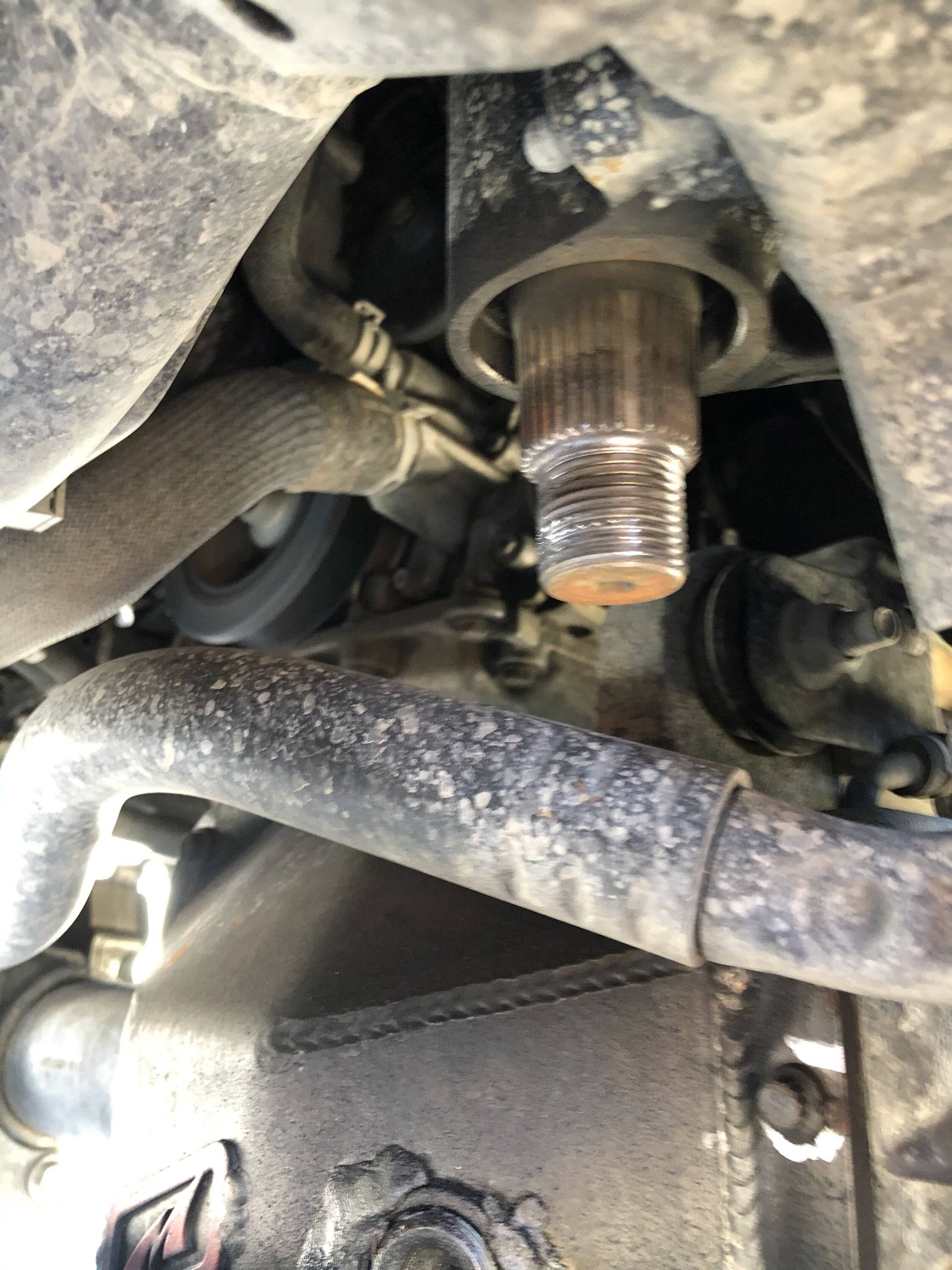
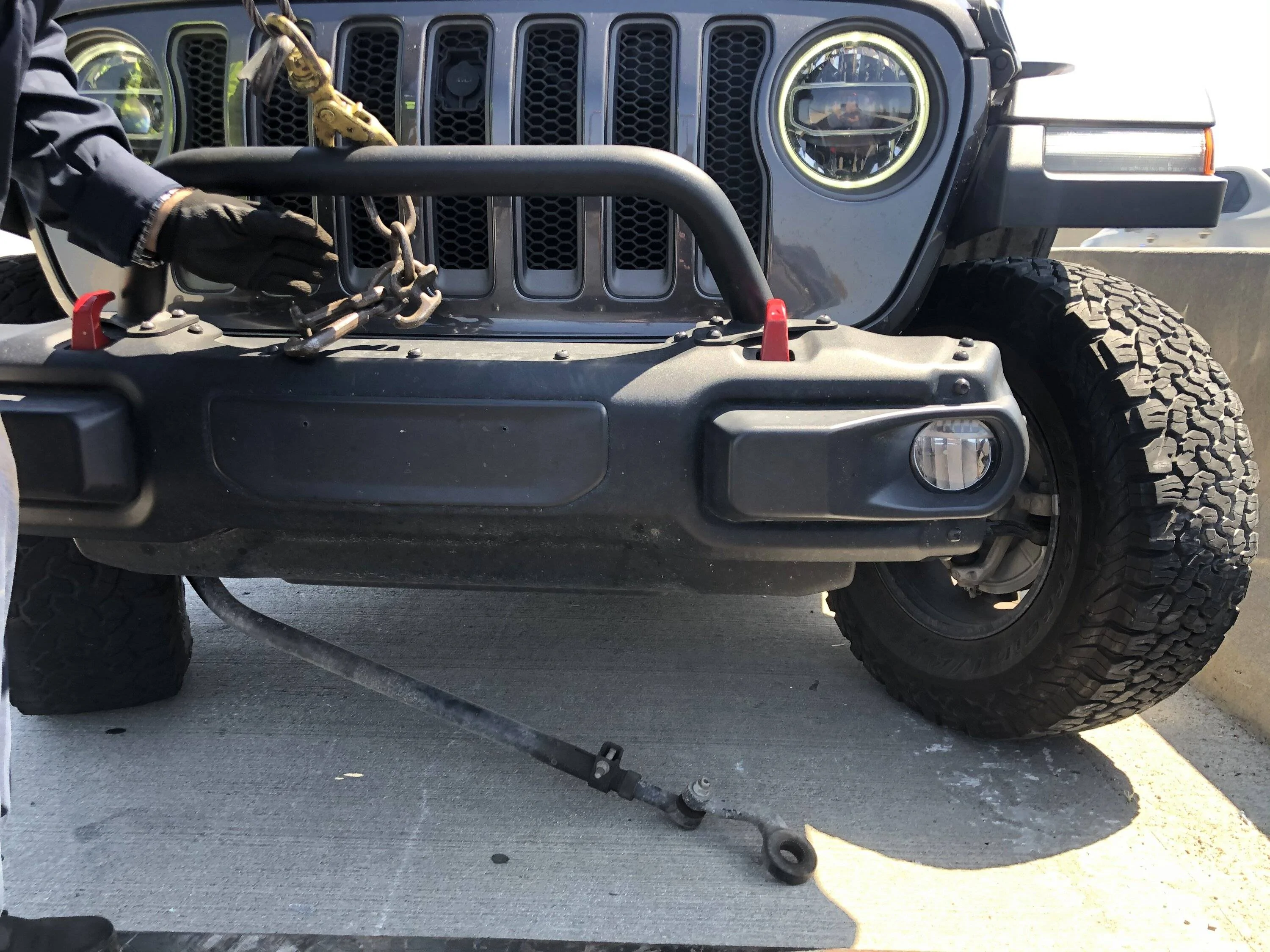
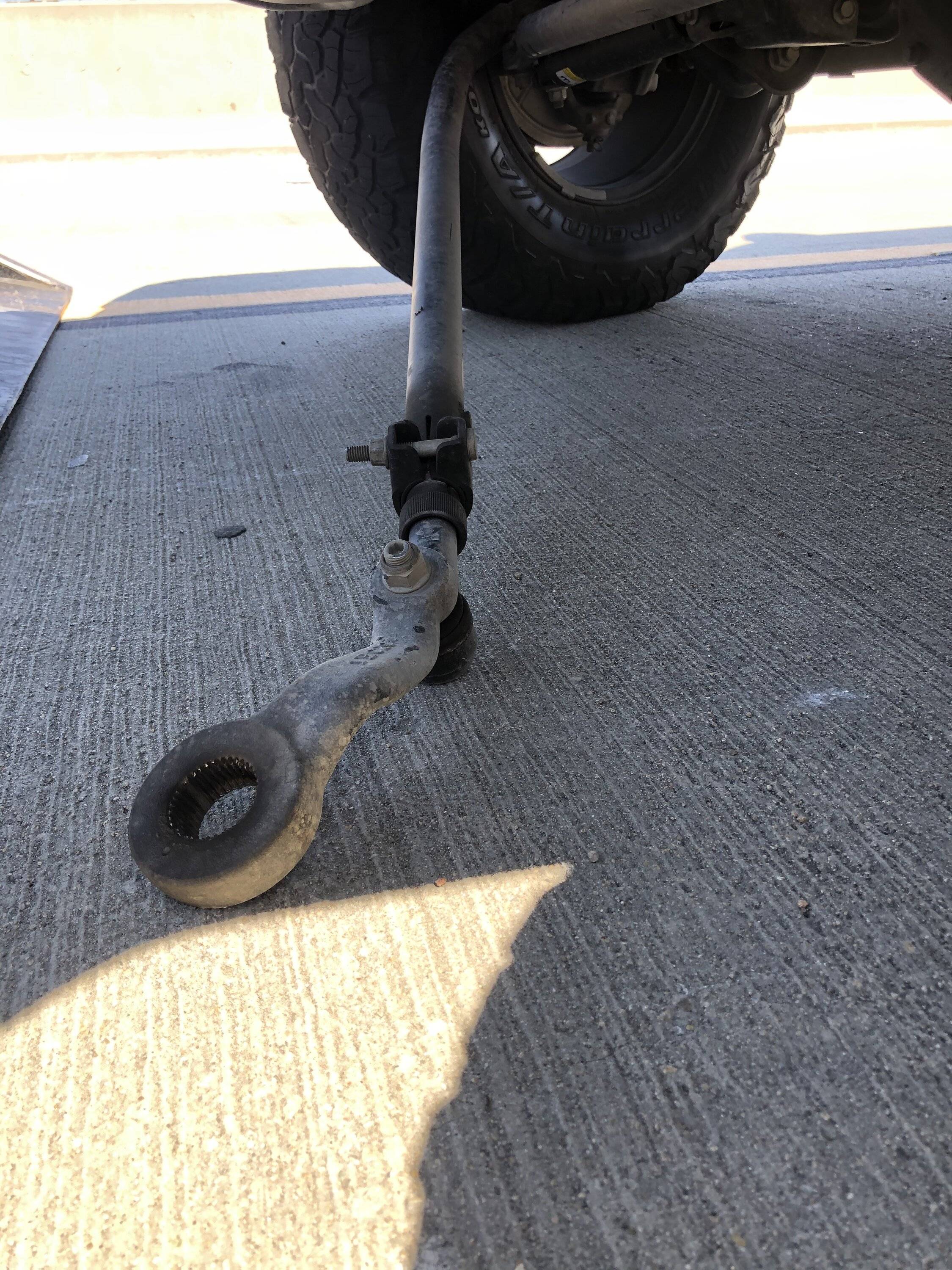
Whoever worked on your car is the cause of the problem. Just like how i took my JLUR for the steering gearbox recall. Few months later the drag link falls of the car while im on the freeway. Car goes left from right lane with no response to the steering. Glad i didnt hit anyone. I was confused as to what happened. Glad i was alive. But it could have been a horrible story all because some idiot didnt torque the nut. But guess what i still got another Jeep after lemoning that one. Moral of the story get work done at a proper reputable shop!
Jeep Wrangler JL Officially done. 2E4F8044-86C5-4E07-87F0-06B3FB7EE2B8
Jeep Wrangler JL Officially done. 8F3090E1-D210-4E80-A727-7D3B1D8EEE30
Jeep Wrangler JL Officially done. 2F103186-5308-4091-9FDB-039A2577280D
 

COJeeper

Banned
Banned
Banned
First Name
Mike
Joined
Aug 16, 2022
Threads
26
Messages
819
Reaction score
1,280
Location
Severance, CO
Vehicle(s)
'22 JLUR, '23 Donkey because gas is too expensive
Clubs
 
Whoever worked on your car is the cause of the problem. Just like how i took my JLUR for the steering gearbox recall. Few months later the track bar falls of the car while im on the freeway. Car goes left from right lane with no response to the steering. Glad i didnt hit anyone. I was confused as to what happened. Glad i was alive. But it could have been a horrible story all because some idiot didnt torque the nut.
2E4F8044-86C5-4E07-87F0-06B3FB7EE2B8.jpeg
But guess what i still got another Jeep after lemoning that one. Moral of the story get work done at a proper reputable shop!
8F3090E1-D210-4E80-A727-7D3B1D8EEE30.jpeg
2F103186-5308-4091-9FDB-039A2577280D.jpeg
Sounds like a typical dealership worked on that one. They don't know their ass from a hole in the ground. :D

Glad you're okay, had to be a code brown on that one!!
 

Punkn89

Well-Known Member
First Name
Alex
Joined
Mar 24, 2022
Threads
24
Messages
1,081
Reaction score
2,772
Location
Maryland
Vehicle(s)
2019 Wrangler
Man, I definitely would’ve sold it by now if all that happened to me. Unfortunately, not a sellers market for the time being so looks like you gotta keep wrenchin it! Hell, I get frustrated every time I forget to turn off the stop/start or if an “aux switches temporarily unavailable” warning comes on. I can’t imagine everything you’ve been through. I’d be biking my ass to work.

I think many people on this forum are very sensitive to the words, Bronco and cactus gray. That may have triggered some.

I hope you can either solve the problem or get a good trade in price for the Jeep! The keyboard warriors do not represent most of us in the Jeep community. ✌


Top