
Tyler-98-W68
Well-Known Member
- Thread starter
- #1
After reading a few posts about people commenting that their battery was draining while plugged in and remote started without ICE running I decided to do some monitoring of the charging system to confirm my theory that the onboard charger can’t keep the battery charged while plugged in during remote start or if the vehicle is plugged in but not “running”
Parameters for the test are as follows.
HV Battery at 95% (To ensure charging)
Vehicle in RUN but not “started”
Headlights ON
Level 1 and Level 2 Chargers plugged in.
The first parameter 18A of Charging Current Available to charge the HV battery. Self explanatory
The second parameter is HV Battery Current – Shunt, This is the current of energy going in to the battery, think of it like the Hybrid screen (sort of)
The AC Current While Charging PID lines up with the 32A available to charge the vehicle from a 240v source. This value changed to 12.3A when using the Level 1 charger at 120v
HCP Charging Current Command is what the vehicle is requesting the charging current to be at. This matches the Charging Current Available PID
The OBCM Output Current Is what the onboard charger is sending for current in to the battery.
Now with a very brief understanding of what you are looking at here are the results.
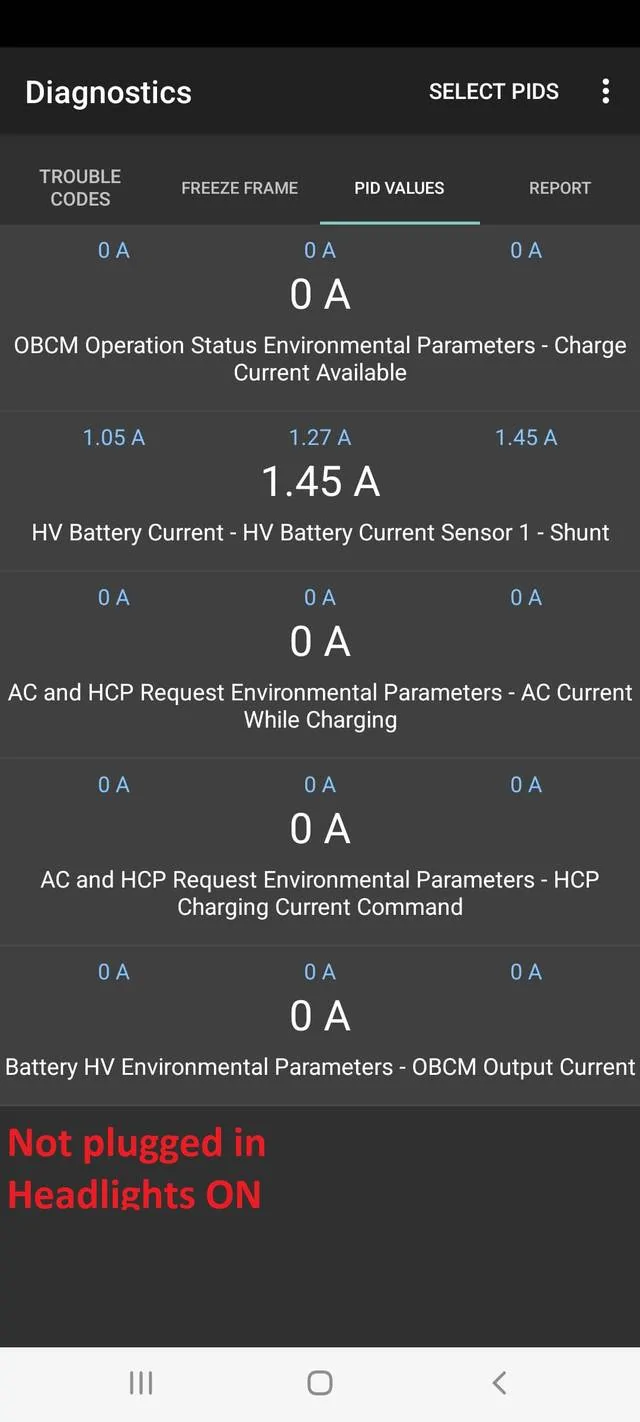
First is unplugged with the only the headlights on showing an amp draw of 1.45a indicating there is draw from the HV battery, as expected.

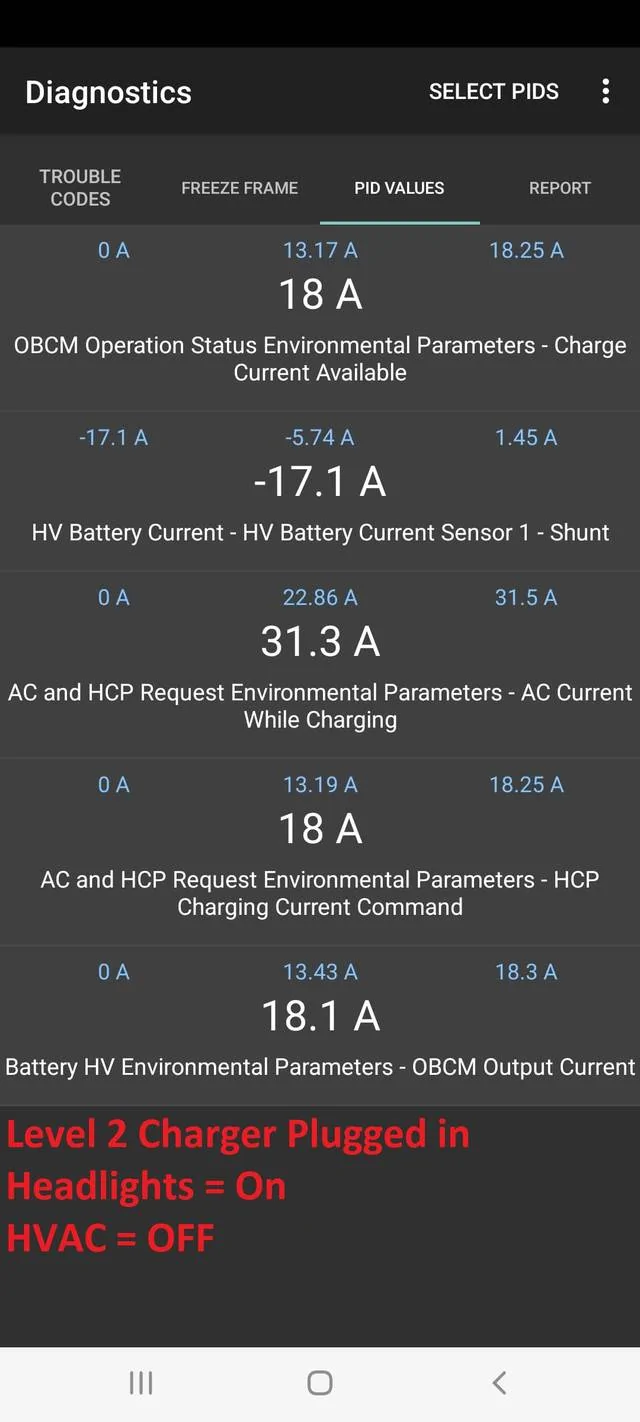
I’ll start with the Level 2 results. There was a total of 18 amps available to charge the HV battery
When plugged in with nothing running other than headlights there was 17.1A of current going into the battery to charge (represented by the negative value) this represents almost all of the L2 chargers ability to charge the battery.
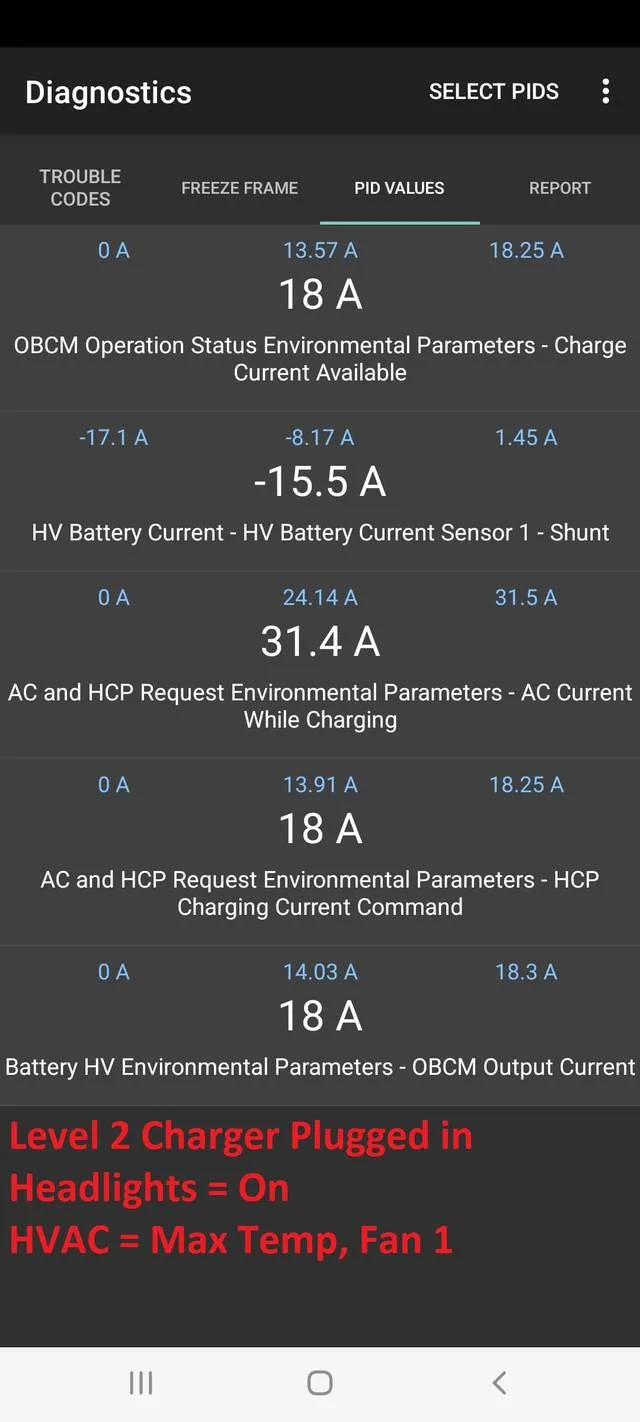
Next I put the HVAC heat to max and the fan to the first setting and got a current of -15.5A Which makes sense as now we are using the electric heater which takes away from total charging ability.
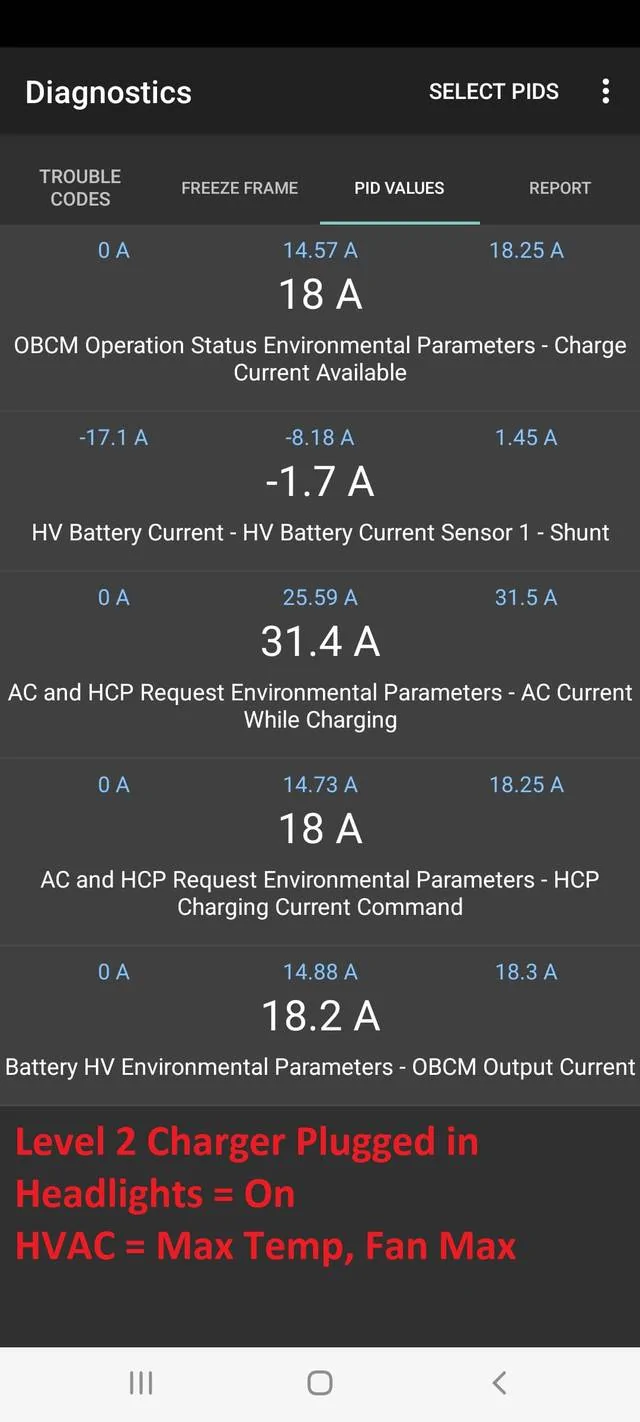
Then I put the HVAC fan to max and registered -1.7A of current going in to the battery, meaning the L2 charger was devoting almost all of the power it had to the HVAC system and not charging the battery and barely maintaining it.
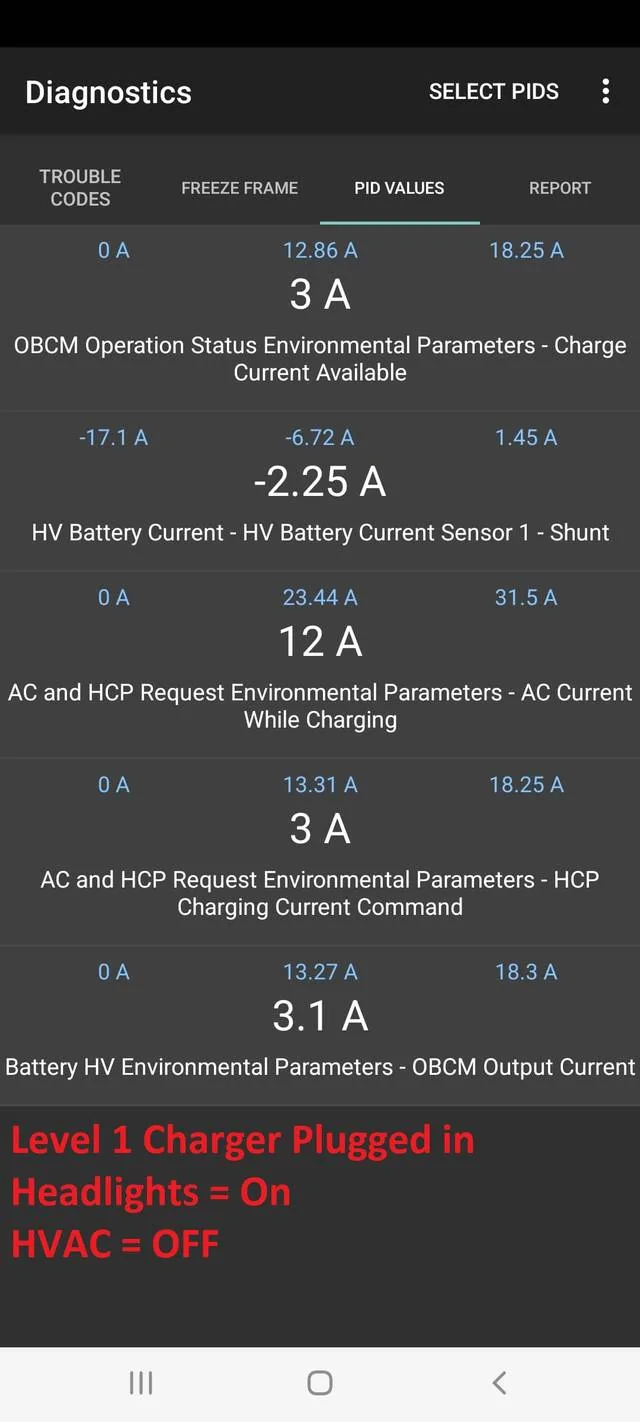
Next is the Level 1 charger results. There was a total of 3 amps available to charge the HV Battery and it was showing 12.3A when charging from a 120v source.
When plugged in with nothing running other than headlights there was -2.25a of current (out of 3A available) going into the battery to charge this represents most of the L1 chargers ability to charge the battery in this circumstance.
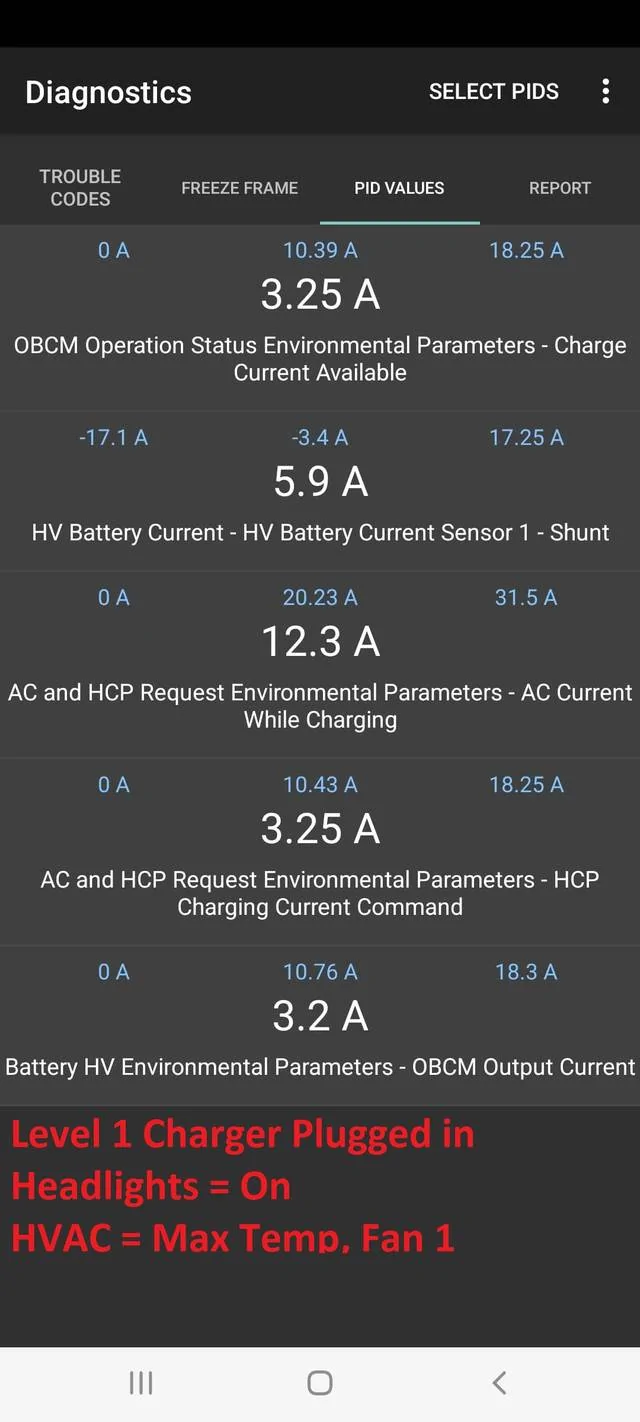
Next was HVAC heat to max and the fan to the first setting and I got a current of 5.9A of battery USE, meaning even with the HVAC level at a low setting the L1 charger can’t keep up.
Now with HVAC max temp and max fan speed. A battery draw of 12.2A from the battery, meaning the L1 charger can’t keep up at all at this configuration.
What this shows is that when plugged in to a L1 charger and remote start is used or just having the vehicle in RUN without starting it results in the HV battery being drained. What this test doesn’t show is the heated seats/wheel and rear defrost that can come on during a remote start event. Obviously with the L1 charger won’t be able to keep up.
With the L2 charger there was only -1.7A of current going in to the battery and again without heated seats/wheel or rear defrost.
This testing shows that in all circumstances the L1 Charger can’t keep up with HVAC/Comfort devices and the L2 Charger can’t quite keep up and will result in a slow draining of the battery (vs fast on the L1 Charger)
Parameters for the test are as follows.
HV Battery at 95% (To ensure charging)
Vehicle in RUN but not “started”
Headlights ON
Level 1 and Level 2 Chargers plugged in.
The first parameter 18A of Charging Current Available to charge the HV battery. Self explanatory
The second parameter is HV Battery Current – Shunt, This is the current of energy going in to the battery, think of it like the Hybrid screen (sort of)
The AC Current While Charging PID lines up with the 32A available to charge the vehicle from a 240v source. This value changed to 12.3A when using the Level 1 charger at 120v
HCP Charging Current Command is what the vehicle is requesting the charging current to be at. This matches the Charging Current Available PID
The OBCM Output Current Is what the onboard charger is sending for current in to the battery.
Now with a very brief understanding of what you are looking at here are the results.
First is unplugged with the only the headlights on showing an amp draw of 1.45a indicating there is draw from the HV battery, as expected.
I’ll start with the Level 2 results. There was a total of 18 amps available to charge the HV battery
When plugged in with nothing running other than headlights there was 17.1A of current going into the battery to charge (represented by the negative value) this represents almost all of the L2 chargers ability to charge the battery.
Next I put the HVAC heat to max and the fan to the first setting and got a current of -15.5A Which makes sense as now we are using the electric heater which takes away from total charging ability.
Then I put the HVAC fan to max and registered -1.7A of current going in to the battery, meaning the L2 charger was devoting almost all of the power it had to the HVAC system and not charging the battery and barely maintaining it.
Next is the Level 1 charger results. There was a total of 3 amps available to charge the HV Battery and it was showing 12.3A when charging from a 120v source.
When plugged in with nothing running other than headlights there was -2.25a of current (out of 3A available) going into the battery to charge this represents most of the L1 chargers ability to charge the battery in this circumstance.
Next was HVAC heat to max and the fan to the first setting and I got a current of 5.9A of battery USE, meaning even with the HVAC level at a low setting the L1 charger can’t keep up.
Now with HVAC max temp and max fan speed. A battery draw of 12.2A from the battery, meaning the L1 charger can’t keep up at all at this configuration.
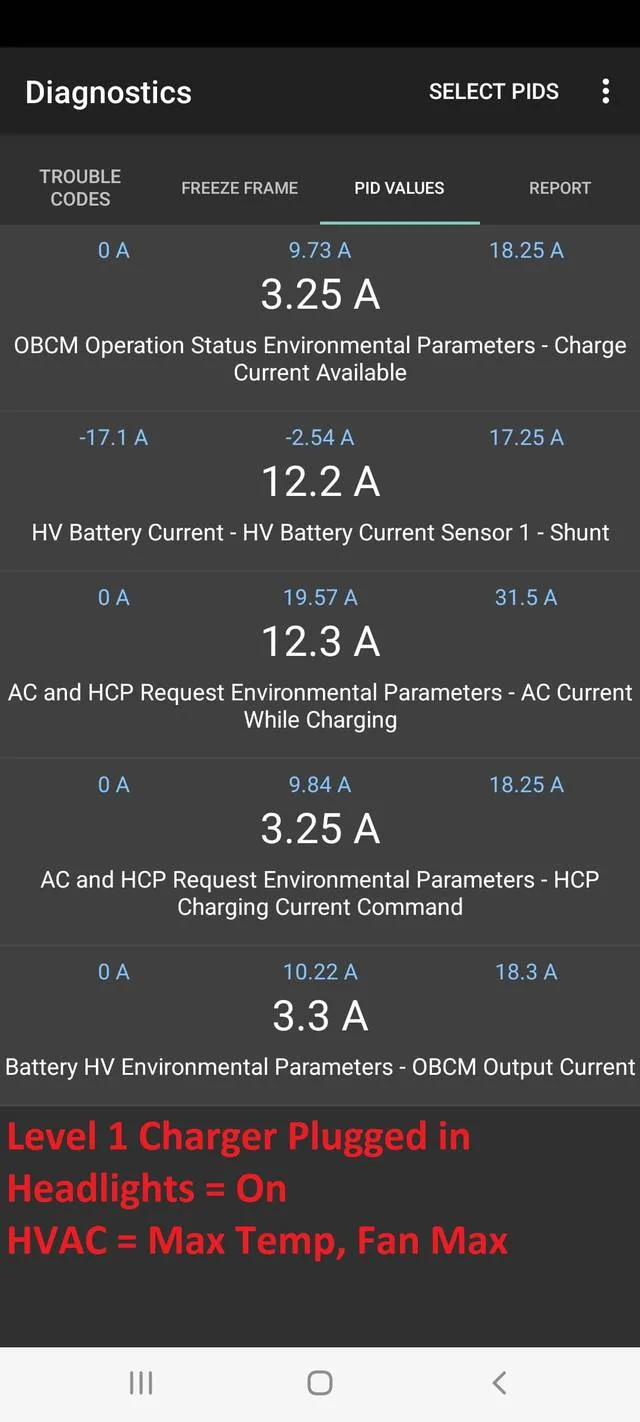
What this shows is that when plugged in to a L1 charger and remote start is used or just having the vehicle in RUN without starting it results in the HV battery being drained. What this test doesn’t show is the heated seats/wheel and rear defrost that can come on during a remote start event. Obviously with the L1 charger won’t be able to keep up.
With the L2 charger there was only -1.7A of current going in to the battery and again without heated seats/wheel or rear defrost.
This testing shows that in all circumstances the L1 Charger can’t keep up with HVAC/Comfort devices and the L2 Charger can’t quite keep up and will result in a slow draining of the battery (vs fast on the L1 Charger)
Sponsored


