Sponsored

Aux battery disconnect

FF5Cobra

Well-Known Member
First Name
Mickey
Joined
Dec 1, 2025
Threads
6
Messages
85
Reaction score
77
Location
md
Vehicle(s)
2025 4 door willys jl
Occupation
Retired auto tech
New jeep owner and member here
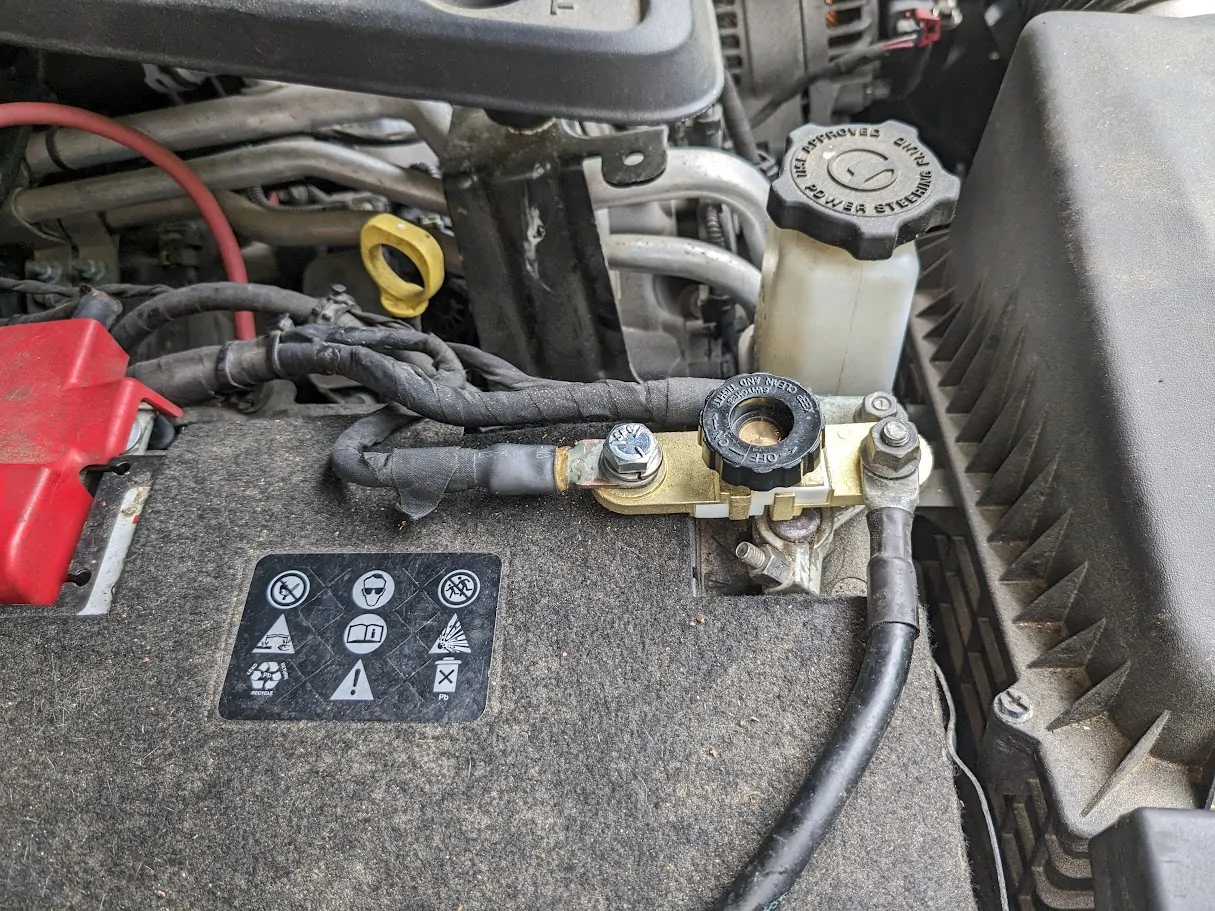
has anyone installed a battery disconnect( perk switch) on negative cable going to aux battery?

doing this would allow One to connect or disconnect Aux battery to use as needed.
of course aux battery would need to be occasionally charged.
but at least having a good aux battery available should be a plus if needed
or am I missing something reading thru these delete/ not delete battery post.😊
Sponsored


Flip

Well-Known Member
First Name
Johnny
Joined
Mar 25, 2023
Threads
137
Messages
6,379
Reaction score
12,797
Location
Virginia
Vehicle(s)
2023 Jeep Wrangler Sport
Build Thread
Link
Occupation
Retired Power Plant Engineer
I don't see why you couldn't do something like that. I think it might be difficult to maintain a charge on the auxiliary battery. Obviously if you don't keep it charged, rest assure it will be dead when you need it. I think a small battery jumper is probably a safer option IMO.

Best of luck my friend.
 

WranglerMan

Well-Known Member
First Name
Will
Joined
May 8, 2018
Threads
104
Messages
3,560
Reaction score
2,885
Location
Greenfield Indiana
Vehicle(s)
2018 Wrangler JLU Sahara
Occupation
Retired
Vehicle Showcase
1
If you wanted to that I’m sure it would work but you would also have to put in a charge point on the isolated side so you could disconnect the main and not have it bleed over the charge plus those little batteries don’t have great life and sort of a PITA to get to.
 

THAW

Well-Known Member
First Name
Foster
Joined
Oct 28, 2022
Threads
4
Messages
2,196
Reaction score
3,028
Location
PNW - prefer Middle of Nowhere
Vehicle(s)
23 JL4DrRubicon
You could switch the AUX (ESS) battery ground cable with a 250 Amp relay (~$20) operated by an ignition-powered source or factory Aux Switch. Then, the AUX (ESS) battery would/could be disconnected when the ignition is off, but receive alternator charging when the engine is running. [Note: significant external discharge of the AUX (ESS) battery while disconnected from the vehicle could cause electrical issues upon reconnection.]
 
Last edited:

Mguy

Well-Known Member
Joined
Nov 29, 2023
Threads
6
Messages
400
Reaction score
382
Location
Far Away
Vehicle(s)
2020 JLUR 6spd MT
New jeep owner and member here
has anyone installed a battery disconnect( perk switch) on negative cable going to aux battery?

doing this would allow One to connect or disconnect Aux battery to use as needed.
of course aux battery would need to be occasionally charged.
but at least having a good aux battery available should be a plus if needed
or am I missing something reading thru these delete/ not delete battery post.😊
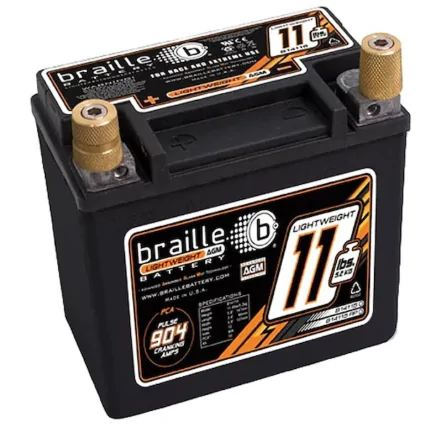
This is what I did/do, using disconnected aux battery as starter/substitute for main battery. Includes some discussion of an aftermarket battery switch.
 

Sponsored

AndySpill

Well-Known Member
First Name
Andy
Joined
Oct 24, 2023
Threads
71
Messages
1,654
Reaction score
1,270
Location
Pittsburgh
Vehicle(s)
2018 JL Sahara
I have a quick disconnect switch like @LanceMagnum (mine happens to be of the knife variety but I think either is fine) at the main battery's negative terminal.

Where I may differ in approach from others here is in purpose of that switch, it remaining closed.

My thoughts were that if the Aux battery dies, and Murphy's law will have it that when it does, I'll be "in a tuxedo on my way to some formal event," that I can, without grabbing tools, open the switch, pull Fuse 42 (pulling this fuse optional for all dual AGM JLs but early 2018's without TSB 18-092-19), and apply my portable jump starter the main battery's terminals and know that the main battery alone, rather than the Aux battery as well, was receiving the jump starter's limited power.

I am leery of people using the Aux battery to power appliances with the engine off, if that's what was intended by some in this thread. It's such a small and relatively unreliable power source that many owners have reported it dying even when always connected to the alternator and never running ESS events, that they idea of taxing it more, and then at some point reconnecting it to the main battery (even if externally charged first) leaves me concerned.

Processes that will faster consume that Aux battery, and that at some point reconnect it to the main battery risk it taking out that main battery as well given the opportunity in such parallel connections of the Aux cannibalizing the main battery. Add to that the fact that lead acid batteries (of which the AGM batteries of our JLs are a variant) should not be taxed below 50% state of charge before recharged, and I think such overlanding power needs best be handled by beefier systems that better monitor power usage, particularly when the alternator isn't running, like those of Genesis Offroad.

I get that some contributors here are keeping the Aux as a backup starter. I thought about that and decided to go the portable power pack/disconnect the Aux route to address such situations.
 

Terrymo

Well-Known Member
First Name
Terry
Joined
Jun 17, 2022
Threads
48
Messages
10,711
Reaction score
33,103
Location
SoCal
Vehicle(s)
2023 JLURXR 3.6 ET
Clubs
 
That's an AGM myth.
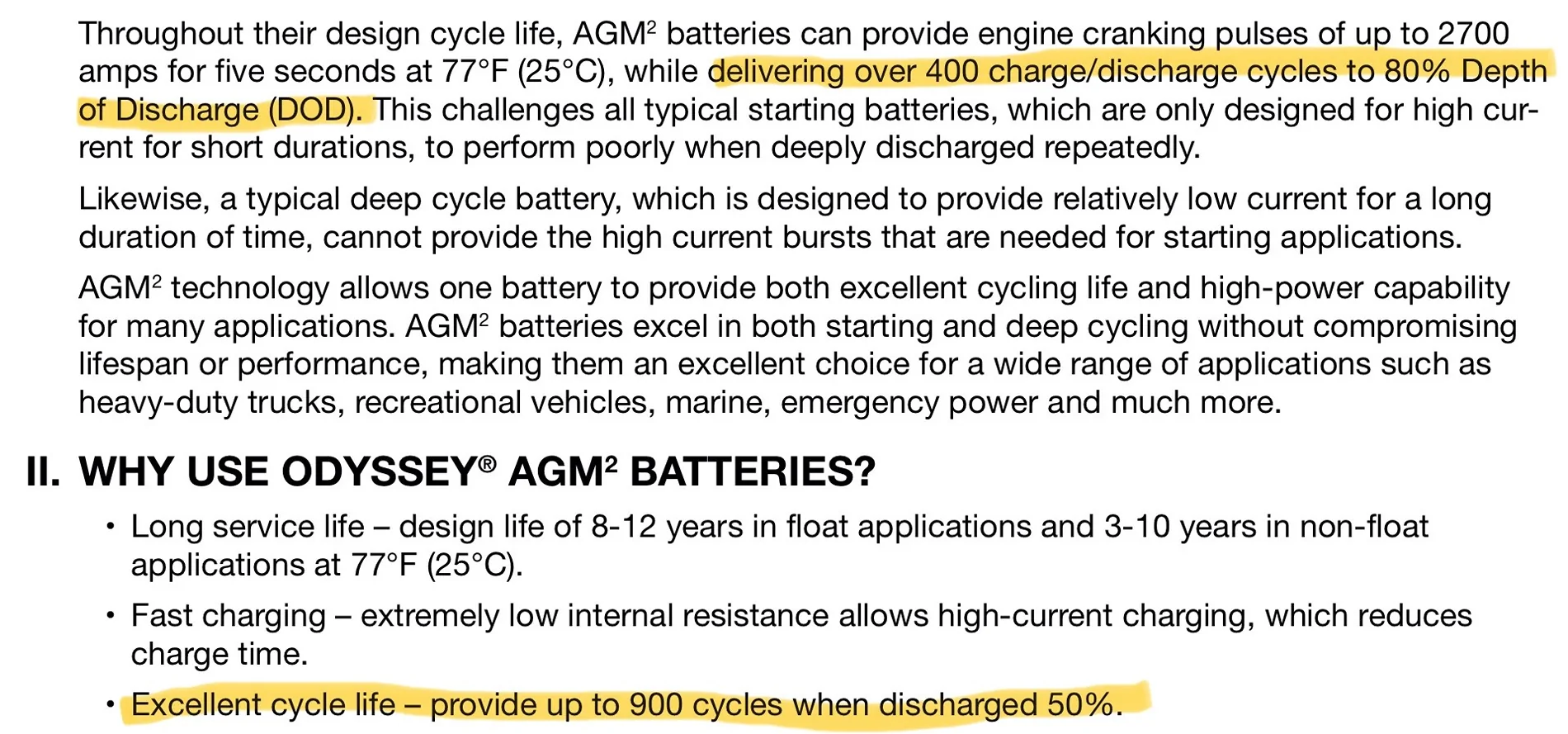
I had a peripheral question and hoping for a short simple answer. The figures I’ve highlighted regarding Odyssey AGM batteries seem counterintuitive to me. Are these figures accurate and why does it appear you get more discharge cycles at 50% DOD than at 80% DOD?
Jeep Wrangler JL Aux battery disconnect IMG_4752
 

Jebiruph

Well-Known Member
First Name
Jerry
Joined
Feb 18, 2018
Threads
57
Messages
2,402
Reaction score
2,998
Location
Iowa
Vehicle(s)
2018 JLU, 2020 JT, 2024 WL
From Grok, the Depth of Discharge refers to the amount of discharge - 80% means 20% remaining, 50% means 50% remaining.


Depth of Discharge (DoD) for AGM (Absorbent Glass Mat) batteries refers to the percentage of the battery's total capacity that has been used before recharging. It directly impacts cycle life—the number of charge/discharge cycles the battery can endure before significant capacity loss.

Key Recommendations

  • Maximum safe DoD: Up to 80%. AGM batteries are designed for deeper discharges than traditional flooded lead-acid batteries (typically limited to 50% DoD for similar longevity). This is supported by manufacturers and experts, as AGM construction (electrolyte absorbed in glass mats) reduces sulfation and allows better deep-cycle performance.
  • Recommended for optimal longevity: 50% DoD or less. Regularly discharging only to 50% can double or more the cycle life compared to 80% DoD, providing the best balance of usable capacity and lifespan in most applications (e.g., solar, RV, marine).
 

Sponsored

THAW

Well-Known Member
First Name
Foster
Joined
Oct 28, 2022
Threads
4
Messages
2,196
Reaction score
3,028
Location
PNW - prefer Middle of Nowhere
Vehicle(s)
23 JL4DrRubicon
I had a peripheral question and hoping for a short simple answer. The figures I’ve highlighted regarding Odyssey AGM batteries seem counterintuitive to me. Are these figures accurate and why does it appear you get more discharge cycles at 50% DOD than at 80% DOD?
IMG_4752.webp
@Jebiruph beat me to it: the counterintuitive part may be that 80% DoD refers to using 80% of capacity, not 20%?

Anyway, the 50% DoD "rule" represents an entirely arbitrary trade-off, and was intended for sizing batteries to known daily power requirements to create emergency capacity and multi-year replacement intervals. Sadly, it has been widely misinterpreted as a battery chemistry "no-no", as it was earlier in this thread.
 

Terrymo

Well-Known Member
First Name
Terry
Joined
Jun 17, 2022
Threads
48
Messages
10,711
Reaction score
33,103
Location
SoCal
Vehicle(s)
2023 JLURXR 3.6 ET
Clubs
 
@Jebiruph beat me to it: the counterintuitive part may be that 80% DoD refers to using 80% of capacity, not 20%?

Anyway, the 50% DoD "rule" represents an entirely arbitrary trade-off, and was intended for sizing batteries to known daily power requirements to create emergency capacity and multi-year replacement intervals. Sadly, it has been widely misinterpreted as a battery chemistry "no-no", as it was earlier in this thread.
So 80% depth of discharge equals a 20% state of charge or have I confused terminology further?
 

THAW

Well-Known Member
First Name
Foster
Joined
Oct 28, 2022
Threads
4
Messages
2,196
Reaction score
3,028
Location
PNW - prefer Middle of Nowhere
Vehicle(s)
23 JL4DrRubicon
  • Recommended for optimal longevity: 50% DoD or less. Regularly discharging only to 50% can double or more the cycle life compared to 80% DoD, providing the best balance of usable capacity and lifespan in most applications (e.g., solar, RV, marine).
Note that "doubling" the "cycle life" only preserves 20% of lifetime output.

For example, a 100 Ah battery cycled once to 80% DoD provides 80 Ah, and a 100 Ah battery cycled twice to 50% DoD provides 100 Ah.

The "or less" in the recommendation is notable because a lot of published charts/figures show a greater cycle life difference between 20% DoD and 50% DoD than between 50% DoD and 80% DoD. Generally, the lower the DoD, the lower the lifetime output, [rhetorical question incoming] so why stop at 50%?
Sponsored

 
Last edited:


Top