Sponsored

2018 ESS battery charge?

AdamG

Well-Known Member
First Name
Adam
Joined
Feb 17, 2021
Threads
12
Messages
671
Reaction score
757
Location
SE Michigan
Vehicle(s)
2019 JLSportS - SOLD; 2026 Moab 392
Bought the H7 and taped up the aux battery negative cable. Thanks all for this awesome solution!

Now just in theory (since I have other drivers in the house) what happens if the don't push the ESS button? I've trained myself to do it over the years, but hey teens will be teens....

Thanks again!
Getting close myself, what H7 did you get? Dropped right in?
 

Barky

Active Member
First Name
Beau
Joined
Jan 6, 2020
Threads
9
Messages
41
Reaction score
11
Location
Scottsdale, AZ
Vehicle(s)
JL Wrangler Rubicon
Yes; provided the ESS battery is not shot and capable of accepting a charge. This is because 99.99% of the time the two batteries are connected in parallel (positive post of main battery cabled to positive post of ESS/Aux battery, negative to negative). The only time they are separated is for an instant at cold crank (hold that thought, I'm going to circle back on it) and ESS events.

Two batteries connected in parallel (which should have same chemistry, in this case AGM, absorbent glass mat: a type of lead acid battery, and voltage) is like two columns of water connected at their base, and filling (charging one battery) one water column with water and watching both water columns rise as "water seeks its own level."


Your language sounds like you are wrongly conflated turning off the ESS system with disconnecting the ESS/Aux battery. They are two completely distinct things. Not that I recommend it but you can run ESS events with one battery, or disable ESS with two batteries.

That said, seeing as you are no fan of ESS events, you may wish to disconnect the ESS/Aux battery and prevent it from ever being isolated, such as in cold cranks (i.e. engine cranks as a result of you pressing the start button, not the warm cranks after an ESS event concludes.)

The easiest way to do this is to identify the two black cables that connect to the main battery's negative post. One of those cables has as its other end the body ground on the passenger's front fender under the hood. Leave that cable connected. It is the other cable that should be disconnect, and whose end wrapped in insulation. Additionally, in the Power Distribution Center (PDC), that black box near the top of the engine bay on the passenger's side, should have Fuse 42 pulled. Doing so will prevent the Power Control Relay (PCR) from ever being energized, with no error messages, and in so doing, preventing the batteries from being separated.

Now, the pre cold crank test of the ESS battery will get routed to all batteries, not just the ESS battery, of which you have only one battery connected: the main.

Do make sure you turn ESS off as well, either by button push or after market tech. It is less than advised to run ESS events on the main battery, much that just about every other ICE vehicle on the market running ESS events does so with one battery, as you could, during an ESS event, drain the main battery down to a level where post ESS event engine cranking could become more difficult. It's not likely but a cold night, an all but shot main battery, too many after market appliances running during an ESS events and a long traffic light might early terminate an ESS event when the main battery voltage drops, just as that battery proves too weak to crank the engine.

Normally, that ESS/Aux battery is what runs appliances during an ESS event, sparing the main battery to effect the post ESS event engine crank.


A word about this. On early model 2018s without the dealer TSB 18-092-19 flash, and a dead ESS battery will prevent the vehicle from cranking. The main battery could be a "nuclear power plant," an engine crank won't even be attempted. Newer 2018s and beyond with dual AGM battery setups will fail on the first crank but on subsequent attempts try to crank off the main battery.

I would very much recommend replacing your main battery. The nature of the parallel connection I described in such that a bad battery can take out other batteries connected to it in parallel, and it sounds like your ESS battery is ready for battery heaven.
This was by far my favorite read I've done on this forum... thank you for your service!
 

txj2go

Well-Known Member
Joined
Apr 7, 2020
Threads
44
Messages
1,518
Reaction score
1,579
Location
DFW
Vehicle(s)
CTS-V, 2018 JLU Sport Firecracker Red
This was by far my favorite read I've done on this forum... thank you for your service!
There are a number of very long threads on the forum concerning the second battery and the ESS. There are a lot of aspects to this. There are a number of ways to disable the ESS but they will leave a small warning symbol on in the instrument display. I just disconnected the cable from my small battery and left it at that. I don't have to push any buttons and I don't have to worry about the small battery killing the main battery. I do still have the small warning symbol on the main instrument cluster.
 

Sponsored

Ratbert

Well-Known Member
First Name
John
Joined
Jun 20, 2020
Threads
159
Messages
16,032
Reaction score
24,984
Location
PNW
Vehicle(s)
2022 AEV JL370 JLURD
Build Thread
Link
Occupation
Software Engineer
Clubs
 
There are a number of very long threads on the forum concerning the second battery and the ESS. There are a lot of aspects to this. There are a number of ways to disable the ESS but they will leave a small warning symbol on in the instrument display. I just disconnected the cable from my small battery and left it at that. I don't have to push any buttons and I don't have to worry about the small battery killing the main battery. I do still have the small warning symbol on the main instrument cluster.
You simply took the aux battery out of the loop. That doesn't disable ESS.
 

txj2go

Well-Known Member
Joined
Apr 7, 2020
Threads
44
Messages
1,518
Reaction score
1,579
Location
DFW
Vehicle(s)
CTS-V, 2018 JLU Sport Firecracker Red
You simply took the aux battery out of the loop. That doesn't disable ESS.
I assumed without the aux battery and without other modifications the ESS wouldn't operate. I've read that ESS won't operate if there is a problem with the level of charge with the battery.

I'm not the expert on the ESS although I have read all of the very long threads here. I bought my Jeep used with non-functioning ESS and the warning symbol on the dash. I didn't want the ESS to operate so I didn't ask any questions and therefore I still don't know why the ESS doesn't function. I replaced the battery with the best one I could find and went on.
 

Ratbert

Well-Known Member
First Name
John
Joined
Jun 20, 2020
Threads
159
Messages
16,032
Reaction score
24,984
Location
PNW
Vehicle(s)
2022 AEV JL370 JLURD
Build Thread
Link
Occupation
Software Engineer
Clubs
 
I assumed without the aux battery and without other modifications the ESS wouldn't operate. I've read that ESS won't operate if there is a problem with the level of charge with the battery.

I'm not the expert on the ESS although I have read all of the very long threads here. I bought my Jeep used with non-functioning ESS and the warning symbol on the dash. I didn't want the ESS to operate so I didn't ask any questions and therefore I still don't know why the ESS doesn't function. I replaced the battery with the best one I could find and went on.
If the ESS isn't functioning and you haven't done something to disable it (removing the aux doesn't disable it) then there's something wrong with your Jeep. Possibly a bad IBS?
 
OP
OP

brow

Well-Known Member
Joined
Mar 4, 2018
Threads
22
Messages
156
Reaction score
113
Location
Edmonton, AB
Vehicle(s)
2018 Black JLU
Getting close myself, what H7 did you get? Dropped right in?
Yup it dropped right in. There may be a clip in the way that has to be removed, my clip was already broken lol
 

AndySpill

Well-Known Member
First Name
Andy
Joined
Oct 24, 2023
Threads
71
Messages
1,654
Reaction score
1,270
Location
Pittsburgh
Vehicle(s)
2018 JL Sahara
Like this, AndySpill suggested as well. Do I need to push the ESS button in cab everytime I start the vehicle still? Or does pulling the fuse eliminate that?
And would I get any type of warning or fault lights at all by pulling the fuse?

Thanks!
While @Papa5 Carey's answer was spot on that the button still needs to be pushed, I'd like to explain, have you understand why, and offer a but more color commentary.

All pulling Fuse 42 does for you is to prevent the Power Control Relay (PCR) from every being energized: a process that when this device is energized separates the two batteries. When the PCR is unenergized the batteries can't be separated by the vehicle (of course they can be if you disconnect cables connected to the ESS/Aux battery as described in above posts.)

Under normal factory operation the PCR is energized for an instant at cold crank to test the ESS/Aux battery and during ESS events: in the latter case running appliances off the ESS/Aux battery while sparing the main battery to effect the post ESS event engine crank (which I'll call a "warm" engine crank.)

In no way does the presence of absence of this Fuse 42 influence, except perhaps in one indirect case I will cover below, whether or not ESS engages. To insure ESS doesn't engage that button has to be pushed each time you cold crank, or use aftermarket tech to do this for you.

This button is by design referred to as "non-latching." That's just a fancy way of saying it switches off (i.e. allows the ESS system to engage under the right circumstances) each time the vehicle cold cranks (barring aftermarket tech,) and it is designed that way because it is mandated by the EPA for that button to be non-latching in order for vehicles with ESS systems to lawfully be able to advertise more favorable MPG ratings that are an average of ESS being on and off. Rephrased, were the switch latching from the factory, (retaining its state from one cold crank to the next) all Stellantis could lawfully report in the way of MPGs would be the lower ESS system off MPG rating.

Now I'll talk of the one exception. In all but early 2018s without dealer flash TSB 18-092-19, all dual AGM battery JLs with a dead or absent/disconnected ESS/Aux and Fuse 42 in place, will fail on the first crank. (In the early 2018's a dead ESS battery stranded you.)

But in these later 2018 dual AGM battery JLs and later, the second crank, provided the main battery has ample power, will crank from solely the main battery. If successful not only would subsequent cold cranks occur on the first try thereafter, the vehicle turns on in the dash the ESS off light (not to be confused with the ESS button).

So this is way to get around not having to push the ESS off button each time without buying aftermarket tech, but most people don't like idiot lights on in the dash, and forum experts (i.e. not me) like Jerry @Jebiruph have considered this technique less than ideal giving the fact that this ESS off light often serves as a means to show vehicle problems, that having that light on all the time could potentially mask. :)
 

Sponsored

AdamG

Well-Known Member
First Name
Adam
Joined
Feb 17, 2021
Threads
12
Messages
671
Reaction score
757
Location
SE Michigan
Vehicle(s)
2019 JLSportS - SOLD; 2026 Moab 392
2019 JLS 3.6L 6spd, original batteries
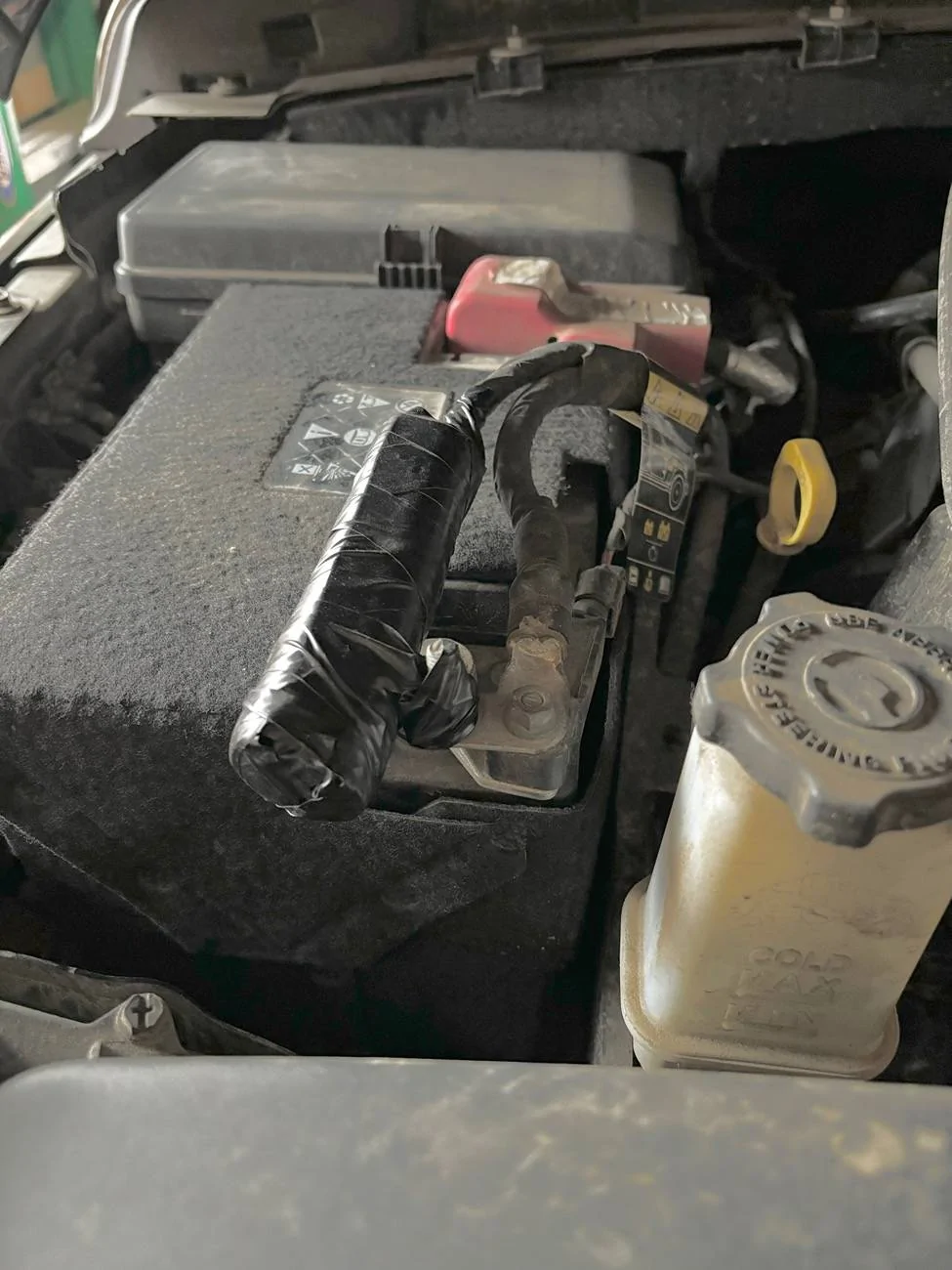
I’ve had the “STOP/START NOT READY, BATTERY CHARGING” message for a while and knowing 1) I’ll need a battery probably soon and 2) wanting to only do the main, I decided to try the bypass. I disconnected the AUX cable (smaller cable held on by the 13mm nut), wrapped it up, and pulled F42. Starts right up, all normal, no dash lights or anything, but I still have the “STOP/START NOT READY, BATTERY CHARGING” message. Why is this? I thought disconnecting the aux and pulling that fuse would mean the ESS would work just off the main by itself?

Jeep Wrangler JL 2018 ESS battery charge? IMG_5506
 

AndySpill

Well-Known Member
First Name
Andy
Joined
Oct 24, 2023
Threads
71
Messages
1,654
Reaction score
1,270
Location
Pittsburgh
Vehicle(s)
2018 JL Sahara
2019 JLS 3.6L 6spd, original batteries
I’ve had the “STOP/START NOT READY, BATTERY CHARGING” message for a while and knowing 1) I’ll need a battery probably soon and 2) wanting to only do the main, I decided to try the bypass. I disconnected the AUX cable (smaller cable held on by the 13mm nut), wrapped it up, and pulled F42. Starts right up, all normal, no dash lights or anything, but I still have the “STOP/START NOT READY, BATTERY CHARGING” message. Why is this? I thought disconnecting the aux and pulling that fuse would mean the ESS would work just off the main by itself?

IMG_5506.webp
Assuming this light's tendency to shut off doesn't go through some time period before it does so, you are likely getting this message because your main battery is in need of replacement.

By pulling Fuse 42 and breaking the circuit to the Aux battery as you have done, the normal factory test of the Aux battery prior to a cold crank is now being done against only the main battery. This is because pulling Fuse 42 prevents the Power Control Relay (PCR) from being energized, and when this (normally closed) relay doesn't receive electrical current it can't isolate/separate the two batteries, so calls to test just the Aux battery go to all connected batteries, of which you only have one, your main.

Your vehicle thinks it's testing the Aux battery when it is actually testing the main, and finding its voltage falling short.

I hope this helps.
 

AdamG

Well-Known Member
First Name
Adam
Joined
Feb 17, 2021
Threads
12
Messages
671
Reaction score
757
Location
SE Michigan
Vehicle(s)
2019 JLSportS - SOLD; 2026 Moab 392
Assuming this light's tendency to shut off doesn't go through some time period before it does so, you are likely getting this message because your main battery is in need of replacement.

By pulling Fuse 42 and breaking the circuit to the Aux battery as you have done, the normal factory test of the Aux battery prior to a cold crank is now being done against only the main battery. This is because pulling Fuse 42 prevents the Power Control Relay (PCR) from being energized, and when this (normally closed) relay doesn't receive electrical current it can't isolate/separate the two batteries, so calls to test just the Aux battery go to all connected batteries, of which you only have one, your main.

Your vehicle thinks it's testing the Aux battery when it is actually testing the main, and finding its voltage falling short.

I hope this helps.
Just to be clear, I have no lights on the dash lit up, the message is on the screen if I cycle through the different menus.

So my main has enough power to start the vehicle normally, but not enough to do a start-stop action? How does that work?
 

AndySpill

Well-Known Member
First Name
Andy
Joined
Oct 24, 2023
Threads
71
Messages
1,654
Reaction score
1,270
Location
Pittsburgh
Vehicle(s)
2018 JL Sahara
Just to be clear, I have no lights on the dash lit up, the message is on the screen if I cycle through the different menus.

So my main has enough power to start the vehicle normally, but not enough to do a start-stop action? How does that work?
Hi Adam:

It works because the threshold of voltage programed into the vehicle in order for stop start to be able to engage (provided about 12 other attributes are also met like a warmed up engine, a climate control fan not set too high, a steering wheel that isn't turned to much, an automatic not in a manual gear, etc.) is higher than that needed to crank the engine.
 

AdamG

Well-Known Member
First Name
Adam
Joined
Feb 17, 2021
Threads
12
Messages
671
Reaction score
757
Location
SE Michigan
Vehicle(s)
2019 JLSportS - SOLD; 2026 Moab 392
Hi Adam:

It works because the threshold of voltage programed into the vehicle in order for stop start to be able to engage (provided about 12 other attributes are also met like a warmed up engine, a climate control fan not set too high, a steering wheel that isn't turned to much, an automatic not in a manual gear, etc.) is higher than that needed to crank the engine.
Cool thanks buddy. My start-stop hasn’t worked much in the last year, intermittent and unpredictable. Everything else, totally fine, none of the weird electrical happenings you see people post about that are indicators of batteries dying. Just thought I’d do this in advance so I knew what to expect. I was gone 10 days in early Oct and only short trips since then, considering connecting it all back up and taking an hour drive tomorrow. Also considering just leaving it and seeing what happens.
Sponsored


Top